


Carbon Footprint in Every Cup: Calculating Your Event's True Environmental Cost
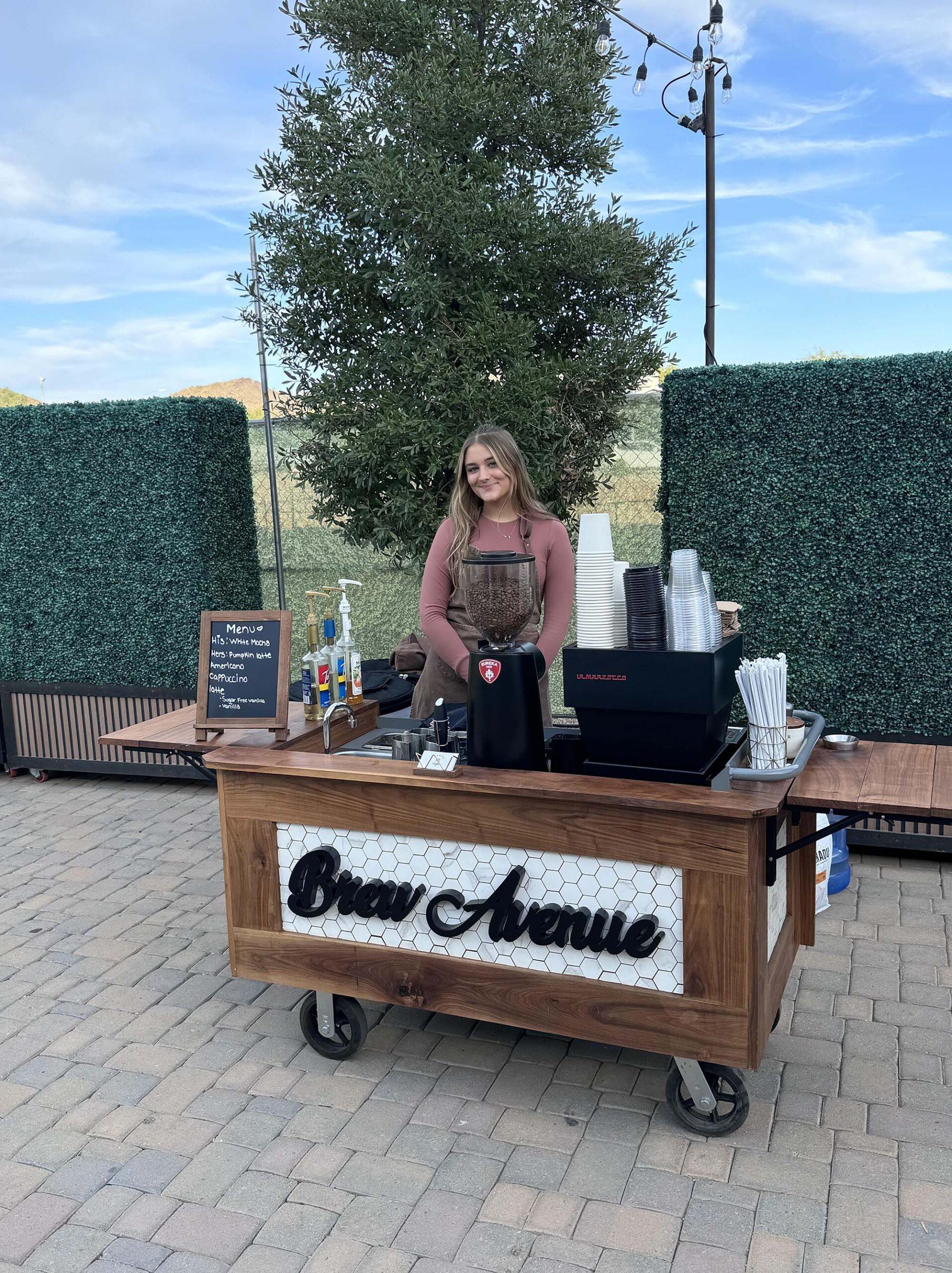
Every cup of coffee tells a story. The beans grown on a mountainside, shipped across oceans, roasted in Arizona, brewed at your event—each step leaves a mark on the planet. Most event planners never see this story. They see a cup of coffee, not the carbon embedded in every sip. But in an era of climate accountability, ignorance is no longer an excuse. The true environmental cost of your event includes the carbon footprint of every beverage served. A responsible coffee catering service helps you calculate, understand, and reduce this impact. At Brew Avenue Coffee, we are located in Phoenix, Arizona, United States, and we believe transparency is the first step toward genuine sustainability.
The Hidden Emissions in Your Morning Cup
The average coffee drinker never considers the carbon cost of their daily ritual. Yet the numbers are sobering. One powerful insight from sustainability research puts it starkly: a single cup of coffee can produce as much carbon dioxide as a full day of human breathing . This startling comparison frames the challenge for event planners who serve hundreds or thousands of cups.
Adults in the United States drink 516 million cups of coffee per day . At an event scale, those numbers compound rapidly. A conference serving 500 attendees two cups each generates emissions equivalent to dozens of human daily breathing cycles—before accounting for food, travel, and venue operations.
The Full Lifecycle: From Farm to Landfill
Calculating coffee's true carbon footprint requires examining every stage of its journey.
Cultivation and Harvesting: Coffee farming can be carbon-intensive or carbon-negative depending on practices. Shade-grown coffee sequesters carbon in trees. Sun cultivation requires clearing land and heavy inputs. The choice of farming method ripples through the entire lifecycle.
Transportation: Coffee is grown in tropical regions and consumed globally. Those shipping miles add up. A study of emissions from the 2024 World Barista Championship found that travel accounted for over 93% of the competition's total CO2 production—22.6 tonnes from a five-person team . While your event's coffee travels less dramatically, the principle holds: transportation dominates carbon footprints.
Roasting: Roasting transforms green beans into the aromatic coffee we love. This process requires significant energy. Some Phoenix roasters have embraced solar power to reduce this impact—Heat Coffee generates more than 15 megawatts of solar energy annually through their panels .
Brewing: The energy to heat water and power equipment adds up. Traditional espresso machines maintain temperature constantly, wasting energy. Efficient equipment reduces this load.
Milk Production: Here is perhaps the most surprising finding. For Barista Company, a European catering service serving over a million cups annually, their 2022 carbon footprint was 195 tons CO2-equivalent. Nearly half—47%—came from cow's milk alone . They consumed 30,774 liters of cow's milk, generating 56 tons of CO2 .
Waste: Finally, what happens after the cup is empty matters enormously. Single-use cups containing petroleum-based plastics take 1,000 years to decompose in landfills, contaminating soil, water, and air . Coffee grounds sent to landfills generate methane, a greenhouse gas 23 times more potent than CO2.
| Lifecycle Stage | Carbon Impact |
|---|---|
| Farming | Varies by method (shade vs. sun) |
| Transportation | Up to 93% of total for global events |
| Roasting | Energy-intensive, but solar reduces |
| Brewing | Equipment efficiency matters |
| Milk | 47% of catering footprint |
| Waste | Methane from landfills, centuries to degrade |
The Milk Factor: Your Biggest Lever
For event coffee service, the single most impactful choice may surprise you. It is not the beans. It is the milk.
Barista Company's analysis revealed that milk accounted for nearly half their total carbon footprint . The solution? Simple: shift to oat milk. Their modeling showed that replacing just 50% of cow's milk with oat milk would reduce total emissions by 12%—from 195 tons to 171 tons CO2-equivalent .
This is why Brew Avenue Coffee carries a full range of plant-based milks and encourages clients to consider making oat milk the default for cappuccinos and lattes. Guests who prefer cow's milk can still request it, but the default matters. Defaults drive behavior, and behavior drives emissions.
Packaging: The Visible Footprint
The carbon footprint of packaging is easier to see but no less important. Single-use cups are a massive problem. Starbucks alone pours more than 8,000 disposable cups per minute worldwide, requiring over 1.6 million trees harvested annually just to produce their cups .
These cups contain petroleum-based plastics—polyethylene, polypropylene, or polystyrene #6—that make recycling difficult and inefficient . More than 50 billion single-use coffee cups go into landfills every year .
The solution is a hierarchy: eliminate, reuse, compost. Eliminate cups entirely when possible through seated service with reusable ware. When disposables are necessary, use certified compostable materials and ensure they actually reach a composting facility—not a landfill.
The Phoenix Context
Phoenix has its own sustainability ecosystem that affects coffee's carbon footprint. The Phoenix Convention Center, where Press Coffee operates, has achieved LEED Silver Certification and maintains a comprehensive recycling program . Press Coffee participates in the Waste Not recycling initiative, ensuring leftover food reaches those in need .
Local roasters are innovating. Blue House Coffee Roasters offers free used grounds for composting, recognizing that grounds are rich in nitrogen and organic matter . They invite the community to bring containers and take what they need.
Chickies Coffee, a Phoenix coffee truck, uses organic, ethically sourced beans and operates from a beautifully restored 1971 Datsun, proving that sustainability and style can coexist . Their founder Ricky holds a sustainability degree from ASU and brings that expertise to every event .
Calculating Your Event's Coffee Footprint
For planners ready to measure their impact, here is a framework.
| Variable | Data to Collect |
|---|---|
| Number of cups | Total beverages served |
| Milk ratio | Percentage of drinks with cow's milk vs. alternatives |
| Cup type | Reusable, compostable, or landfill-bound |
| Grounds destination | Compost or landfill |
| Energy source | Grid, solar, or generator |
From these inputs, you can estimate your total emissions. A service like Brew Avenue Coffee provides this data as part of our standard reporting.
Reduction Strategies That Work
Once you know your footprint, reduction becomes possible.
Choose Plant Milks: Make oat milk the default. Offer cow's milk as an option, not the standard. This single shift delivers the largest carbon reduction per dollar spent.
Eliminate Single-Use: For seated events, use reusable cups and collect them for washing. The carbon cost of washing is far lower than manufacturing new disposables.
Compost Everything: Ensure all compostable materials and coffee grounds reach a composting facility, not a landfill. Partner with services like Recycled City that close the loop locally.
Offset What Remains: For emissions that cannot be eliminated, invest in verified carbon offsets. The key is to reduce first, offset second.
The Price of Carbon
Some innovative programs are experimenting with putting a price on coffee's carbon. The Muddy Waters Café project at Duke Kunshan University uses a "negotiated pricing" model, inviting customers to discuss the true carbon cost of their cup . They are exploring ways to ensure the price of coffee reflects not just production but environmental restoration, including carbon capture through reforestation .
While this model is experimental, it points toward a future where carbon transparency is built into every transaction.
Conclusion: Know Your Number
You cannot manage what you do not measure. The carbon footprint in every cup of coffee at your event is real, significant, and manageable. By calculating this impact, you take the first step toward reducing it. By choosing partners who prioritize transparency and reduction, you ensure your events align with your values.
At Brew Avenue Coffee, we provide the data you need to understand your footprint and the practices you need to reduce it. From oat milk defaults to zero-waste systems to solar-powered carts, we are building a future where great coffee and environmental responsibility are inseparable.
Ready to calculate the true environmental cost of your next Phoenix event? Contact Brew Avenue Coffee for a consultation and carbon assessment.
Frequently Asked Questions
How is the carbon footprint of coffee calculated?
Footprint calculations consider emissions from farming, transportation, roasting, brewing, milk production, and waste disposal. Each stage has established emissions factors that can be multiplied by the quantities used at your event.
What is the single biggest contributor to coffee's carbon footprint at events?
For most events, milk is the largest contributor. Studies show milk can account for nearly half of coffee service emissions . Transportation and packaging also contribute significantly.
Can switching to oat milk really make that much difference?
Yes. Modeling shows that replacing 50% of cow's milk with oat milk can reduce total coffee service emissions by 12% . For large events, this reduction is substantial.
Do compostable cups actually reduce carbon footprint?
Only if they reach a composting facility. If compostable cups go to landfills, they may degrade slowly or not at all. The key is ensuring proper disposal through partnerships with local composters.
How does Brew Avenue Coffee help clients track their carbon footprint?
We provide post-event reporting that includes beverage counts, milk ratios, waste diversion data, and estimated emissions. For corporate clients with sustainability goals, this data supports reporting and improvement planning.

 English
 Arabic
 French
 Spanish
 Portuguese
 Deutsch
 Turkish
 Italiano
 Russian
 Romaian
 Portuguese (Brazil)
 Greek
Greek