


How Educational Toys Help Children Build Problem-Solving Skills
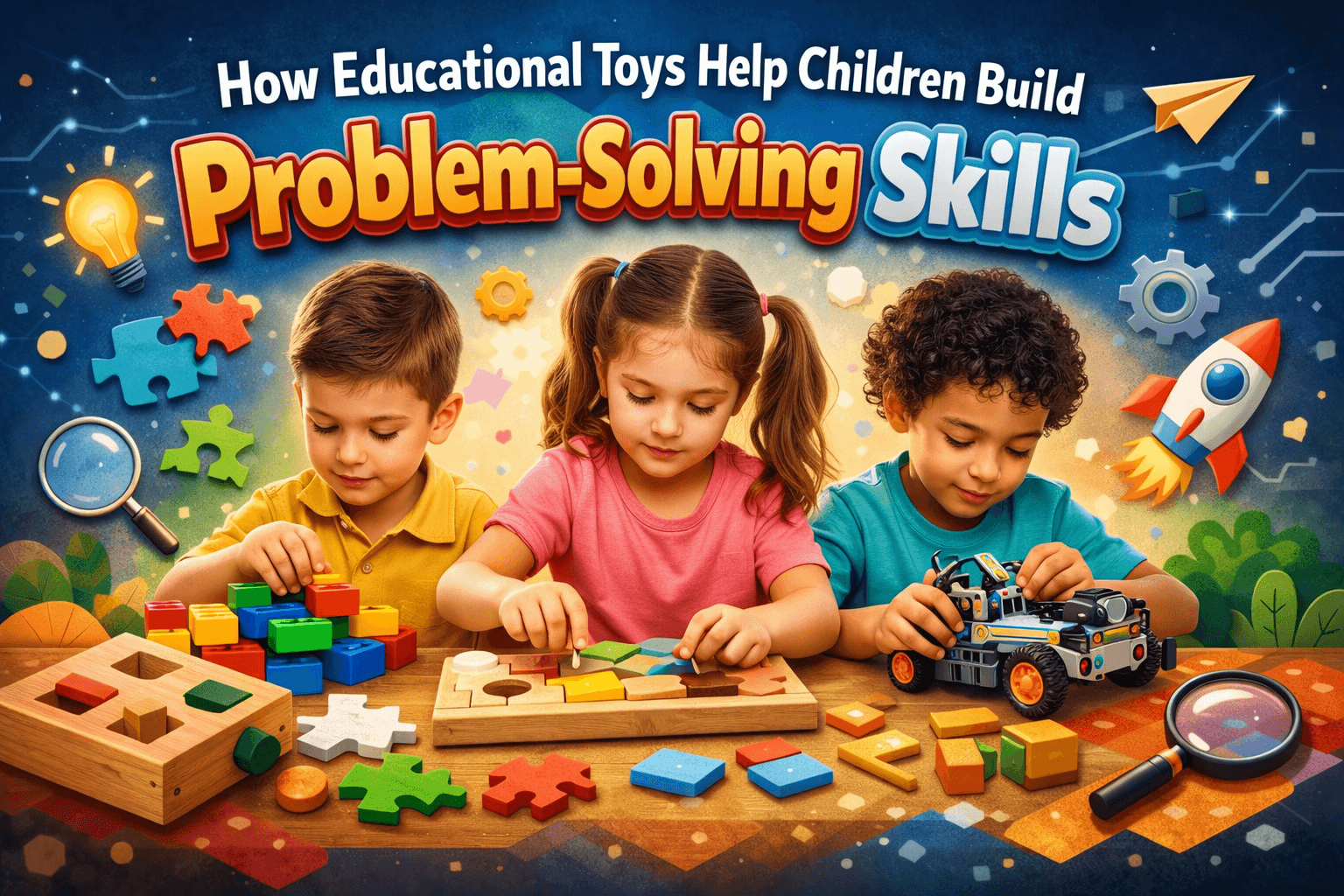
Children learn best when they are actively involved in the process. That is why play is such an important part of early learning. Among the many types of play materials available today, educational toys stand out because they do more than entertain. They encourage children to think, explore, test ideas, and find solutions on their own. One of the biggest benefits of educational toys is their ability to help children build problem-solving skills from an early age.
Problem-solving is an essential life skill. It helps children learn how to face challenges, make decisions, and think with confidence. Whether they are building a structure, solving a puzzle, or figuring out how a toy works, children are learning how to approach problems step by step. Educational toys make this learning process natural, enjoyable, and highly effective.
What Are Problem-Solving Skills in Children?
Problem-solving skills refer to a child’s ability to identify a challenge, think about possible solutions, try different approaches, and learn from the outcome. These skills are not only useful in academics but also in daily life. A child uses problem-solving when deciding how to complete a puzzle, balance blocks, connect pieces, or even organise play materials in a better way.
As children grow, strong problem-solving skills help them become more independent, creative, and confident. They begin to understand that not every challenge has an immediate answer, and that trying again is part of learning.
How Educational Toys Support Problem-Solving Development
Educational toys are designed to engage a child’s mind. Unlike passive toys, they require participation, decision-making, and active thinking. Here are some of the ways they help children strengthen problem-solving abilities.
Encouraging Trial and Error
One of the most effective ways children learn is through trial and error. Educational toys give children the freedom to experiment without fear of failure. If a block tower falls, they rebuild it. If puzzle pieces do not fit, they try again. This process teaches persistence and helps children understand that mistakes are part of finding the right solution.
Through repeated attempts, children learn to observe what works and what does not. This develops patience and logical thinking over time.
Promoting Critical Thinking
Many educational toys challenge children to think before they act. Toys such as puzzles, shape sorters, building sets, and coding kits require children to analyse the situation and choose the best next step. This encourages critical thinking, which is a key part of problem-solving.
For example, when a child is trying to complete a jigsaw puzzle, they must look at colours, shapes, and patterns to decide where each piece belongs. This helps them improve attention to detail and reasoning skills.
Teaching Cause and Effect
Understanding cause and effect is an important step in problem-solving. Educational toys often help children see how one action leads to another. When children press buttons, move parts, connect pieces, or build structures, they begin to understand the relationship between actions and outcomes.
This learning helps children make better decisions during play and in real-life situations. They start to ask useful questions such as, “What will happen if I do this?” or “Why did this not work?”
Improving Focus and Concentration
Solving a problem requires concentration. Educational toys hold a child’s attention and encourage them to stay engaged until they complete a task. Activities such as matching games, construction play, and logic-based toys improve focus by giving children a clear goal to achieve.
As concentration improves, children become better at following steps, remembering instructions, and finishing what they start. These are all important parts of effective problem-solving.
Building Confidence Through Achievement
When children solve a challenge on their own, they feel a sense of achievement. This boosts their self-confidence and motivates them to take on new tasks. Educational toys create small but meaningful opportunities for success, whether it is completing a maze, building a model, or solving a pattern game.
Confidence plays a major role in problem-solving because children are more willing to try when they believe they can succeed. Over time, this positive mindset helps them face more complex challenges with less hesitation.
Supporting Creative Thinking
Problem-solving is not always about finding one correct answer. Sometimes it involves trying new ideas and thinking creatively. Open-ended educational toys such as building blocks, construction kits, role-play sets, and art-based learning tools allow children to explore multiple possibilities.
A child may use the same set of materials to create different structures, stories, or solutions each time. This freedom develops creativity alongside logic, helping children approach problems from different angles.
Strengthening Fine Motor and Coordination Skills
Many educational toys also involve physical interaction, such as stacking, sorting, fitting, or connecting pieces. These activities improve fine motor skills and hand-eye coordination, which are important for completing tasks successfully.
When children can handle objects with better control, they are more able to execute their ideas and solve hands-on challenges with ease. Physical coordination supports mental development in a practical way.
Examples of Educational Toys That Build Problem-Solving Skills
Different types of educational toys support problem-solving in different ways. Some of the most effective options include:
Puzzles
Puzzles help children recognise shapes, patterns, and visual relationships. They also teach patience and reasoning.
Building Blocks and Construction Sets
These toys encourage children to plan, test, adjust, and create. They are excellent for spatial thinking and logical development.
Shape Sorters
Shape sorters help younger children understand comparison, matching, and basic reasoning.
STEM Toys
Science, technology, engineering, and maths toys introduce children to structured thinking, experimentation, and real-world problem-solving.
Coding and Robotics Kits
For older children, coding toys and robotics kits develop sequential thinking, logic, and analytical decision-making.
Board Games and Strategy Games
These help children think ahead, make decisions, and adapt their approach based on changing situations.
The Role of Parents and Teachers
Educational toys are most effective when adults provide encouragement without taking over. Parents and teachers can support problem-solving by asking open-ended questions during play, such as:
- What do you think will happen next?
- Why do you think that piece does not fit?
- Can you try another way?
- What could make it stronger or better?
These kinds of questions help children think more deeply and become active learners. It is important to give children time to explore and solve problems independently, while also offering guidance when needed.
Why Educational Toys Matter in Today’s Learning Environment
In today’s world, children need more than memorisation. They need skills that help them think, adapt, and respond to challenges with confidence. Problem-solving is one of the most valuable skills they can develop, and educational toys provide a strong foundation for that growth.
By combining play with purposeful learning, educational toys make skill-building enjoyable. They prepare children not only for school but also for everyday situations where thinking, decision-making, and creativity are needed.
Conclusion
Educational toys play a meaningful role in helping children build problem-solving skills. They encourage curiosity, improve critical thinking, teach cause and effect, and help children learn through hands-on experience. More importantly, they make the learning process enjoyable and rewarding.
When children are given the right educational toys, they do not just play. They explore, discover, question, test, and grow. These simple moments of play can shape strong thinkers who are better prepared for the future.

 English
 Arabic
 French
 Spanish
 Portuguese
 Deutsch
 Turkish
 Italiano
 Russian
 Romaian
 Portuguese (Brazil)
 Greek
Greek