


HDPE Pipe Fittings for Safe and Efficient Fluid Handling
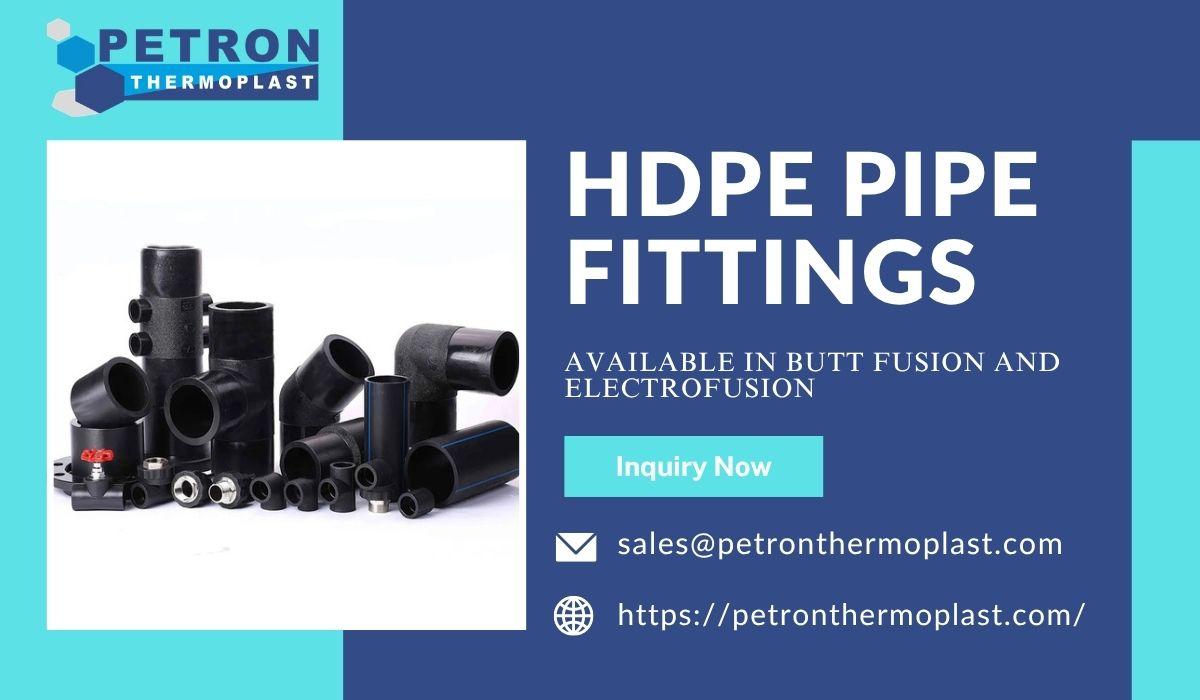
High-Density Polyethylene (HDPE) pipe fittings are integral components in modern piping systems, enabling secure connections, directional changes, and flow control across industrial, municipal, and infrastructure applications. Engineered for durability, chemical resistance, and leak-proof performance, HDPE pipe fittings ensure safe and efficient fluid handling in environments where reliability and long service life are critical.
From water distribution and wastewater management to chemical processing and mining operations, HDPE fittings provide a robust alternative to conventional metal and rigid plastic systems, delivering superior performance under demanding conditions.
Overview of HDPE Material
HDPE is a thermoplastic polymer known for its high strength-to-density ratio, flexibility, and resistance to corrosion and abrasion. These properties make it highly suitable for piping systems handling liquids and gases.
Key Material Properties
- Density: 0.94 – 0.97 g/cm³
- Tensile Strength: 20 – 37 MPa
- Operating Temperature Range: -40°C to +60°C
- Excellent resistance to chemicals and corrosion
- High impact strength and flexibility
- Low friction coefficient
HDPE’s molecular structure provides exceptional resistance to cracking and environmental stress, ensuring long-term reliability.
Role of Pipe Fittings in Fluid Handling Systems
Pipe fittings are used to connect, control, and direct fluid flow within a piping network. HDPE fittings perform several essential functions:
- Connecting pipes of the same or different diameters
- Changing flow direction (elbows, bends)
- Dividing or combining flow (tees, crosses)
- Terminating pipelines (caps, plugs)
- Enabling maintenance and expansion
Reliable fittings are critical for maintaining system integrity and preventing leaks or failures.
Types of HDPE Pipe Fittings
Elbows
- Used to change the direction of flow
- Available in 45°, 90°, and custom angles
Tees
- Allow branching of pipelines
- Available in equal and reducing configurations
Reducers
- Connect pipes of different diameters
- Ensure smooth flow transition
Couplers
- Join two pipe sections
- Provide strong and leak-proof connections
Flanges
- Facilitate easy assembly and disassembly
- Used in large diameter systems
End Caps
- Seal the end of pipelines
- Prevent leakage and contamination
Key Features of HDPE Pipe Fittings
Corrosion Resistance
HDPE fittings are resistant to:
- Acids and alkalis
- Salts and industrial chemicals
- Moisture and environmental exposure
This eliminates the risk of rust and degradation common in metal fittings.
Leak-Proof Jointing
- Fusion welding creates homogeneous joints
- Eliminates leakage points
- Ensures long-term reliability
Flexibility and Impact Resistance
- Absorbs mechanical stress and vibration
- Resistant to cracking under load
- Suitable for underground installations
Lightweight Construction
- Easy to transport and install
- Reduces labor and installation costs
Smooth Internal Surface
- Reduces friction losses
- Prevents scaling and buildup
- Maintains consistent flow rates
Jointing Methods
Butt Fusion
- Joins pipes and fittings by heating and pressing
- Creates strong, permanent joints
Electrofusion
- Uses embedded heating elements
- Suitable for precise and controlled connections
Compression Fittings
- Used for quick installation
- Ideal for smaller diameter pipes
Flanged Connections
- Used for easy maintenance and disassembly
- Suitable for large pipelines
Technical Specifications
Typical specifications for HDPE pipe fittings include:
- Material Grade: PE80 / PE100
- Size Range: 20 mm to 630 mm (or larger)
- Pressure Ratings: PN6, PN10, PN16
- Temperature Range: -40°C to +60°C
- Standards: ISO 4427, DIN 8074, ASTM
These specifications ensure compatibility with various industrial applications.
Applications in Fluid Handling
Water Supply Systems
HDPE fittings are widely used in municipal and industrial water distribution networks.
Wastewater and Sewage Systems
Resistant to corrosion and chemical exposure, making them ideal for effluent handling.
Chemical Processing Industry
Used for transporting aggressive chemicals safely.
Mining Industry
Suitable for slurry and abrasive material handling.
Agriculture and Irrigation
Ensures efficient water distribution in irrigation systems.
Oil and Gas Industry
Used in low to medium pressure fluid transport systems.
Advantages Over Conventional Materials
|
Parameter |
HDPE Fittings |
Metal Fittings |
|
Corrosion Resistance |
Excellent |
Prone to rust |
|
Weight |
Lightweight |
Heavy |
|
Flexibility |
High |
Low |
|
Maintenance |
Low |
High |
|
Service Life |
Long |
Moderate |
Installation Benefits
- Quick and easy installation
- Reduced need for heavy equipment
- Strong and leak-proof joints
- Adaptability to complex layouts
Maintenance and Lifecycle Performance
Maintenance Advantages
- No corrosion or scaling
- Minimal inspection requirements
- Easy repair and replacement
Lifecycle Benefits
- Service life up to 50 years under normal conditions
- Reduced downtime and operational costs
- Reliable performance in continuous systems
Quality Control and Standards
HDPE pipe fittings are manufactured under strict quality control processes.
Testing Procedures
- Hydrostatic pressure testing
- Dimensional inspection
- Material verification
- Joint strength testing
Standards Compliance
- ISO standards for piping systems
- ASTM and DIN specifications
- Industry-specific certifications
Customization Options
Manufacturers offer customization to meet project requirements:
- Custom sizes and pressure ratings
- Specialized fittings for complex layouts
- Integration with valves and accessories
- Tailored solutions for specific industries
Sustainability Benefits
- Recyclable material
- Long lifecycle reduces waste
- Energy-efficient manufacturing
- Reduced environmental impact
Role in Modern Infrastructure
HDPE pipe fittings are essential in modern infrastructure development:
- Smart water management systems
- Industrial automation networks
- Sustainable piping solutions
- Long-term infrastructure projects
Conclusion
HDPE pipe fittings provide a safe, efficient, and durable solution for fluid handling across a wide range of industrial applications. Their corrosion resistance, flexibility, and leak-proof performance make them superior to traditional materials in demanding environments.
With easy installation, low maintenance, and long service life, HDPE fittings contribute to improved system efficiency and reduced operational costs. Their adaptability and compliance with international standards make them a preferred choice for modern piping systems in water, chemical, and industrial sectors.

 Arabic
 French
 Spanish
 Portuguese
 Deutsch
 Turkish
 Dutch
Dutch
 Italiano
 Russian
 Romaian
 Portuguese (Brazil)
 Greek
Greek