


Surgical Drill Guides Explained: Benefits, Types, and Uses
Dental implant treatment has become more accurate and predictable thanks to digital technology. One of the most important tools behind this progress is the surgical drill guide. Although patients may not always see it, this device plays a major role in helping dentists place implants safely and precisely.
Whether you are a patient considering implants or a dental professional exploring modern workflows, this guide explains what surgical drill guides are, their benefits, types, and common uses.
What Is a Surgical Drill Guide?


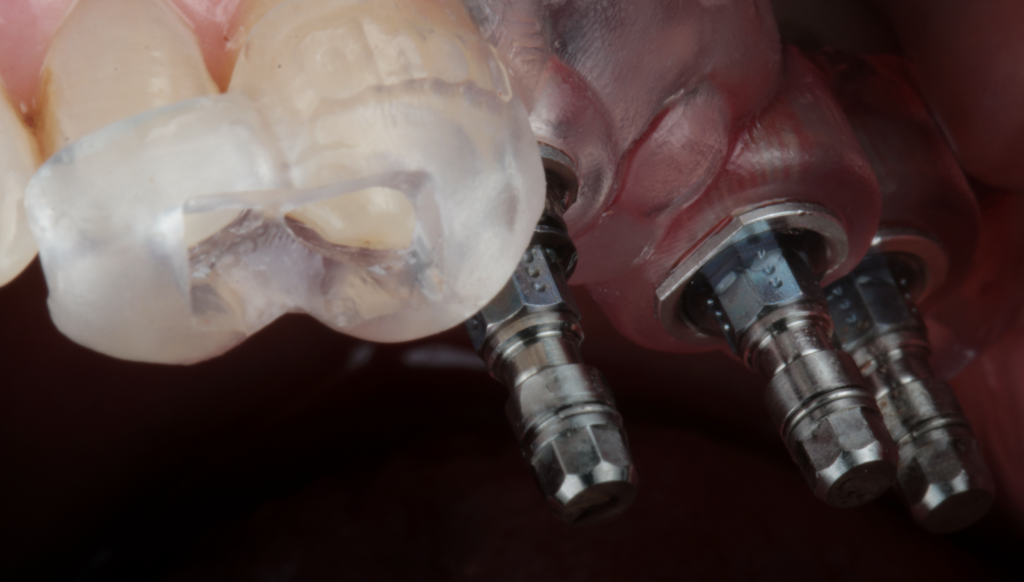
A surgical drill guide is a custom-made template used during dental implant surgery to direct the dental drill to the exact planned position, angle, and depth.
It is designed from digital scans or impressions and fits securely over the patient’s teeth, gums, or bone. Small metal or reinforced sleeves within the guide help guide the drilling instruments during surgery.
This improves precision and helps ensure the implant is placed according to the treatment plan.
Why Surgical Drill Guides Matter
Dental implants require highly accurate positioning. Even small placement errors can affect:
- Bite alignment
- Appearance of the final crown
- Implant stability
- Nearby teeth roots
- Nerves or sinus areas
- Long-term success of treatment
Surgical guides help reduce these risks by translating digital planning into real-world accuracy.
How Surgical Drill Guides Work
Step 1: Digital Imaging


The dentist collects detailed information using:
- Intraoral digital scans
- Traditional impressions
- 3D CBCT imaging of the jawbone
Step 2: Virtual Implant Planning
Special software is used to determine the ideal implant:
- Position
- Angle
- Depth
- Relation to bone and anatomy
Step 3: Guide Design
A custom guide is digitally created to match the patient’s mouth.
Step 4: Manufacturing
The guide is commonly produced using:
- 3D printing
- CAD/CAM milling
Step 5: Guided Surgery
During surgery, the guide is placed in the mouth and used to direct drilling and implant placement.
Benefits of Surgical Drill Guides
1. Greater Accuracy


One of the biggest advantages is highly precise implant positioning.
This helps improve:
- Final crown alignment
- Functional bite
- Long-term implant success
2. Improved Safety
Guides help the dentist avoid important anatomical structures such as:
- Nerves
- Sinus cavities
- Adjacent tooth roots
This can reduce surgical risks.
3. Minimally Invasive Treatment
In many cases, guided surgery allows smaller incisions or flapless implant placement.
Benefits may include:
- Less bleeding
- Reduced swelling
- Faster healing
- Greater comfort
4. Faster Surgical Procedure
Because planning is done in advance, surgery can often be more efficient and streamlined.
5. Better Aesthetic Results
Accurate implant placement helps support natural-looking crowns, especially in visible front teeth areas.
6. Predictable Outcomes
Digital planning plus guided execution creates more consistent treatment results.
Types of Surgical Drill Guides


1. Tooth-Supported Guides
These rest on existing teeth.
Best For:
- Patients missing one or several teeth
- Cases with stable remaining teeth
Benefits:
- Excellent stability
- High accuracy
2. Tissue-Supported Guides
These rest on the gums.
Best For:
- Patients missing all teeth in an arch
- Full denture or implant cases
They may be secured with fixation pins.
3. Bone-Supported Guides
These sit directly on exposed bone during surgery.
Best For:
- Complex surgical cases
- Significant bone loss situations
- Advanced implant reconstructions
4. Fully Guided Systems
These systems guide:
- Pilot drilling
- Sequential drilling
- Implant insertion
They offer maximum control during surgery.
Common Uses of Surgical Drill Guides


Surgical drill guides are commonly used for:
Single Tooth Implants
Ideal for replacing one missing tooth precisely.
Multiple Implants
Helpful when placing several implants with correct spacing.
Full-Arch Restorations
Used in advanced cases replacing all teeth in one arch.
Front Teeth Implants
Very useful where cosmetic positioning is critical.
Limited Bone Cases
Allows optimal implant angulation to use available bone.
Role of Dental Labs in Surgical Guides


Dental labs often play a key role by:
- Designing guides from digital data
- Printing or milling the guide
- Verifying fit and sleeve placement
- Coordinating with dentists
A skilled lab can significantly improve accuracy and workflow efficiency.
Are Surgical Guides Always Necessary?
Not every implant case requires a guide. Simple cases may sometimes be performed freehand by experienced clinicians.
However, guides are especially valuable when:
- Precision is critical
- Anatomy is complex
- Multiple implants are placed
- Immediate restorations are planned
- Cosmetic zones are involved
Limitations to Consider
Although highly beneficial, guides may involve:
- Additional planning time
- Extra cost
- Need for digital imaging
- Dependence on accurate data capture
Still, many clinicians consider these worthwhile for the added precision.
The Future of Guided Implant Surgery
The next generation of implant treatment may include:
- AI-assisted planning
- Real-time navigation systems
- Robotic guidance
- Faster in-office 3D printing
- Fully digital same-day workflows
Final Thoughts
Surgical drill guides are transforming dental implant treatment by making procedures safer, faster, and more accurate. They help translate careful digital planning into precise implant placement, improving comfort, function, and aesthetics.
Whether for a single implant or a full-mouth restoration, surgical guides are one of the most valuable tools in modern implant dentistry.

 English
 Arabic
 French
 Spanish
 Portuguese
 Deutsch
 Turkish
 Dutch
Dutch
 Italiano
 Russian
 Romaian
 Portuguese (Brazil)