


From Lassi to Kashmiri Chai: 7 Traditional Pakistani Drinks to Quench Your Thirst
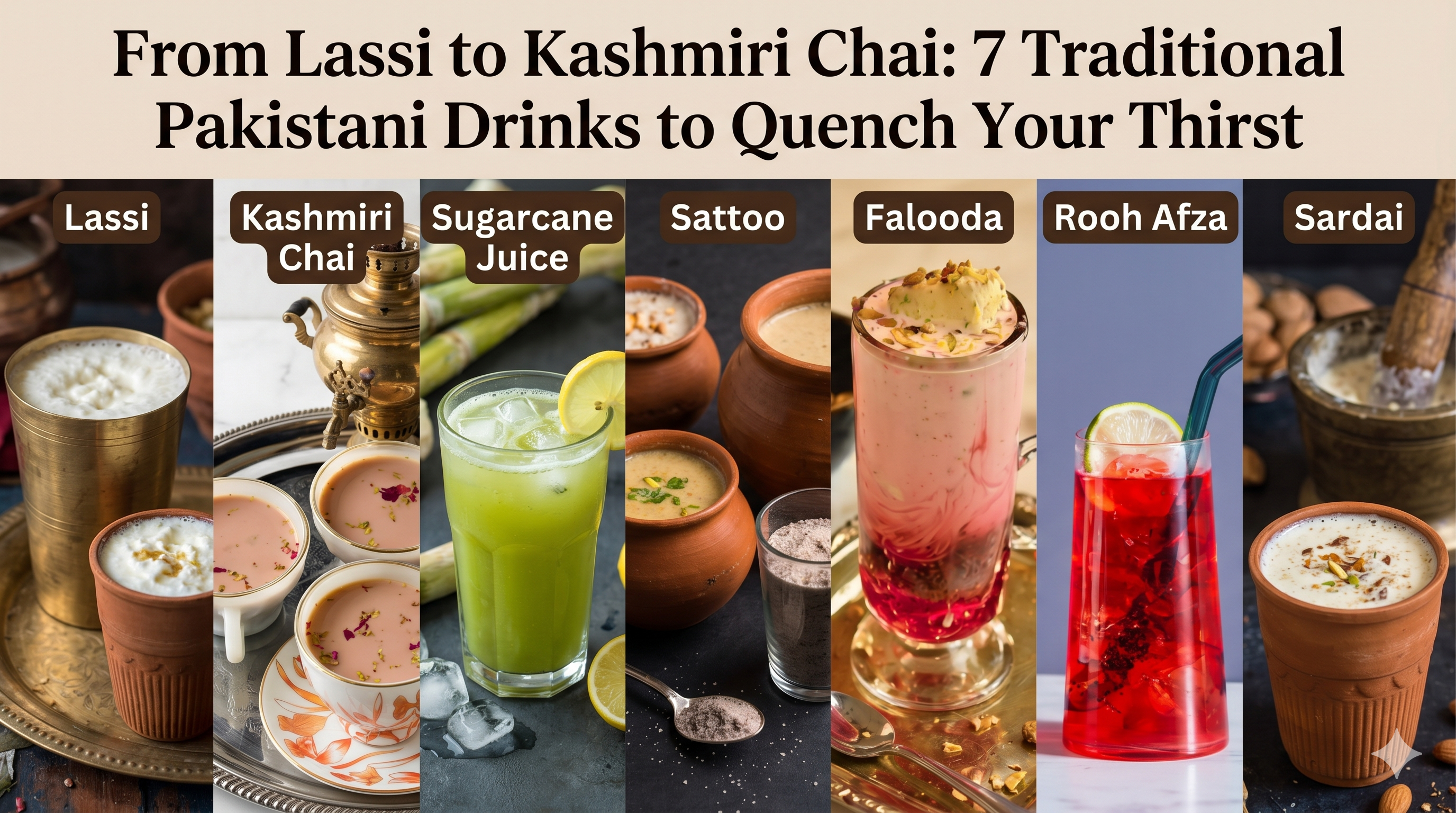
Imagine the bustling streets of Lahore, where the rhythmic clang of a lassi-maker's churn mixes with the cheerful calls of a chaiwala. Picture a cozy winter evening in Hunza, where families gather around a steaming pot of aromatic Qahwa. This is the heart of Pakistan's beverage culture, a world where drinks are not merely for hydration but are deeply woven into the social fabric of the nation.
These traditional Pakistani drinks represent a cherished form of Pakistani hospitality, a history passed down through generations, and a comforting ritual in daily life. They mark seasons, celebrate milestones, and offer solace. From the scorching summer heat to the crisp winter chill, there is a perfect, time-honored concoction waiting.
This journey will take us through seven iconic beverages that define the nation's palate. We will explore the luxurious pink Kashmiri Chai, the everyday comfort of Doodh Patti, and the ultimate summer coolers like Lassi and Gannay ka Ras. We will also uncover unique regional flavors perfect for special occasions.
Key Takeaways
- Chai is Central: Tea, in its various forms like Doodh Patti and Kashmiri Chai, is the cornerstone of social interaction and daily routine in Pakistan.
- Summer Relief: Drinks like Lassi, Sugarcane Juice (Gannay ka Ras), and Sattu are traditional, natural remedies designed to combat Pakistan's intense summer heat.
- The National Drink: Sugarcane Juice (Gannay ka Ras) is officially recognized as the national drink of Pakistan, celebrated for its refreshing qualities.
- The Secret of Pink Tea: The unique color of Kashmiri Chai comes from a chemical reaction between chlorophyll in specific tea leaves and baking soda, enhanced by a vigorous aeration process.
- More Than Refreshment: These beverages are integral to cultural events, from weddings featuring Imli Aloo Bukhara Sharbat to the welcoming tradition of serving Qahwa to guests in the north.
- Regional Diversity: The drinks showcase the country's diverse climate and culture, with warm, milky teas dominating in colder months and tangy, cool sharbats in the summer.
The Undisputed Champions of Chai
In Pakistan, chai is more than just a hot beverage; it is an institution. It fuels conversations, seals business deals, and is the default expression of hospitality. The country's love for tea is profound; a 2022 report from the Pakistan Bureau of Statistics noted that the nation imported tea worth over $590 million in a single fiscal year, underscoring its immense popularity.
1. Kashmiri Chai (Noon Chai): The Luxurious Pink Tea
What it is: Often called Noon Chai, Kashmiri Chai is a spectacular pink-hued tea renowned for its rich, creamy, and distinctively savory flavor. It's a slow-brewed masterpiece, a world away from your standard cup of black tea. Garnished with crushed pistachios and almonds, it is as much a feast for the eyes as it is for the palate.
Cultural Significance: This luxurious tea is a staple at weddings, special family gatherings, and festive occasions, particularly during the cold winter months. Its preparation is an art form, and serving it to guests is a sign of high honor and warm welcome. It signifies celebration and comfort.
Key Ingredients & The Secret to Pink: The magic of Kashmiri Chai begins with special green tea leaves, often sourced from Kashmir. The iconic pink color is not from an artificial dye but from a fascinating chemical process. When the tea leaves are boiled with a pinch of baking soda, a reaction occurs with the chlorophyll, which is then amplified through vigorous and repeated aeration—the act of pouring the tea from a height back and forth, introducing oxygen. This process, combined with the addition of cold water and finally milk, results in its signature rosy shade. Salt is a key ingredient, giving it the name 'noon' (salt) chai, though sweeter versions are also popular.
2. Doodh Patti: The Creamy, Everyday Comfort
What it is: Doodh Patti, which literally translates to 'milk and tea leaves', is the soul of Pakistani street-side cafes, known as dhabas. Unlike regular chai, where tea is brewed in water before adding milk, Doodh Patti is made by boiling the tea leaves directly in milk, often with sugar and cardamom. This method produces a much stronger, creamier, and more decadent cup of tea.
Cultural Significance: This is the go-to beverage for daily life. It is the fuel for late-night study sessions, the companion to a morning newspaper, and the centerpiece of long chats among friends. The simplicity of Doodh Patti makes it a symbol of uncomplicated comfort and connection, enjoyed equally in homes and bustling marketplaces.
Ultimate Summer Coolers to Beat the Heat
The Pakistani summer, or 'Garmi', can be notoriously intense, with temperatures soaring across the plains. To combat this heat, generations have turned to a variety of natural and profoundly refreshing beverages. These summer coolers are not just delicious; they are specifically designed to hydrate and restore energy.
3. Lassi: The Quintessential Yogurt Drink
What it is: Lassi is a world-famous yogurt drink that stands as a pillar of Pakistani refreshment. At its core, it is a simple blend of yogurt, water or milk, and flavorings, churned until frothy and smooth. It is a powerhouse of probiotics and calcium, offering both hydration and nutrition.
Cultural Significance: Deeply rooted in the agricultural heartland of Punjab, Lassi was traditionally the drink of farmers, providing sustained energy for a long day's work. Today, it is enjoyed nationwide, from roadside stalls to high-end restaurants. It is the perfect accompaniment to a spicy meal, helping to cool the palate and aid digestion. After a heavy and delicious meal at one of the many fantastic clifton restaurants, a tall, cool glass of Lassi is the perfect way to finish.
Variations: Lassi is wonderfully versatile. The two primary types are Namkeen Lassi (salty), often seasoned with cumin and mint, and Meethi Lassi (sweet), which is blended with sugar. In recent years, fruit-infused versions have become immensely popular, with Mango Lassi leading the charge as an international favorite.
4. Gannay ka Ras (Sugarcane Juice): The Official National Drink
What it is: Gannay ka Ras, or sugarcane juice, is widely recognized as the national drink of Pakistan. It is pure, unadulterated refreshment, made by pressing fresh sugarcane stalks through a large mechanical press. The sweet, grassy-flavored juice is typically served chilled with a squeeze of lime, a hint of ginger, and a sprinkle of black salt to balance the sweetness.
Cultural Significance: This drink is synonymous with Pakistani street food culture. The sight and sound of a vendor operating a sugarcane press is a common feature of any marketplace. Pakistan’s status as a top global producer, yielding over 80 million tonnes of sugarcane annually according to the Food and Agriculture Organization (FAO), ensures this drink is both affordable and widely available. It is the people's choice for instant energy and hydration on a scorching day.
5. Sattu: The Ancient Protein-Packed Cooler
What it is: Sattu is a humble yet incredibly effective ancient cooler made from roasted gram flour (besan). The flour is mixed into cold water to form a thin, porridge-like drink. It can be made sweet with sugar or jaggery, or savory with salt, cumin, and lemon juice.
Health Benefits: Sattu is prized for its amazing cooling properties and nutritional value. It is rich in protein, fiber, and essential minerals, making it a satiating drink that provides a slow release of energy. For centuries, it has been a summer staple for laborers and travelers, offering a quick, affordable, and deeply nourishing way to beat the heat.
Unique Beverages for Special Occasions and Regional Flavors
Beyond the daily staples, Pakistan boasts a collection of special beverages that highlight unique regional flavors and mark important cultural events.
6. Imli Aloo Bukhara Sharbat: The Tangy Wedding Favorite
What it is: This is a vibrant, sweet, and tangy sharbat (a sweet cordial) made from tamarind (imli) and dried plums or prunes (aloo bukhara). The fruits are soaked and then simmered with sugar and spices to create a thick concentrate, which is later diluted with cold water and ice. The result is a uniquely refreshing drink with a complex flavor profile.
Cultural Significance: This sharbat is a non-negotiable feature at Pakistani weddings and large festive gatherings, especially during the holy month of Ramadan. Its deep, rich color and tangy taste make it a celebratory drink that cuts through the richness of festive foods. It is often presented as a healthier, traditional alternative to commercial fizzy drinks.
7. Qahwa: Aromatic Green Tea of the North
What it is: Qahwa is a fragrant, light-bodied herbal tea that is central to the culture of Pakistan's northern regions, particularly Khyber Pakhtunkhwa. It is a simple green tea brewed with whole cardamom pods and sometimes a few strands of saffron or a cinnamon stick. Unlike other Pakistani teas, it is served without milk and often lightly sweetened with sugar or honey.
Cultural Significance: Qahwa is the ultimate symbol of hospitality in Pashtun culture. It is offered to guests upon arrival and is almost always served after meals to aid digestion. This aromatic brew, often accompanied by dates or nuts, is perfect for the cold climate of the mountainous north, offering warmth and a moment of peaceful reflection.
Conclusion: Experience Pakistan, One Sip at a Time
Our journey through Pakistan's traditional drinks reveals so much more than a list of recipes. We have seen how the creamy comfort of Doodh Patti fuels daily life, how the zesty punch of Gannay ka Ras offers relief from the summer sun, and how the elegant Kashmiri Chai adds a touch of luxury to celebrations. Each beverage tells a story of climate, agriculture, and cultural tradition.
These drinks are a direct reflection of the warmth and generosity of Pakistani hospitality. They are offered freely to guests, shared among family, and enjoyed in the communal spaces of dhabas and bazaars. They are a liquid narrative of the nation's rich heritage.
So, the next time you seek refreshment, look beyond the usual options. We encourage you to try one of these traditional recipes at home or to seek them out on your travels. What is your favorite Pakistani drink? Share your thoughts and experiences in the comments below!
Frequently Asked Questions
What is the official national drink of Pakistan?
Sugarcane Juice, known locally as Gannay ka Ras, is widely considered the national drink of Pakistan. Its immense popularity, wide availability, and status as a quintessential street-side refresher have cemented its place in the nation's identity.
What makes Kashmiri Chai pink?
The characteristic pink color is the result of science, not artificial coloring. It is a chemical reaction between the chlorophyll present in the specific green tea leaves and a pinch of baking soda. This reaction is magnified by a process of aeration, where the tea is repeatedly poured from a height, which introduces oxygen and deepens the rosy hue before milk is added.
Are alcoholic drinks available in Pakistan?
The sale and consumption of alcohol are restricted for the Muslim majority population due to legal and religious reasons. This article focuses on the rich and diverse tradition of non-alcoholic beverages that are central to Pakistani social life, culture, and hospitality.
What is the difference between Doodh Patti and regular chai?
The primary difference lies in the brewing method. For Doodh Patti, tea leaves are boiled directly and exclusively in milk from the start, resulting in a very strong, rich, and creamy texture. For regular chai (or 'mix chai'), the tea leaves are typically brewed in water first to create a liquor, and milk is added later in the process.

 English
 Arabic
 French
 Spanish
 Portuguese
 Deutsch
 Turkish
 Dutch
Dutch
 Russian
 Romaian
 Portuguese (Brazil)
 Greek
Greek