


What is the role of CROs in drug development?
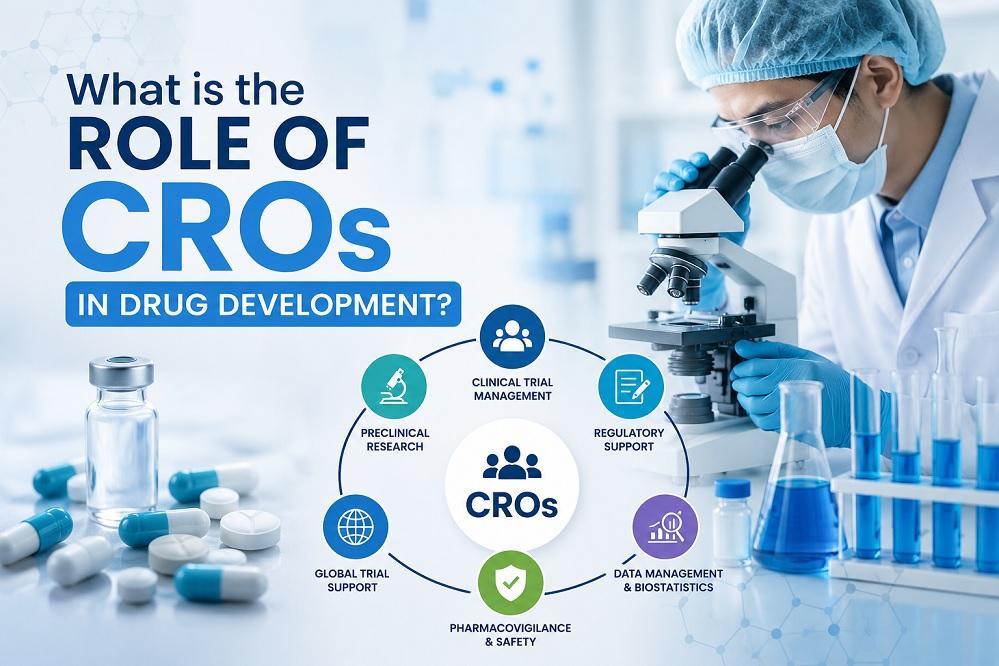
It takes years of research, testing and regulatory review for drugs to reach the market. Different stages of this process are often managed by Contract Research Organizations (CROs) in the pharmaceutical/biotech industry. The CROs assist businesses in executing studies, gathering data, overseeing clinical trials, and fulfilling regulatory needs.
Today, the role of CROs is an integral part of drug development processes, which also helps these companies reduce costs and enhance efficiency.
What Is a CRO?
A Contract Research Organization is a company that offers Research and Development services to pharmaceutical, biotechnology and medical device companies.
CROs supply services in the field of drug development, including:
- Preclinical research
- Clinical trials
- Regulatory support
- Data management
- Medical writing
- Pharmacovigilance
- Market access studies
Drug companies do not build large in-house teams, but rather hire out certain tasks to the CRO who has the specific expertise.
Why Cros Are an Essential Component of a Drug Development Process
It is very expensive and time consuming to develop a new drug. It takes over 10 years to get a drug to the market. CROs decrease delays and enhance workflow through the development stages.
Here’s why CROs are important:
Improved adherence to regulatory standards and approvals.
1.Faster Clinical Trial Execution
The process of patient recruitment, clinical site management, monitoring and reporting are all clinical trial related operations. CROs already have a network of hospital, investigators and research sites. This facilitates quicker initiation of trials for companies.
They also employ standardized systems to keep operations in trials efficient.
2. Access to Professional Development Opportunities
The development of a new drug involves a variety of disciplines—including regulatory affairs, biostatistics, toxicology and data analysis. CROs gather teams from all therapeutic areas.
This allows companies to save on having large, permanent staff for short-term projects.
3. Cost Management
The development of internal infrastructure for research and clinical trials is costly. Companies can outsource the work as per the requirement of the project with the help of CROs.
This lowers the expenses involved in operation and facilitates smaller biotech companies to deal with budget more effectively.
4. Global Clinical Trial Support
A large number of clinical studies are conducted in several countries. By managing local regulations, ethics approvals and patient recruitment, CROs can assist companies in managing international trials.
Global CRO networks enhance trial reach and diversity.
The role of CROs throughout the stages of drug development.
Role of CROs Across Drug Development Stages
CROs are involved in the majority of aspects of drug development.
Preclinical Research
Prior to human testing, researchers investigate the safety and biological activity of a drug candidate.
CROs support:
- Toxicology studies
- Pharmacokinetic studies
- Laboratory testing
- Animal studies
- Bioanalytical services
These studies are used to decide if a drug is “safe enough” for clinical trials.
Clinical Trials
The clinical trials are divided into various phases and CROs can help manage every phase.
Phase I
First in human studies to assess safety and dosage are performed by CROs.
Phase II
They assist to evaluate the effectiveness of a drug and to track side effects in a larger number of patients.
Phase III
CROs run large trials at several sites prior to regulatory submission.
Phase IV
Once approved, CROs will help to conduct post-marketing surveillance and long-term safety monitoring.
Regulatory Support
Relax no regulations of a drug's approval. CROs can assist businesses with creating documents for agencies like:
- US FDA
- EMA
- CDSCO
- MHRA
They support:
- Regulatory submissions
- Clinical study reports
- IND and NDA filings
- Compliance management
This helps to minimize delays in the approval process.
Data Management and Biostatistics
A lot of data is produced in clinical trials. This information is organized, cleaned, and analyzed by CROs.
Their responsibilities include:
- Electronic data capture
- Statistical analysis
- Database management
- Clinical data validation
Regulatory approval and product safety depends on accurate data.
Pharmacovigilance Services
Once a drug is marketed, the companies are required to continue to monitor for safety. CROs aid in monitoring and reporting adverse drug reactions.
This includes:
- Safety reporting
- Risk management
- Signal detection
- Post-market surveillance
These services help maintain patient safety and regulatory compliance.
How Technology Is Transforming Cro Operations
The impact of technology on CRO operations.
Technology has enhanced the research and clinical trial management within CROs.
Modern CROs use:
- AI-based data analysis
- Electronic trial master files
- Remote monitoring systems
- Real-world evidence platforms
- Patient recruitment solution for digital platforms
These technologies ensure data accuracy and save trial delays.
Challenges Faced by CROs
While CROs have numerous benefits, there are also drawbacks.
Patient Recruitment Delays
One of the largest challenges in conducting a clinical trial is determining who is eligible for the trial.
Regulatory Complexity
Global studies are more complex, as different countries have different rules to follow.
Data Security
Patient information is critical in clinical trials. It is crucial for CROs to have robust cybersecurity and compliance protocols.
Competition
The CRO market is still expanding and there is an increasing demand for quicker and more economical services.
How Databases Can Assist in CRO Research
Availability of reliable market intelligence and company databases is becoming important in drug development research. Researchers and pharmaceutical companies can use the Clival Database to gain access to clinical trial information, pharma companies, APIs, regulatory updates, and industry insights.
These databases facilitate quicker decision-making and research planning.
Future of CROs in Drug Development
As pharmaceutical companies seek to expedite drug approvals and expand to global markets, the need for CRO services remains strong.
CROs will be more involved in:
- Decentralized clinical trials
- AI-driven research
- Precision medicine studies
- Rare disease research
- Real-world evidence collection
In the increasingly complex drug development landscape, the partnerships between pharmaceutical/biotech and CROs will continue to be vital.
Conclusion
A crucial component of today's drug development process are CROs. They play a vital role in making pharmaceutical firms more efficient in conducting clinical trials, regulatory processes, data analysis, and monitoring for safety and other issues.
CROs can provide specialized expertise, operational support, and ultimately cut development time and enhance research quality. And with growing use of digital tools and research databases like Clival Database, the drug development process continues to become more data-driven and efficient.

 English
 Arabic
 French
 Spanish
 Deutsch
 Turkish
 Dutch
Dutch
 Italiano
 Russian
 Romaian
 Portuguese (Brazil)
 Greek
Greek