


Squeezing Fun Out of Physics: A Casual Gamer’s Guide to the Watermelon Puzzle Craze
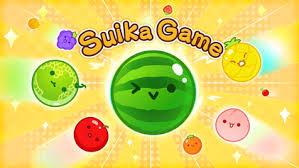
If you have spent any time in cozy gaming communities or watched streamers over the past few months, you have probably noticed a brightly colored, deceptively simple puzzle game taking the internet by storm. At first glance, it looks like a cute children’s game filled with smiling fruits. But within minutes of picking it up, you realize it is a deeply engaging, physics-based puzzle that challenges your spatial awareness and planning skills.
I am talking, of course, about the watermelon puzzle genre. Today, I want to take a deep dive into how to play and truly experience this delightful genre, using the incredibly popular Suika Game as our main example. Whether you are playing on a console during your commute or in a browser window during a lunch break, here is everything you need to know about mastering the art of the watermelon.
Understanding the Gameplay: Tetris Meets 2048
The core concept of the watermelon puzzle is brilliantly simple, effectively combining the drop-down mechanics of Tetris with the merging math of 2048. You start with an empty, rectangular box. At the top of the screen, a cute little cloud (or a similar dropping mechanism) holds a random, small fruit—usually a cherry, strawberry, or grape.
Your objective is to choose a spot and drop the fruit into the box. When two identical fruits touch, they merge with a satisfying "pop" to form the next fruit in the evolutionary chain. Two cherries make a strawberry; two strawberries make a grape, and so on, culminating in the massive, box-filling watermelon.
However, there is a catch. The fruits are round, squishy, and governed by a bouncy physics engine. When they drop, they roll, slide, and squeeze into gaps. As you merge larger fruits, the box becomes increasingly crowded. If any fruit crosses the warning line at the very top of the box, it is game over. Your ultimate goal is not just to survive, but to rack up a high score and, ideally, create the elusive watermelon before your box overflows.
Essential Tips for Chasing the Watermelon
Getting a high score might seem entirely dependent on luck, but there is actually a distinct strategy to managing your fruit box. If you are struggling to get past the pineapple or the peach, here are some tips to help you optimize your drops.
1. Anchor Your Heaviest Fruits in the Corners
The most common mistake new players make is dropping fruits randomly in the center of the box. As your fruits grow larger, they take up massive amounts of space. If a large fruit is sitting in the middle, it divides your playing field in half, making it incredibly difficult to merge smaller fruits on either side. Try to build your largest fruits in one of the bottom corners. This keeps them out of the way and allows you to use the rest of the box for combining smaller items.
2. Build a Sloping Hierarchy
Think of your fruit arrangement like a staircase. Ideally, you want your largest fruit in the corner, the second largest sitting right next to it, the third largest next to that, and so on. This creates a natural slope. When you finally merge two smaller fruits at the top of the slope, the resulting larger fruit will often roll downhill, bumping into its identical twin and triggering a massive, highly satisfying chain reaction of merges.
3. Respect the Physics
The bouncy nature of the game is both your best friend and your worst enemy. When two fruits merge, the new, larger fruit expands. This sudden expansion exerts force on everything around it. If your box is getting full, a merge near the top can act like a tiny explosion, launching a stray cherry right over the game-over line. Always leave a little breathing room near the top, and try to anticipate how a merge will shift the surrounding pile.
4. Don't Ignore the "Next" Indicator
Just like in Tetris, knowing what piece is coming next is crucial. If you know a larger fruit like an apple is up next, you might want to save a specific gap for it rather than filling it with a cherry. Planning one or two moves ahead elevates your game from chaotic dropping to calculated strategy.
Conclusion: A Perfect Bite-Sized Escape
What makes the watermelon puzzle so universally appealing is its perfect balance of relaxation and mental stimulation. The cheerful graphics and gentle sound effects create a low-stakes environment, yet the physics-based gameplay requires just enough focus to help you disconnect from the stresses of daily life.
It is the kind of game where you constantly tell yourself, "Just one more try," because you know you can do just a little bit better next time. The joy of finally watching two massive honeydews fuse into a giant, smiling watermelon is genuinely triumphant.
If you haven't yet dipped your toes into this fruity phenomenon, I highly recommend giving it a spin. It is accessible, instantly understandable, and wonderfully challenging. So load up your browser, drop some cherries, and see if you have what it takes to build the ultimate fruit. Happy merging, and feel free to share your high scores in the comments below!

 English
 Arabic
 French
 Portuguese
 Deutsch
 Turkish
 Dutch
Dutch
 Italiano
 Russian
 Romaian
 Portuguese (Brazil)
 Greek
Greek