Many optical systems fail to deliver accurate performance because of poor material selection. In industries like medical imaging, aerospace, defense, laser technology, and scientific instruments, even a small optical defect can reduce system efficiency and measurement accuracy. One major reason behind these failures is low-quality optical window glass.
Scratches, weak light transmission, coating damage, and thermal instability can affect the performance of sensitive optical equipment. These issues may lead to inaccurate imaging, system downtime, and increased maintenance costs for businesses.
To avoid these problems, manufacturers and engineers are investing in advanced optical window glass solutions that provide higher durability, stable transmission, and reliable environmental protection. As precision optical systems continue growing across industries, selecting the right optical window glass has become a critical decision for long-term performance and product reliability.
What Is Optical Window Glass?
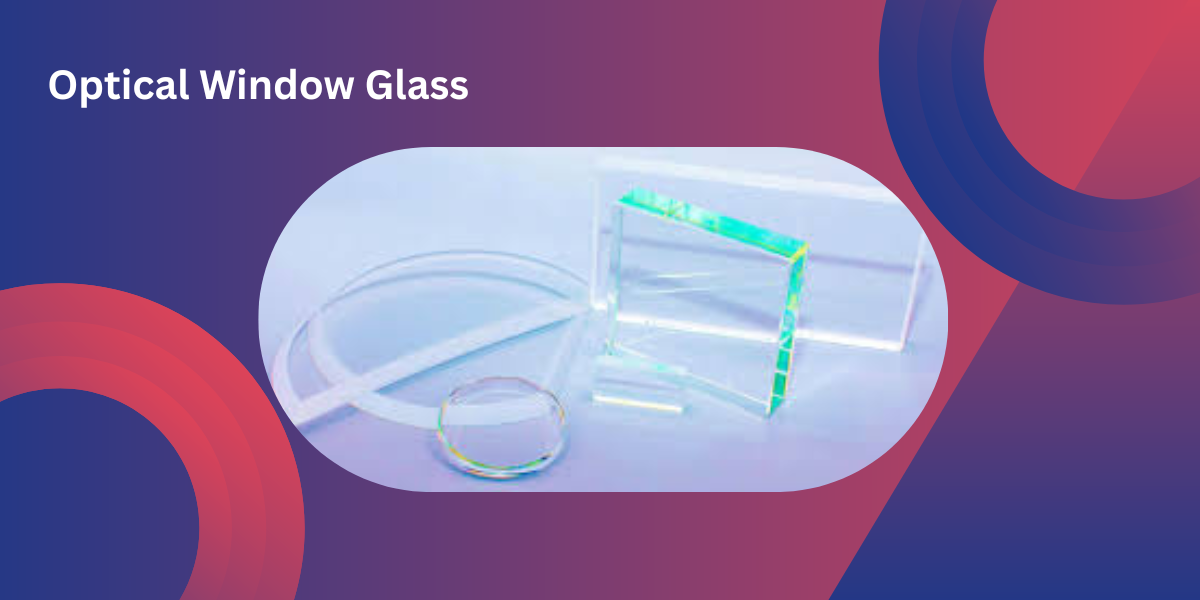
Optical window glass is a transparent optical material designed to protect sensitive components while allowing light to pass through with minimal distortion. Unlike standard glass, optical window glass is manufactured with precise optical properties for scientific, industrial, and imaging applications.
These optical windows are commonly used in:
- Laser systems
- Medical imaging equipment
- Aerospace optics
- Infrared sensors
- Industrial cameras
- Defense and surveillance systems
The main purpose of optical window glass is to provide environmental protection without negatively affecting optical performance.
Common Problems Caused by Poor Optical Window Glass
Many businesses face operational problems because of low-quality or improperly selected optical glass materials.
Low Light Transmission
Poor glass quality can reduce light efficiency, affecting imaging clarity and sensor accuracy.
Surface Scratches and Damage
Weak materials may become scratched during cleaning, handling, or industrial use.
Thermal Instability
Temperature changes can cause expansion or distortion, reducing optical precision.
Reflection and Glare Issues
Improper coatings may increase unwanted reflections that affect image quality.
Environmental Damage
Moisture, chemicals, dust, and pressure can damage sensitive optical systems if the protective window is unreliable.
How Optical Window Glass Solves These Problems
Modern optical window glass is engineered to support stable optical performance in demanding environments.
High Optical Clarity
Advanced manufacturing processes improve transparency and reduce image distortion.
Better Light Transmission
High-quality optical windows allow maximum light efficiency for imaging and sensing systems.
Strong Surface Durability
Special coatings improve scratch resistance and extend product lifespan.
Thermal Resistance
Optical window glass materials can maintain stability under changing temperatures and harsh environments.
Improved Anti-Reflective Performance
Advanced coating technology helps reduce glare and unwanted reflections.
Industries Using Optical Window Glass
The demand for optical window glass continues increasing because many industries rely on precision optical systems.
Medical Equipment Industry
Medical imaging systems require accurate light transmission and distortion-free optical performance.
Aerospace and Aviation
Aircraft sensors and aerospace optics need strong materials that can handle extreme environments.
Defense and Security
Surveillance systems and military optics depend on durable and reliable optical protection.
Laser Technology
Laser systems require optical windows that maintain beam quality and thermal stability.
Industrial Automation
Machine vision systems and industrial cameras use optical windows for environmental protection and image accuracy.
Important Factors Businesses Should Consider
Selecting the right optical window glass is important for system reliability and long-term operational performance.
Optical Transmission Quality
Businesses should evaluate transmission efficiency based on application wavelength requirements.
Material Type
Different materials provide different optical and thermal properties. Common options include fused silica, sapphire, and borosilicate glass.
Coating Performance
Anti-reflective and protective coatings improve durability and imaging performance.
Environmental Resistance
The optical window should resist moisture, dust, pressure, and chemical exposure.
Dimensional Accuracy
Precision manufacturing helps maintain stable optical alignment and performance.
Challenges Businesses Still Face
Although optical window glass provides many advantages, some challenges still exist during selection and manufacturing.
Higher Production Costs
Precision optical materials and advanced coatings may increase manufacturing expenses.
Custom Design Requirements
Some applications require specialized shapes, coatings, or wavelength compatibility.
Supplier Quality Differences
Not all manufacturers provide consistent optical accuracy or long-term quality control.
Best Strategy for Long-Term Optical Performance
Businesses should avoid choosing optical window glass based only on low pricing. Inferior optical materials can reduce overall system performance and increase maintenance risks.
The best approach is to work with experienced optical manufacturers that provide:
- Certified optical quality
- Precision coating technology
- Material customization support
- Reliable manufacturing standards
- Long-term technical assistance
This strategy helps businesses improve system reliability while reducing operational failure risks.
Future of Optical Window Glass Technology
The future of optical window glass technology is moving toward higher precision, stronger durability, and smarter optical coatings. Industries are demanding materials that support advanced imaging, AI-powered vision systems, and high-performance sensors.
Future developments may include:
- Better anti-reflective coatings
- Improved thermal stability
- Higher scratch resistance
- Advanced infrared compatibility
- More efficient manufacturing processes
These improvements will support next-generation optical systems across multiple industries.
Conclusion
Poor-quality optical window glass can reduce imaging accuracy, damage sensitive components, and increase maintenance costs. Advanced optical window glass solutions solve these problems by improving light transmission, durability, thermal stability, and environmental protection.
For businesses working in aerospace, medical imaging, defense, industrial automation, and laser technology, selecting the right optical window glass is essential for long-term system performance and reliability. As precision optical systems continue advancing, high-quality optical window glass will remain a critical component in modern industrial and scientific applications.




 English
 Arabic
 French
 Spanish
 Portuguese
 Deutsch
 Dutch
Dutch
 Italiano
 Russian
 Romaian
 Portuguese (Brazil)
 Greek
Greek