


How Medical Necessity Documentation Strengthens Wound Treatment Claims
Introduction
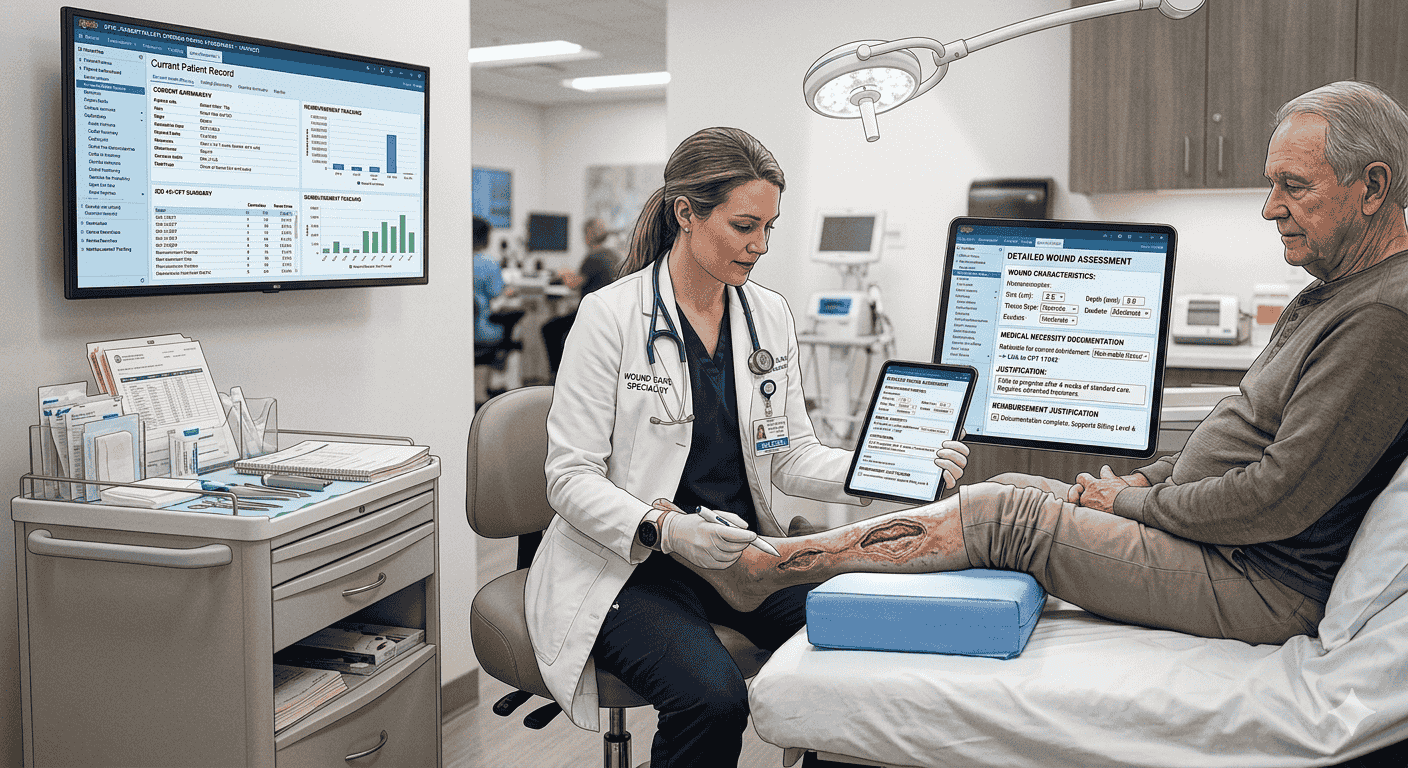
In today’s complex healthcare environment, advanced wound care providers face not only clinical challenges but also administrative and financial hurdles. Chronic wounds, including diabetic foot ulcers, pressure injuries, and venous ulcers, require meticulous management and documentation. While clinicians focus on patient outcomes, insurers and payers evaluate claims based on the evidence provided in medical records. This makes medical necessity documentation one of the most critical components of successful reimbursement.
Medical necessity documentation is more than just a procedural formality; it is the foundation for ensuring that wound care services are reimbursed accurately and timely. Payers require detailed records that explain the patient’s condition, the rationale for each treatment, and the measurable outcomes achieved. Without robust documentation, even clinically appropriate interventions can be denied, delayed, or receive reduced payments.
For advanced wound care providers, maintaining compliance with payer policies while optimizing revenue is essential. Structured and thorough documentation bridges the gap between clinical excellence and financial sustainability. Professional wound care billing services often assist practices by reviewing documentation, ensuring proper coding, and verifying that claims meet medical necessity standards.
This article explores the importance of medical necessity documentation in wound care, its impact on claims, best practices for recording clinical details, and strategies for enhancing reimbursement accuracy while maintaining regulatory compliance.
The Role of Medical Necessity in Wound Care Reimbursement
Medical necessity serves as the linchpin of insurance reimbursement. For wound care, payers require documented evidence that supports the need for treatments such as:
-
Debridement procedures
-
Application of advanced dressings
-
Skin substitutes and grafts
-
Negative pressure wound therapy
Documentation must clearly demonstrate that each treatment is reasonable, necessary, and consistent with clinical guidelines. It is the bridge between clinical care and financial approval.
When claims are submitted without sufficient evidence of medical necessity, payers may:
-
Deny the claim
-
Request additional information
-
Reduce reimbursement
-
Conduct audits
Accurate medical necessity documentation not only protects revenue but also ensures that providers remain compliant with payer policies and regulatory standards.
Key Components of Medical Necessity Documentation
Proper documentation requires a comprehensive approach that captures all relevant aspects of wound care. Key components include:
1. Comprehensive Patient Assessment
-
Relevant medical history affecting wound healing, such as diabetes, vascular disease, or neuropathy
-
Previous treatments and outcomes
-
Comorbid conditions that impact wound management
2. Detailed Wound Evaluation
-
Wound size, depth, and location
-
Tissue type and condition (necrotic, granulating, or epithelialized)
-
Presence of infection or inflammation
-
Exudate levels and surrounding skin condition
3. Justification for Treatment
-
Clinical rationale for each procedure or therapy
-
Evidence of failed conservative measures if advanced treatment is applied
-
Alignment with best practice guidelines
4. Treatment and Procedure Documentation
-
Exact methods used, including surgical debridement, dressing application, or skin grafting
-
Tools and techniques employed
-
Depth of debridement or tissue affected
-
Patient response and tolerance
5. Progress and Follow-Up
-
Ongoing assessment of wound healing
-
Adjustments to the care plan based on patient response
-
Photographic evidence or objective measurements when applicable
Structured documentation of these components strengthens claims by showing that each service is clinically necessary and appropriately applied.
How Documentation Supports CPT and ICD-10 Coding
Medical coding translates clinical services into standardized codes used for billing. Accurate CPT and ICD-10 coding depends directly on detailed documentation.
For instance:
-
CPT codes for debridement are determined by wound depth and tissue type.
-
ICD-10 codes identify the wound type, location, and stage.
When medical necessity is clearly documented, coding specialists can confidently assign the correct codes. This reduces coding errors and minimizes the likelihood of claim denials. Professional wound care billing services often review clinical notes to ensure coding aligns with documented services.
Reducing Claim Denials Through Documentation
Claim denials are a significant source of financial loss for wound care providers. Common causes include:
-
Insufficient description of wound severity
-
Missing evidence of failed conservative care
-
Lack of documentation for repeated or advanced procedures
By maintaining detailed, structured documentation, providers can:
-
Demonstrate the necessity of each service
-
Align with payer guidelines
-
Minimize audit triggers
-
Accelerate reimbursement
Well-documented claims reduce administrative workload and improve overall financial performance for wound care programs.
Enhancing Compliance and Audit Readiness
Medical necessity documentation is also a critical component of compliance. Auditors and regulatory agencies frequently review wound care claims to ensure adherence to:
-
Medicare and Medicaid guidelines
-
Commercial payer policies
-
Clinical practice standards
Structured documentation allows providers to demonstrate that all billed services are justified, medically necessary, and properly coded. It strengthens audit defense and protects the practice from potential penalties or recoupments.
Best Practices for Medical Necessity Documentation
To optimize claims and ensure compliance, providers should implement best practices for documentation:
Use Standardized Templates
Structured templates capture all essential details consistently across patient encounters.
Train Clinicians
Educate providers on documentation requirements and the connection between clinical notes, coding, and reimbursement.
Conduct Regular Audits
Internal reviews identify gaps and improve documentation quality before claims are submitted.
Collaborate with Billing Services
Partnering with specialized wound care billing services ensures documentation meets payer standards and coding accuracy.
Leverage Technology
Electronic health records (EHRs) with structured documentation fields improve data capture and reduce errors.
Leveraging Documentation for Advanced Wound Treatments
Advanced wound therapies—such as negative pressure wound therapy, skin grafts, and cellular tissue applications—are subject to stricter documentation scrutiny. Payers require evidence of:
-
Medical necessity
-
Appropriate selection criteria
-
Documented failure of less intensive treatments
-
Measurable outcomes
High-quality documentation for these interventions demonstrates that services are justified and supports higher reimbursement rates.
The Financial Impact of Strong Documentation
Accurate medical necessity documentation has a direct effect on financial performance:
-
Reduces claim denials and resubmissions
-
Speeds up reimbursement timelines
-
Improves revenue cycle efficiency
-
Minimizes audit risks and financial penalties
In wound care practices, even small improvements in documentation quality can have significant revenue implications due to the frequency and complexity of treatments.
Integrating Documentation Into Clinical Workflows
To maximize the benefits of medical necessity documentation, it should be integrated seamlessly into clinical workflows:
-
Capture data at the point of care using EHR templates
-
Record objective wound measurements and photographs
-
Document rationale for treatment choices in real time
-
Maintain communication between clinicians and coding teams
Integration ensures that documentation is accurate, complete, and supports reimbursement without adding unnecessary administrative burden.
Future Trends in Wound Care Documentation
Healthcare technology continues to advance documentation practices. Emerging trends include:
-
AI-assisted wound measurement and documentation
-
Automated coding suggestions based on clinical notes
-
Predictive analytics for wound healing outcomes
-
Enhanced telehealth documentation tools
Providers who adopt these technologies will improve documentation efficiency, coding accuracy, and claims reimbursement, while also enhancing patient care.
Conclusion
Medical necessity documentation is a critical factor in strengthening wound treatment claims. It ensures that services are justified, appropriately coded, and fully reimbursed. For advanced wound care providers, structured and detailed documentation not only improves financial performance but also supports compliance and audit readiness.
By implementing standardized documentation practices, leveraging technology, and collaborating with professional wound care billing services, healthcare organizations can reduce claim denials, optimize revenue, and enhance operational efficiency. Strong documentation ultimately aligns clinical excellence with financial sustainability, enabling wound care practices to focus on high-quality patient care while maintaining a robust revenue cycle.

 English
 Arabic
 French
 Spanish
 Portuguese
 Deutsch
 Turkish
 Dutch
Dutch
 Russian
 Romaian
 Portuguese (Brazil)
 Greek
Greek