


Mastering Precision: The Spot Resistance Welder for Modern Manufacturing
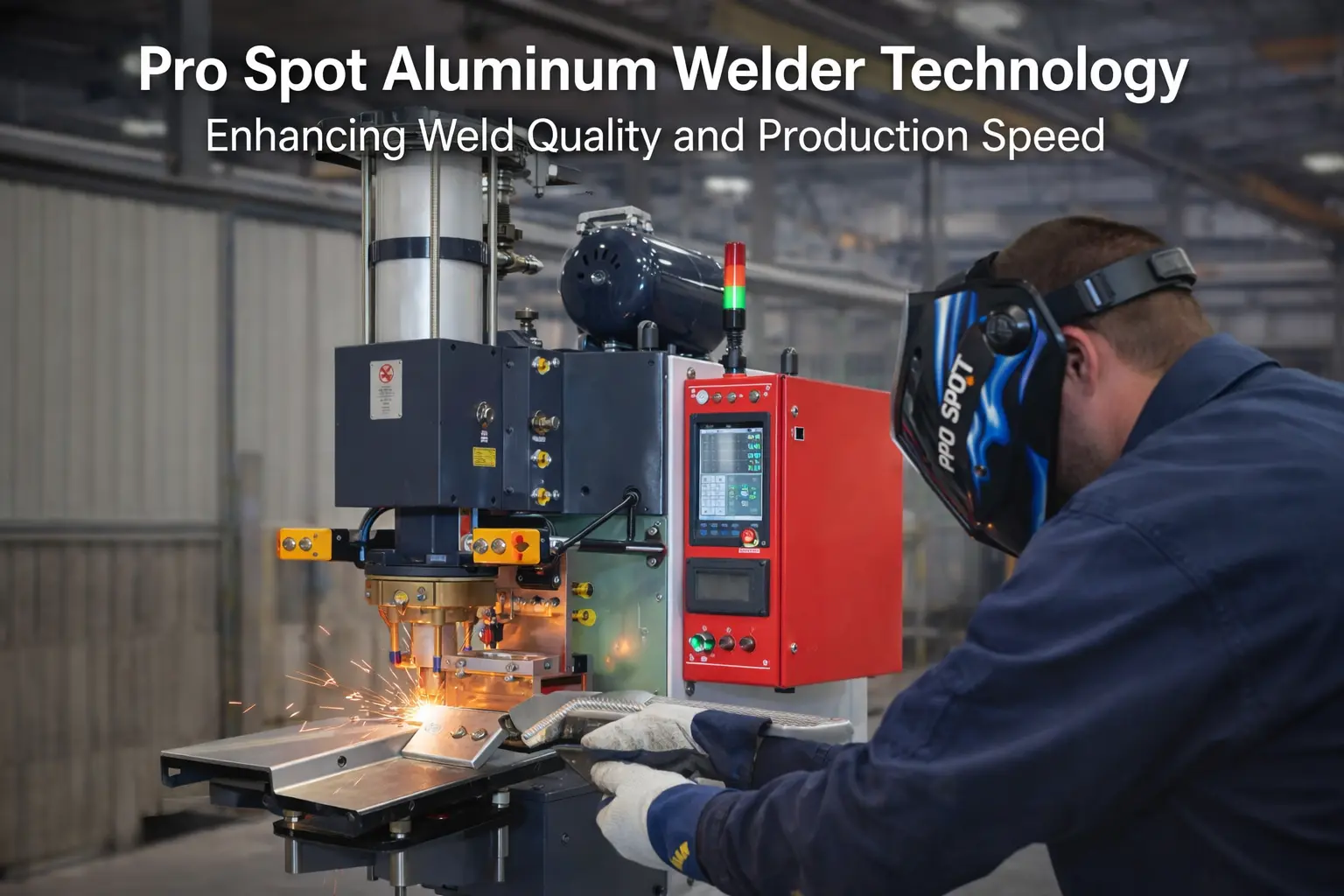
In today’s fast-paced manufacturing environment, efficiency, repeatability, and precision are non-negotiable. The spot resistance welder has emerged as a cornerstone technology for automotive, aerospace, electronics, and appliance industries, enabling high-quality metal joining with speed and reliability. Heron Welder, a global leader in industrial welding and metal-joining solutions, provides advanced spot resistance welding machines designed to meet the demands of modern production lines.
What Is a Spot Resistance Welder?
A spot resistance welder is a type of resistance welding machine that joins two or more metal sheets by applying pressure and passing electrical current through the contact points. The heat generated by electrical resistance at the interface melts the metal, forming a strong, localized weld nugget.
Unlike traditional fusion welding, spot resistance welding does not require filler material or gas shielding, making it clean, energy-efficient, and ideal for high-volume applications.
Key Components of a Spot Resistance Welder:
-
Electrodes: Copper or copper-alloy tips that conduct current and apply pressure.
-
Transformer: Converts electrical power to the high current, low voltage needed for welding.
-
Control System: Regulates current, time, and pressure for repeatable welds.
-
Frame and Actuator: Provides mechanical force, either pneumatic, hydraulic, or servo-driven, to press the electrodes onto the workpieces.
Principles of Spot Resistance Welding
The effectiveness of spot resistance welding relies on three primary factors:
-
Electrical Resistance: Heat is generated at the interface due to resistance between metal sheets. The correct current ensures proper fusion without burning through.
-
Pressure: Adequate electrode force ensures intimate contact between sheets, shaping the weld nugget and preventing splatter.
-
Time: The welding cycle must be precise, as too short a current may create weak welds, while too long can cause excessive metal deformation.
Advanced Heron spot resistance welders use MFDC (Medium-Frequency Direct Current) technology, allowing ultra-precise control of current pulses for minimal spatter and consistent weld quality even on thin or coated materials.
Applications of Spot Resistance Welders
Spot resistance welders are widely used across industries that demand high-speed, reliable metal joining:
-
Automotive Manufacturing: Body panels, chassis components, and battery pack assemblies.
-
Appliance Production: Refrigerators, ovens, and washing machines.
-
Electronics: Metal enclosures, connectors, and heat sinks.
-
Aerospace and Defense: Lightweight aluminum and steel components where precision is critical.
Heron’s solutions extend beyond standalone machines, offering integrated welding cells and fully automated production lines to enhance throughput while reducing labor costs.
Spot Welding vs. Other Resistance Welding Methods
It’s essential for manufacturers to choose the right resistance welding method based on material thickness, joint type, and production volume:
| Welding Method | Ideal Application | Pros | Cons |
|---|---|---|---|
| Spot Welding | Sheet-to-sheet joins | Fast, minimal preparation, energy-efficient | Limited to overlapping sheets |
| Projection Welding | Complex shapes with projections | Multiple welds in one cycle, consistent | Higher tooling cost |
| Seam Welding | Continuous metal seams | Leak-proof joins, automated | Slower than spot welding for discrete joints |
| Capacitor Discharge Welding | Small, delicate parts | High-speed, minimal distortion | Limited thickness capability |
Heron provides expertise in selecting the right welding technology, ensuring optimal ROI for your factory setup.
Best Practices for Spot Resistance Welding
To achieve maximum weld quality and equipment longevity:
-
Material Preparation: Clean surfaces and remove coatings that interfere with conductivity.
-
Electrode Maintenance: Regular dressing and replacement prevent inconsistent welds.
-
Parameter Optimization: Adjust current, time, and pressure for material type and thickness.
-
Monitoring and Automation: Use real-time process monitoring to ensure consistency and reduce scrap.
-
Operator Training: Skilled operators paired with intelligent controls maximize throughput and minimize errors.
Heron’s welders feature intuitive control systems and diagnostic tools, making parameter optimization and production monitoring straightforward even for complex high-speed assembly lines.
Why Choose Heron for Spot Resistance Welding Solutions
Heron Welder stands out as a trusted partner for manufacturers seeking precision and efficiency:
-
Global Expertise: Decades of experience in industrial welding across automotive, electronics, and appliance sectors.
-
Advanced Technology: MFDC, capacitor discharge, and servo-driven welders for optimized performance.
-
Automation Integration: Full-service solutions, from individual machines to fully automated production lines.
-
Custom Engineering: Tailored systems for unique manufacturing challenges and high-volume production.
By combining technology and service, Heron ensures that manufacturers can meet their production targets without compromising quality.
Frequently Asked Questions (FAQs)
1. Can spot resistance welders handle coated metals?
Yes. Heron’s MFDC spot welders are optimized for galvanized, painted, or coated sheets, minimizing spatter and maintaining weld integrity.
2. What is the typical weld cycle time?
Cycle times can range from 0.2 to 3 seconds depending on material thickness, current, and pressure settings. Heron welders offer precise control to optimize speed and quality.
3. How do I maintain electrode life?
Regular cleaning, proper force settings, and electrode dressing are essential. Heron also offers wear-resistant electrode materials for extended service life.
4. Can spot welding be automated?
Absolutely. Heron provides robotic and automated cells, integrating spot welding into high-speed production lines with minimal operator intervention.
5. Is spot welding suitable for aluminum?
Yes, especially with MFDC welders, which deliver controlled current pulses to handle aluminum’s high thermal conductivity without burn-through.
Take Your Manufacturing to the Next Level
Choosing the right spot resistance welder can transform your production line, improving speed, precision, and efficiency. Heron Welder combines advanced technology, global expertise, and automation solutions to help manufacturers stay ahead in competitive markets.
Request a quote or consult with Heron today to design a custom spot welding solution tailored to your production requirements. Elevate your welding processes with reliability, precision, and industry-leading support.

 English
 Arabic
 Spanish
 Portuguese
 Deutsch
 Turkish
 Dutch
Dutch
 Italiano
 Russian
 Romaian
 Portuguese (Brazil)
 Greek
Greek