


Precision Hurdles: Solving Modern Gun Sight Optical Issues
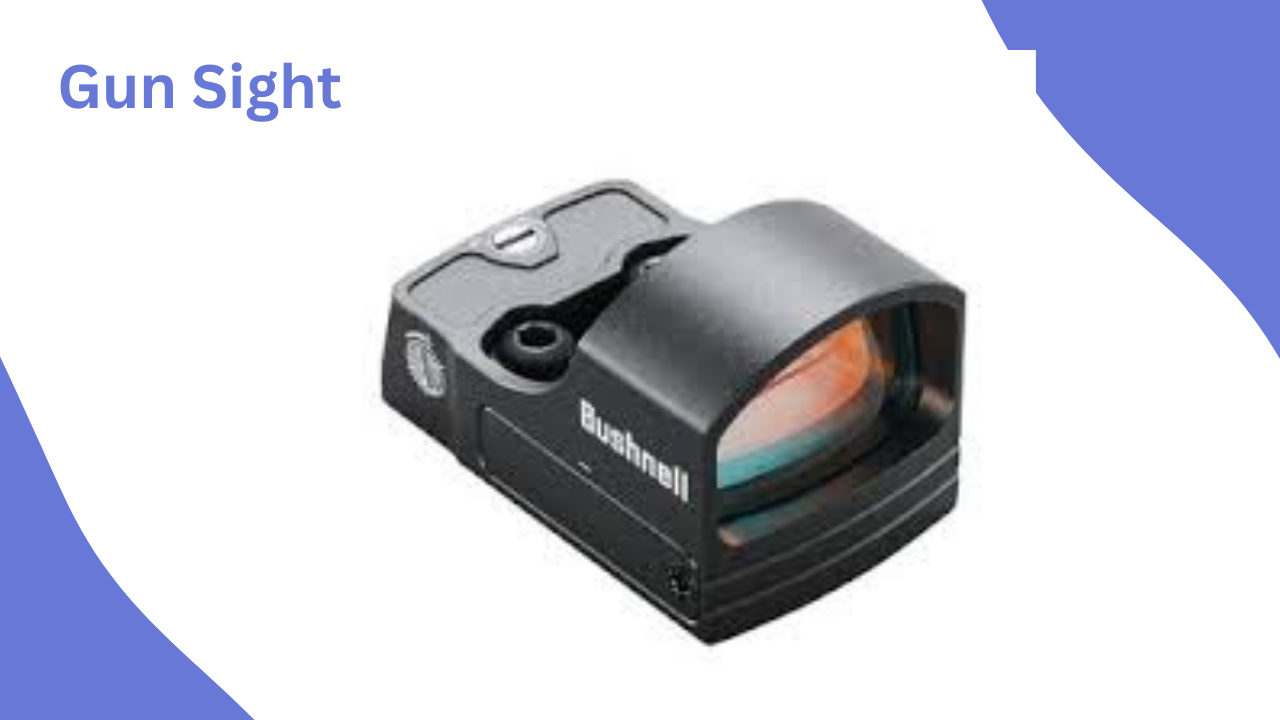
In the high-stakes sectors of defense, law enforcement, and specialized security, the gun sight is no longer just a mechanical alignment tool; it is a sophisticated optoelectronic interface. However, as we move through 2026, many B2B procurement officers and Tier 1 manufacturers are identifying a critical "Precision Paradox."
As firearms become more modular and ammunition more consistent, the bottleneck in hit probability has shifted back to the glass. Traditional red dot and holographic systems—while revolutionary a decade ago—are struggling to meet the demands of modern multi-domain environments. From "thermal drift" in extreme climates to the "washout effect" in high-contrast lighting, the static gun sight is becoming a liability for professional end-users.
The Problem: The Three Critical Failure Points of Legacy Optics
To solve the modern aiming problem, we must first address why legacy "glass and gas" optics are failing in the field:
-
Parallax Error in Stressful Engagements: Many budget-to-mid-tier sights claim to be "parallax-free," but in reality, they suffer from significant point-of-impact (POI) shifts when the user’s eye isn't perfectly centered—a common occurrence in dynamic, high-stress movement.
-
The Thermal Drift Dilemma: When an optic moves from a climate-controlled vehicle to a 110°F outdoor environment, the internal components expand. This microscopic shift can throw a zero off by several Minutes of Angle (MOA), rendering the optic useless for long-range precision.
-
Reticle Washout: In transition zones—moving from a dark interior to a bright, sunlit exterior—static LED reticles either become too dim to see or bloom so brightly they obscure the target.
The Optoelectronic Pivot: Smart Sights and OLEDoS Integration
The industry is currently witnessing a transition from passive glass to active, sensor-integrated gun sight modules. By leveraging the same technology found in high-end AR headsets, we are redefining what a "sight" can do.
1. Addressing Low-Light with Micro OLED
The future of the professional gun sight lies in Micro OLED (OLEDoS) overlays. Unlike traditional etched reticles or simple LED projectors, a Micro OLED can project a high-resolution digital display directly into the shooter’s field of view.
-
The Benefit: This allows for "Active Reticles" that can change shape, provide distance data via integrated LiDAR, or even show thermal overlays from a secondary sensor, all within the same housing.
2. Solving the Battery Life vs. Brightness Equation
A major pain point for fleet-wide deployments is battery maintenance. In 2026, we are seeing the integration of Ambient Light Sensors (ALS) paired with ultra-efficient driver circuits. These systems automatically adjust reticle intensity to the exact "nit" level required for the environment, extending battery life from months to years while ensuring the reticle is always crisp, never washed out.
3. Ruggedized "Hard-Bonding" for High Vibration
Optoelectronics in a gun sight must survive the violent G-forces of repetitive recoil. The solution is Optical Bonding—using specialized silicones to fill the air gaps between the lens and the display module. This not only makes the unit virtually indestructible but also eliminates internal fogging and improves light transmission.
B2B Strategic Comparison: Evaluating the 2026 Tech Stack
For procurement teams and OEM designers, choosing the right architecture is about balancing cost with "Probability of Hit" (Ph).
| Feature | Standard Red Dot | Holographic Sight | Digital/Hybrid Smart Sight |
| Parallax Control | Moderate | High | Superior (Sensor-Corrected) |
| Power Consumption | Ultra-Low | High | Managed (Smart-Sleep Tech) |
| Data Integration | None | Limited | Full (LiDAR/Atmospheric) |
| Reliability | Proven | Complex | Solid-State/Hard-Bonded |
| Best For | General Security | Close Quarters (CQB) | Precision/Specialized Ops |
Overcoming the "Digital Lag" Hurdle
The primary critique of digital gun sight systems has been "refresh rate lag." If the digital image stutters, the shooter misses.
To solve this, leading optoelectronic firms are now utilizing high-speed LVDS (Low-Voltage Differential Signaling) and 120Hz refresh rates in their micro-displays. This ensures that the digital reticle or thermal overlay moves in perfect synchronization with the physical world, eliminating the "temporal disconnect" that leads to motion sickness or missed targets.
The Path Forward: V2X and Connected Aiming
As we look toward 2027, the gun sight is becoming a node in the Internet of Battlefield Things (IoBT). Sights are now being equipped with Bluetooth/LoRa connectivity to share "Target-Down" data or "Low-Ammo" alerts with a command center. This transforms the optic from a simple aiming point into a critical data-collection tool for B2B defense contractors.
Conclusion: Clarity as a Strategic Asset
The evolution of the gun sight is moving away from purely mechanical adjustments toward integrated optoelectronic solutions. By addressing parallax, thermal stability, and digital latency, manufacturers can provide end-users with a level of confidence that traditional glass simply cannot match.

 English
 Arabic
 French
 Portuguese
 Deutsch
 Turkish
 Dutch
Dutch
 Italiano
 Russian
 Romaian
 Portuguese (Brazil)
 Greek
Greek