


Manufacturing Swimwear for Men: Solving Top B2B Quality Issues
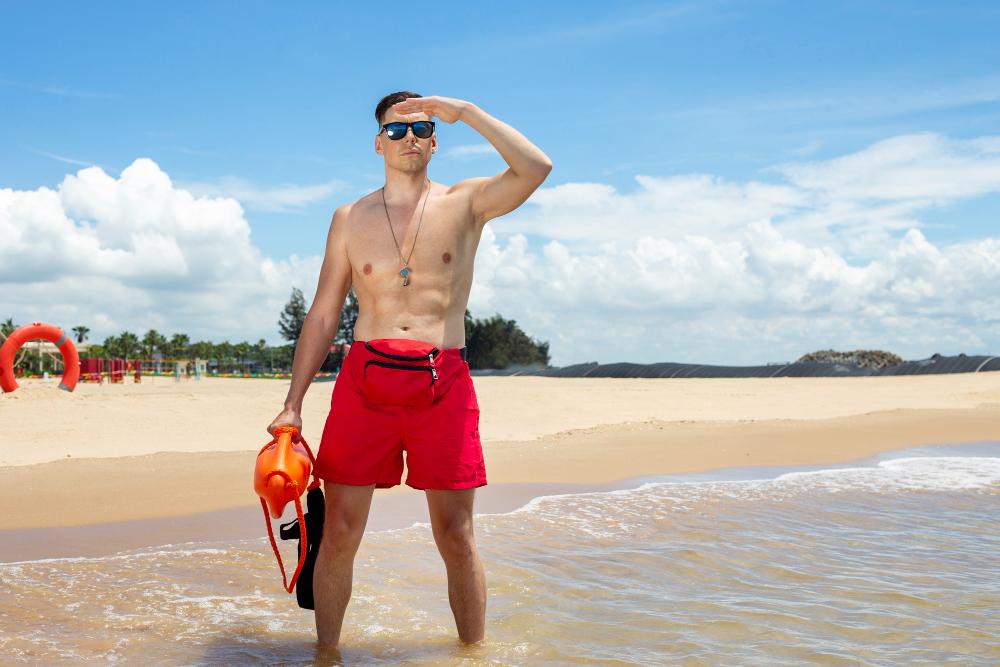
In the global apparel market, swimwear for men has evolved far beyond the basic "boardshort." Today’s B2B buyers and retailers are navigating a landscape where consumers demand high-performance functionality, hybrid versatility, and sustainable sourcing. However, as the complexity of the designs increases, so do the manufacturing pitfalls.
As industry experts in swimwear manufacturing, we have seen many brands struggle with the transition from lifestyle apparel to technical swim gear. If a men's swim line isn't engineered for the unique stresses of salt water, chlorine, and active movement, it will inevitably result in high return rates and diminished brand loyalty.
Below, we analyze the five most common problems found in the production of swimwear for men and the professional solutions to ensure your brand stands out in a saturated market.
1. The "Chafe Factor" and Liner Engineering
The single most common complaint in men’s swimwear—specifically in swim trunks—is skin irritation caused by the internal liner.
-
The Problem: Traditional "mesh" liners are often made from stiff, low-grade polyester with large apertures. These act like sandpaper against the skin when wet and sandy. Furthermore, poorly constructed elastic at the leg openings of the liner often "digs in," causing significant discomfort.
-
The Expert Solution: Replace traditional mesh with a fine-gauge jersey knit or a "super-soft" stretch mesh. In high-end swimwear for men, we recommend a boxer-brief style liner made from a nylon-spandex blend. This provides superior support and a smooth interface against the skin, virtually eliminating chafing.
2. Fabric "Ballooning" and Drainage Failures
There is nothing more frustrating for a consumer than a pair of swim shorts that trap air or water, creating an unsightly and heavy "balloon" effect when exiting the water.
-
The Problem: If the pocket bags are made from the same solid fabric as the outer shell, they trap water. Similarly, without proper airflow, air gets trapped in the seat of the shorts upon entry.
-
The Expert Solution: Every pair of swimwear for men must include reinforced brass or plastic eyelets (grommets) at the rear of the waistband and the bottom of pocket bags for instant drainage. Additionally, use a mesh-drainage system for all internal pockets to ensure water exits the garment as quickly as the wearer exits the pool.
3. The Elasticity Decay: Chlorine and UV Resistance
Men's swim shorts are often used as "all-day" apparel—worn from the pool to the beach and then to lunch. This exposure to diverse environments tests the textile’s limits.
-
The Problem: Standard polyester fabrics without a specialized coating will "bleach out" or lose their structural integrity (pilling) after just a few weeks of heavy use. If the fabric lacks 4-way stretch, the seams in the "rise" of the shorts are prone to blowing out during active movements.
-
The Expert Solution: Source high-performance PBT (Polybutylene Terephthalate) or "Xtra Life" elastane blends. These fibers are specifically engineered to resist the "fiber rot" caused by pool chemicals and salt water. For boardshorts, ensure a minimum of 15% spandex content to allow for the multi-directional movement required for surfing and swimming.
4. Hardware Failure and Drawcord Integrity
In the B2B world, the small details are often where the quality is judged. For swimwear for men, the closure system is a frequent failure point.
-
The Problem: Low-quality metal aglets (tips) on drawcords rust or fall off, and Velcro closures lose their "grip" after exposure to sand. Inexpensive zippers on "hybrid" shorts often seize up due to salt-crystallization.
-
The Expert Solution: Use Zamak alloy or high-density plastic hardware that is certified salt-spray resistant. For closures, we recommend silicone-tipped drawcords that provide a non-slip grip even when wet. For hybrid styles, exclusively use plastic-molded YKK zippers, which are immune to the corrosion that kills metal sliders in marine environments.
5. Sizing Inconsistency in Hybrid Designs
The "Hybrid Short"—a garment that looks like a chino but performs like a swimsuit—is a top seller, but it is notoriously difficult to size correctly.
-
The Problem: Unlike elastic-waist trunks, hybrid shorts use a fixed waistband. If the factory does not account for the "shrinkage" that occurs during the sublimation printing or dyeing process, the final waist measurement can be off by a full size.
-
The Expert Solution: Implement a Pre-Shrunk Sizing Protocol. Patterns must be adjusted to account for the specific heat-reaction of the fabric used. For B2B excellence, we suggest incorporating an "internal drawstring" or a "contoured waistband" that allows for a slight margin of adjustability while maintaining a clean, tailored look.
Comparison: Standard vs. Performance Men's Swimwear Specs
| Feature | Standard "Fashion" Trunks | Technical "Swimwear for Men" |
| Lining Material | Stiff Polyester Mesh | Soft Nylon-Spandex / Boxer Style |
| Drainage | None / Minimal | Dual Rear Eyelets & Mesh Pockets |
| Hardware | Basic Metal (May Rust) | Salt-Spray Tested Zamak / Silicone |
| Fabric Stretch | 2-Way or Non-Stretch | 4-Way High-Modulus Stretch |
| Waistband | Simple Elastic | Contoured / Anti-Slip Internal Cord |
Strategy for B2B Market Leadership
To dominate the swimwear for men category, your production must move beyond the "disposable" fashion mindset. By solving the issues of chafe-free liners, technical drainage, and hardware durability, you create a product that justifies a premium price point and reduces the cost of customer acquisition through word-of-mouth reliability.
In this industry, the "wave zone" of success is found where style meets uncompromised engineering.

 English
 Arabic
 French
 Spanish
 Portuguese
 Deutsch
 Turkish
 Dutch
Dutch
 Italiano
 Russian
 Romaian
 Portuguese (Brazil)