


Types of Viking Axes and Their Uses in Battle and Daily Life
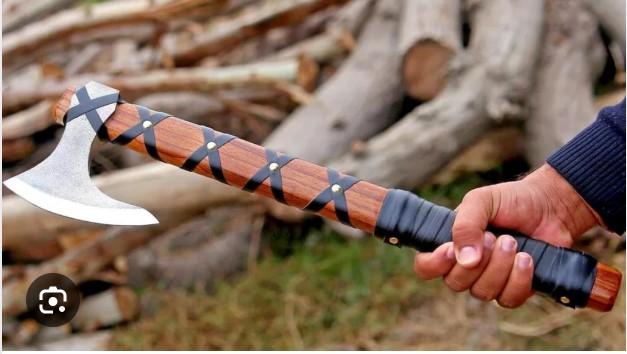
The axe was one of the most important and versatile objects in Viking society. Unlike many other weapons of the early medieval period, Viking axe served both as everyday tools and as deadly instruments of war. Their designs reflected practical needs, available materials, and the realities of Viking life, where the same person could be a farmer, craftsman, and warrior. Over time, several distinct types of Viking axes developed, each with its own purpose in daily life and on the battlefield.
Working Axes: Tools of Survival
The most common Viking axes were working tools used for daily tasks. These axes typically had relatively narrow blades and sturdy wooden handles, making them suitable for chopping firewood, shaping timber, and building houses and ships. In a land rich with forests, such tools were essential for survival.
Although not designed specifically for combat, working axes could easily be used as weapons in times of conflict. Because nearly every free man owned one, these axes often became the first line of defense during raids or local feuds. Their durability and cutting power made them dangerous even without specialized modifications.
Bearded Axes: Versatile and Tactical
One of the most recognizable Viking axe types is the bearded axe, named for the extended lower part of its blade. This “beard” increased the length of the cutting edge while keeping the weapon relatively light. The design allowed warriors to hook enemy shields, weapons, or limbs, giving them greater control in close combat.
In daily life, bearded axes were also useful tools. The extended blade made them effective for woodworking tasks such as carving joints and shaping beams. This dual-purpose design made the bearded axe especially popular among Vikings, blending functionality with combat effectiveness.
Broad Axes: Power and Precision
Broad axes featured wide blades designed to deliver powerful cutting blows. In daily use, they were ideal for hewing logs and shaping planks, particularly in shipbuilding and construction. Their wide edge allowed for smooth, controlled cuts in wood.
On the battlefield, broad axes were capable of inflicting devastating injuries. Their wide blades could cut through shields and armor, making them effective against heavily equipped opponents. However, their size required strength and skill, meaning they were often used by experienced warriors.
Long-Handled and Two-Handed Axes
Larger axes with long handles were primarily weapons of war. Norse axe offered extended reach, allowing warriors to strike enemies from a safer distance. When used with two hands, they delivered tremendous force, capable of breaking shield walls and disrupting enemy formations.
Due to their size and weight, these axes were less practical for everyday tasks and were mainly carried by professional warriors or elite fighters. Their presence on the battlefield often signaled a highly skilled and dangerous opponent.
Small Hand Axes and Throwing Axes
Smaller axes were easier to carry and faster to use. In daily life, they served as general-purpose tools for light chopping and travel. In combat, they could be wielded quickly in close quarters or thrown at enemies to disrupt formations or cause panic before engagement.
Though throwing axes were less common than popular culture suggests, their occasional use demonstrates the adaptability of Viking weaponry.
Conclusion
Viking axes were not merely weapons but reflections of a practical and adaptable society. Each type—from simple working axes to specialized battle axes—served specific roles in daily life and warfare. This versatility made the axe a symbol of Viking axe for sale resilience, skill, and readiness to face both the challenges of survival and the demands of battle.

 English
 Arabic
 French
 Spanish
 Portuguese
 Turkish
 Dutch
Dutch
 Italiano
 Russian
 Romaian
 Portuguese (Brazil)
 Greek
Greek