


The Repair vs. Replace Debate: Is Your Cracked iPhone Actually Worth Fixing?
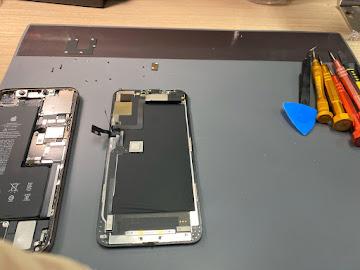
We have all been there. It starts with that heart-stopping thud on the pavement, followed by the slow-motion reach for the device, and the inevitable "spiderweb" of glass staring back at you. In that moment, your brain starts a rapid-fire internal debate: Do I fix this, or is this the universe telling me it’s time to drop $1,200 on the newest model?
In 2026, the pressure to upgrade is relentless. Your carrier is texting you about "zero-down" deals, and the big tech giants are subtly nudging you toward a trade-in. But as a consumer, you have to ask: Is the repair actually worth it? The short answer is: Almost always, yes. But the long answer requires a look at the math, the engineering, and the "Factory-Plus" standard of modern repair. Let’s break down the debate and see why your "broken" iPhone might actually be your most valuable asset.
The Economic Reality: Repair Costs vs. Hidden Upgrade Fees
When people think about "replacing" a phone, they often only look at the monthly payment. "It’s only $35 a month," they say. But in the world of precision finance, that’s a trap.
Let’s look at a typical scenario for a 2-year-old iPhone with a cracked screen:
-
The Repair Route: A premium screen replacement with surgical accuracy typically costs between $150 and $280 depending on the model. You pay once, and your phone is back to 100% functionality.
-
The Upgrade Route: You "buy" a new $1,200 iPhone. Even if you get a trade-in credit for your broken device (which will be significantly lower because it’s cracked), you are still on the hook for the sales tax on the full price of the phone, an "activation fee" from your carrier, and 36 months of payments.
By the time you finish the math, the "cheap" upgrade has actually cost you four to five times more than a professional repair. If your current phone still supports the latest iOS and handles your daily apps without lag, a precision repair is the undisputed winner of the ROI (Return on Investment) battle.
The "Surgical Accuracy" of Modern Repair
One reason people hesitate to repair is the fear that the phone "won't be the same." We’ve all seen those "budget" repairs where the screen colors look washed out, the touch is glitchy, or Face ID suddenly stops working.
This is the difference between a "parts-swapper" and a technician who operates with surgical accuracy.
Modern iPhones are masterpieces of micro-engineering. When we open a device at a shop like Byte Fix Repair, we aren't just putting in a new piece of glass. We are managing dozens of delicate internal components:
-
Face ID & Sensor Array: These are cryptographically paired to your logic board. If a technician doesn't have the precision tools to transfer these sensors or calibrate them properly, you lose your biometric security forever.
-
The True Tone Secret: Your iPhone’s ability to adjust its color temperature to the room is stored in a small chip on the original screen. Without the precision software to "copy and paste" that data to the new display, your screen will always look slightly "off."
-
Water Resistance Seals: A "Factory-Plus" repair doesn't just close the phone; it replaces the internal gaskets and seals to maintain the device’s resistance to the Tucson dust and occasional monsoon moisture.
When a repair is handled with surgical accuracy, the "it won't be the same" argument disappears. Your phone doesn't just look fixed—it performs to original factory specifications.
When a "Dead" Phone Isn't Actually Dead
Sometimes the debate isn't about a cracked screen; it’s about a phone that won't turn on or won't charge. This is where most people give up and head to the carrier store.
However, many "dead" phones are suffering from minor, fixable issues that look like catastrophes.
-
The "Heart" Problem (Battery): After two years, every iPhone battery begins to "chemically age." It throttles your CPU speed and shuts down unexpectedly. A precision battery swap—taking less than 30 minutes—can literally make an old phone feel like it just came out of the box.
-
The Charging Port Paradox: Often, a phone that "won't charge" doesn't need a new port; it needs a surgical cleaning to remove years of pocket lint and desert grit. Even if the port is broken, it is a modular, replaceable part.
-
Logic Board Resuscitation: Even if your phone has water damage or a "short," micro-soldering technology in 2026 allows us to repair the motherboard itself. This is the pinnacle of surgical accuracy—fixing a $1,000 device by replacing a $2 capacitor.
The "Factory-Plus" Standard: Why Parts Quality Matters
If you decide to repair, the most important question you can ask is: "What parts are you using?"
In the repair world, there are "Aftermarket" parts (cheap, color-shifted, fragile) and there are "Factory-Plus" parts (OEM-grade, vibrant, durable).
Choosing lasting quality components is the only way to win the repair vs. replace debate. A cheap $60 screen will likely break again within a month from a minor bump. A premium, high-contrast display with precision-engineered glass is built to survive. At Byte Fix Repair, the goal isn't just to fix the phone for today—it’s to ensure it lasts until you actually want to upgrade, not when you’re forced to.
The Hidden Cost: Data and Environment
Beyond the money, there are two "hidden" factors in the debate: Data and E-waste.
-
Your Digital Life: Moving to a new phone is a hassle. Even with iCloud, there is always that one app that doesn't sync right, the bank token that needs resetting, or the photos that didn't transfer. Repairing your current device means you walk out of the shop with your data exactly where you left it.
-
The E-waste Crisis: Every time we "replace" a repairable iPhone, we contribute to a global e-waste problem. Manufacturing a single new smartphone requires mining rare earth minerals and generates a massive carbon footprint. Repairing is the ultimate "green" choice, keeping a perfectly good piece of technology in your pocket and out of a landfill.
When SHOULD You Replace?
To be fair, there is a point where replacement makes sense. As an authentic collaborator, I’m not going to tell you to fix a 10-year-old iPhone 6.
It’s time to replace if:
-
iOS Support Ends: If Apple no longer provides security updates for your model, your data is at risk.
-
The "Rule of 50": If the repair cost exceeds 50% of the resale value of the phone, an upgrade starts to look more logical.
-
Catastrophic Damage: If the phone was crushed by a car or sat at the bottom of a pool for a week, the surgical accuracy required to save it might outweigh the cost of a new device.
The Professional Verdict
In 2026, a cracked iPhone is a hurdle, not a finish line. By choosing a precision repair over a premature upgrade, you are choosing to be a smart consumer. You are choosing lasting quality over planned obsolescence.
Your iPhone was built to be a powerhouse. Don't let a bit of broken glass convince you otherwise. With the right technician and a commitment to surgical accuracy, your current device has years of life left in it.

 English
 French
 Spanish
 Portuguese
 Deutsch
 Turkish
 Dutch
Dutch
 Italiano
 Russian
 Romaian
 Portuguese (Brazil)
 Greek
Greek