

Thread Lift in Dubai: Before and After Transformations
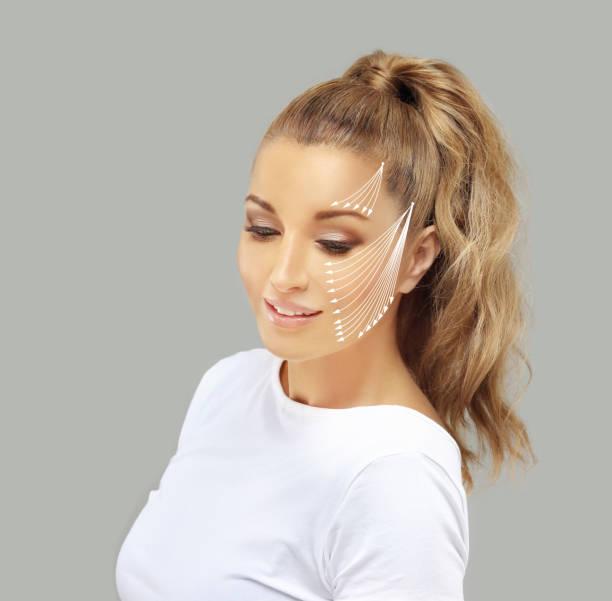
The most honest thing a clinic can show a prospective patient is not a perfectly lit photograph taken six months post-procedure. It is the full picture — what the face looked like before, what it looked like at day three when swelling peaked, what it looked like at week two when the lift settled, and what it looked like at month six when collagen had done its work. Thread lift in Dubai produces transformations that are real and meaningful — but they unfold over time, not in a single image.
This article takes you through that full arc. What changes, when it changes, which areas transform most visibly, and what patients actually say when they see the result at different stages of the journey.
Why Before and After Comparisons Matter — and Where They Fall Short
Before and after photography is the currency of aesthetic medicine. Patients rely on it to set expectations. Clinics use it to demonstrate results. At its best, it is genuinely informative. At its worst, it is selective, filtered, and taken under conditions specifically designed to maximise the apparent difference between two images.
Thread lift transformations are best understood not as a single comparison but as a timeline. The immediate post-procedure result is different from the week-two result, which is different again from the month-six result. Understanding what drives the change at each stage — mechanical lift first, collagen response second — is what allows a patient to interpret what they see accurately.
The most important thing to know before looking at any thread lift before and after is this: the best results are not always the most dramatic. A result that makes a patient look refreshed, well-rested, and structurally defined — without looking operated — is a better outcome than one that produces a dramatic visual contrast in a photograph but reads as unnatural in person.
What Actually Changes After Thread Lift in Dubai
Before examining specific areas and patient experiences, it helps to understand the categories of change that thread lift produces. There are three distinct types of visible transformation.
Structural repositioning
This is the immediate, mechanical change. Tissue that has descended — malar fat pads that have dropped, jowls that have formed, a brow that has become heavy — is physically moved back toward its original anatomical position. This change is visible on the table before the patient leaves. It is most clearly seen in photographs taken two to three weeks post-procedure, once swelling has resolved and the lift has settled.
Skin quality improvement
This is the biological change. As PLLA threads stimulate collagen in the surrounding tissue over three to six months, the skin surface begins improving independently of the structural lift. Fine lines soften. Skin tone becomes more even. The surface quality that photography captures — the way light catches the face — improves in ways that are visible but difficult to attribute to a single cause. Patients at the six-month mark often look better than the structural lift alone would predict, because the collagen response has improved the canvas on which the lift sits.
Facial proportion restoration
This is the cumulative effect. When cheeks are repositioned upward, the mid-face recovers its natural fullness and the nasolabial folds are indirectly softened. When the jowl is lifted, the jawline sharpens and the lower face regains the definition it had a decade earlier. The face does not simply look lifted. It looks proportioned correctly again — and that is a fundamentally different and more satisfying transformation.
Area by Area: What Before and After Looks Like in Each Zone
Mid-Face and Cheeks
The mid-face transformation is consistently the most visually striking result of thread lift in Dubai. The malar fat pad — the soft tissue mass that gives cheeks their youthful projection — descends with age, flattening the mid-face and creating a tired, hollowed appearance even in patients who have not lost significant volume.
Before thread lift, patients with mid-face descent typically present with:
- A flattened cheek contour where fullness used to sit
- A deepening line running from the nose to the corner of the mouth
- A general appearance of tiredness regardless of actual rest
- A subtle heaviness in the lower face that wasn't there previously
After thread lift targeting the mid-face, what patients and practitioners observe:
- The cheek projection returns to a higher, more anterior position
- The nasolabial fold softens as tissue is lifted away from it
- The face recovers a three-dimensional quality that photographs register clearly
- The transition from cheek to lower eyelid improves as the malar pad repositions upward
Patients treated in this area consistently describe looking at photographs taken before the procedure and being surprised by how much the mid-face had changed without them fully noticing at the time.
Jowls and Jawline
Jowl formation is one of the most common presenting concerns for thread lift consultations in Dubai. It represents the point at which many patients transition from looking their age to looking older than they feel. The jowl forms when the soft tissue of the lower face loses its superior support and descends below the mandibular border, creating a shadow and irregularity along what used to be a clean jaw contour.
Before thread lift targeting the lower face:
- The jawline lacks definition along its lower border
- A soft bulge sits below and just anterior to the angle of the jaw
- The chin appears to merge with the neck rather than sitting in clear definition above it
- Profile photographs show a loss of the angular jaw-to-neck transition
After thread lift addressing the jowl zone:
- The mandibular border re-emerges as a cleaner, more defined line
- The jowl mass is repositioned superiorly, restoring the lower face contour
- Profile views show a more distinct separation between the lower face and neck
- The overall facial shape returns toward the inverted triangle of youth from the heavier square shape of mid-face descent
The jowl transformation is the area that patients most frequently point to when asked what made the biggest difference. It is also the transformation that friends and colleagues notice most — without necessarily identifying a specific procedure.
Brow and Forehead
Brow descent is a slower, more gradual change than cheek or jowl sagging — and therefore often the last thing patients identify as a contributor to their aged appearance. A descending brow adds heaviness to the upper face, reduces the visible eyelid platform, and creates a perpetually tired or stern expression that does not reflect how the patient actually feels.
Before brow thread lift:
- The outer brow sits at or below the orbital rim
- The upper eyelid appears heavier with reduced visible platform
- The face carries an expression of fatigue or seriousness even at rest
- Photographs taken ten years earlier show a clearly higher, more arched brow position
After thread lift addressing the brow:
- The outer brow elevates by typically four to eight millimetres
- The visible eyelid platform increases, creating a more open, rested eye appearance
- The forehead-to-brow ratio normalises
- The resting expression softens — patients look more approachable and alert
Brow thread lift produces one of the most immediate and striking visual differences in before and after photography — yet it is the area patients least expect to make such a significant contribution to overall facial appearance.
Neck and Jawline Definition
The neck is an area increasingly requested in thread lift consultations in Dubai as patients become more aware of how much the neck contributes to overall facial ageing. Lax neck skin, softening of the jaw-to-neck transition, and early platysmal banding all contribute to an aged appearance that facial treatment alone does not fully address.
Before neck thread lift:
- The jaw-to-neck transition is soft and undefined
- Skin laxity along the anterior neck creates vertical banding when the neck is extended
- Profile views show a loss of the sharp submandibular angle characteristic of a youthful profile
- The neck appears wider and less defined in frontal photographs
After thread lift addressing the neck and submental zone:
- The submental angle sharpens, creating a more distinct jaw-to-neck definition
- Skin laxity along the neck tightens moderately, reducing the appearance of banding
- The profile view recovers a more angular, defined transition between lower face and neck
- The overall silhouette of the face reads younger in both frontal and profile views
The Transformation Timeline: Week by Week, Month by Month
Understanding when to expect each phase of the thread lift in Dubai transformation is essential for patients navigating the recovery period without anxiety.
Day one to three
The face looks lifted — sometimes overcorrected. Swelling is building. Entry points are visible. This is not representative of the final result and should not be used as a basis for evaluation. Patients at this stage are advised to document their starting point with photographs and revisit them at two weeks and six months.
Week one to two
Swelling resolves. The lift settles into its natural anatomical position. This is the first accurate view of the structural transformation. Patients typically describe this as the stage at which they first felt genuinely pleased — the result reads as natural rather than operated, and the change from the pre-treatment baseline is clearly visible.
Month one to three
The structural result is established. Collagen synthesis is now active in the thread pathways. Skin quality begins improving — texture, tone, and surface regularity all show progressive change. Patients at this stage often find that their skin looks better in photographs taken in natural light, independent of the structural lift.
Month four to six
Peak results. The mechanical lift and biological collagen response combine to produce the best composite outcome. Patients who document their journey with consistent photography at regular intervals consistently report that this is the stage at which the transformation is most comprehensively visible.
Month twelve to eighteen
Threads are dissolving or fully resorbed. The collagen scaffold remains. Patients with good skin quality, consistent SPF use, and healthy lifestyle habits maintain visible improvement at this stage. Those approaching the end of their result duration may begin considering a maintenance session.
The Transformations Patients Describe in Their Own Words
Patient descriptions of their thread lift transformation often capture something that before and after photographs miss — the experiential dimension of looking different.
"I had a photograph from my daughter's wedding two years ago that I kept coming back to. My face looked so much heavier than I remembered feeling at the time. Three months after my thread lift in Dubai, I took a photograph at a similar event and finally understood what people mean when they say you look like yourself again. My cheeks were back where they should be. The heaviness was gone." — Sheikha, 52, Emirates Hills
"The change I noticed most wasn't in the mirror. It was in how people responded to me. Colleagues started commenting that I looked well — not that I looked different. My husband said I looked the way I did when we got married. That was twelve years of ageing walking backwards in six weeks." — Rania, 48, Jumeirah Islands
"I had been putting foundation on my jowls for two years trying to contour them away. After the thread lift, I stopped needing to. The jawline that came back wasn't a dramatic transformation — it was subtle, clean, and completely natural. Exactly what I wanted." — Nour, 44, Motor City
"What surprised me most was the skin quality change. By month three the skin over my cheeks was noticeably different — firmer, more consistent. I had assumed the collagen benefit was a marketing claim. It isn't. You can actually see and feel it." — Hessa, 50, Meadows
What Before and After Thread Lift Does Not Show
Honest representation of thread lift in Dubai results requires acknowledging what photography does not capture.
Before and after photographs do not show how the face moves. Thread lift that looks natural in a static image must also look natural when the patient smiles, laughs, and talks. A technically correct thread lift passes this test consistently. An overcorrected or incorrectly vectored one may look acceptable in a photograph but feel and look unnatural in motion.
Photography does not show how the result feels. Patients frequently describe a subjective improvement in facial confidence that does not appear in any image. The way they hold themselves in social situations. Whether they avoid photographs or welcome them. How they feel when they unexpectedly catch their reflection. These dimensions of transformation are real and clinically meaningful — they simply don't fit in a before and after frame.
Photography does not show the recovery. The best before and after images are taken after full healing and at peak result. They do not include day two with its swelling, or day five with its residual bruising. Patients who see only polished documentation of results without an honest picture of the recovery journey are not fully prepared.
Why Choose Tajmeels Clinic for Thread Lift in Dubai?
At Tajmeels Clinic, the thread lift journey is documented honestly — from consultation through recovery to peak results. Board-certified specialists perform every procedure with thorough pre-treatment facial mapping, using Silhouette Soft sutures exclusively, and provide patients with structured follow-up appointments at the stages that matter most. The transformation a patient achieves at Tajmeels is one built on correct candidacy assessment, skilled technique, and post-procedure support that continues through every phase of the result.
FAQ: Thread Lift Before and After in Dubai
When is the best time to take before and after photographs?
The most useful documentation captures the face at four time points: immediately before the procedure, at two weeks post-procedure when swelling has resolved, at three months when collagen response is building, and at six months when peak results are achieved. Single-point photography taken at any one of these stages tells only part of the story.
Why does my result look different in photographs than in the mirror?
Lighting, angle, and distance all affect how thread lift results appear in photography. Natural daylight at a consistent distance and angle produces the most accurate comparison. Flash photography flattens the face and can make three-dimensional changes appear less pronounced. Mirror assessment in consistent lighting at the same time of day gives a more reliable ongoing impression of how the result is progressing.
Is it normal for results to look different on each side of the face?
Yes — particularly in the first two weeks. Swelling rarely resolves symmetrically. One side may appear more lifted, more swollen, or more bruised than the other during the healing period. This is normal and does not indicate an asymmetric result. Final symmetry assessment should wait until at least the two-week mark, ideally the six-week mark.
Will my thread lift result look the same in all lighting conditions?
Not exactly. Three-dimensional structural changes — like restored cheek projection or a sharper jawline — are most visible in directional lighting that creates shadow and definition. In flat, even lighting, the same result may appear more subtle. This is not a flaw in the result. It is how facial structure works. The improvement is present in all lighting conditions; it is simply more or less apparent depending on how light falls on the face.
Can I share my before and after photographs with my clinic for assessment?
Yes — and this is encouraged. Sharing photographs taken at consistent intervals with your practitioner allows for clinical documentation of your progress, helps identify the optimal timing for any complementary treatments, and provides a reliable record if a follow-up assessment or maintenance session is needed.
How much improvement can I realistically expect to see?
The degree of visible improvement varies by patient. Patients with mild descent typically see a subtle, natural improvement that reads as refreshed rather than dramatically different. Patients with moderate descent — particularly in the jowl and mid-face — often see a more pronounced structural change that is clearly visible in comparison photographs. The goal is always a result appropriate to the patient's anatomy, not the maximum possible lift.

 English
 Arabic
 French
 Spanish
 Portuguese
 Deutsch
 Dutch
Dutch
 Italiano
 Russian
 Romaian
 Portuguese (Brazil)
 Greek
Greek