


The Legend of the Ohafia Warriors.
If you think the Igbo were only farmers and traders, you haven't heard of the Ohafia, Abam, and Edda clans. In pre-colonial times, these were the "Special Forces" of the Igbo nation.
The Mercenaries of the East
The Ohafia warriors were legendary for their skill in jungle warfare. They didn't fight for land or to build empires; they fought for glory and the "Hero's Head." Because they were so feared, the Aro Confederacy often hired them as protectors for their trade routes. When an Ohafia war horn sounded in the forest, people knew that a professional force had arrived.
The "War Dance" (Igiri)
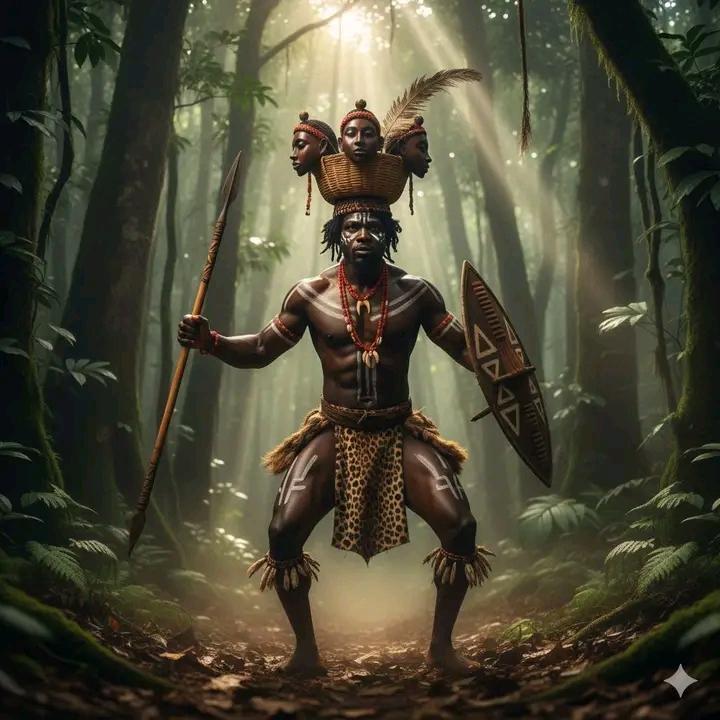
Ever seen the Ohafia War Dance? The way they carry a basket of "human heads" (now represented by carvings) on their heads while moving their chests with rhythmic precision?
That isn't just a dance—it’s a victory parade. In ancient times, a young man from Ohafia could not wear the eagle feather or be called a "man" until he had returned from a campaign with a trophy of war. It was a culture of extreme bravery where the greatest honor was to be called "Dike" (The Brave One).
The Leopard Spirit
They moved like leopards—silent, fast, and deadly. They used the Oshue (war shield) and the Ogbunigwe (traditional explosives/traps) long before modern warfare. But their greatest weapon was their reputation. Many wars were won before they even started simply because the enemy heard the Ohafia were coming.
Why This Matters Today
The Ohafia spirit is why the Igbo are known for being bold and fearless in business and life today. That "never-say-die" attitude and the pride in one's achievement (meritocracy) started in the training grounds of these ancient warriors.
Tag someone from Ohafia, Abam, or Edda! Let them know their blood is made of iron.
If you think the Igbo were only farmers and traders, you haven't heard of the Ohafia, Abam, and Edda clans. In pre-colonial times, these were the "Special Forces" of the Igbo nation.
The Mercenaries of the East
The Ohafia warriors were legendary for their skill in jungle warfare. They didn't fight for land or to build empires; they fought for glory and the "Hero's Head." Because they were so feared, the Aro Confederacy often hired them as protectors for their trade routes. When an Ohafia war horn sounded in the forest, people knew that a professional force had arrived.
The "War Dance" (Igiri)
Ever seen the Ohafia War Dance? The way they carry a basket of "human heads" (now represented by carvings) on their heads while moving their chests with rhythmic precision?
That isn't just a dance—it’s a victory parade. In ancient times, a young man from Ohafia could not wear the eagle feather or be called a "man" until he had returned from a campaign with a trophy of war. It was a culture of extreme bravery where the greatest honor was to be called "Dike" (The Brave One).
The Leopard Spirit
They moved like leopards—silent, fast, and deadly. They used the Oshue (war shield) and the Ogbunigwe (traditional explosives/traps) long before modern warfare. But their greatest weapon was their reputation. Many wars were won before they even started simply because the enemy heard the Ohafia were coming.
Why This Matters Today
The Ohafia spirit is why the Igbo are known for being bold and fearless in business and life today. That "never-say-die" attitude and the pride in one's achievement (meritocracy) started in the training grounds of these ancient warriors.
Tag someone from Ohafia, Abam, or Edda! Let them know their blood is made of iron.
⚔️ The Legend of the Ohafia Warriors.
If you think the Igbo were only farmers and traders, you haven't heard of the Ohafia, Abam, and Edda clans. In pre-colonial times, these were the "Special Forces" of the Igbo nation.
🦅 The Mercenaries of the East
The Ohafia warriors were legendary for their skill in jungle warfare. They didn't fight for land or to build empires; they fought for glory and the "Hero's Head." Because they were so feared, the Aro Confederacy often hired them as protectors for their trade routes. When an Ohafia war horn sounded in the forest, people knew that a professional force had arrived.
🥁 The "War Dance" (Igiri)
Ever seen the Ohafia War Dance? The way they carry a basket of "human heads" (now represented by carvings) on their heads while moving their chests with rhythmic precision?
That isn't just a dance—it’s a victory parade. In ancient times, a young man from Ohafia could not wear the eagle feather or be called a "man" until he had returned from a campaign with a trophy of war. It was a culture of extreme bravery where the greatest honor was to be called "Dike" (The Brave One).
🛡️ The Leopard Spirit
They moved like leopards—silent, fast, and deadly. They used the Oshue (war shield) and the Ogbunigwe (traditional explosives/traps) long before modern warfare. But their greatest weapon was their reputation. Many wars were won before they even started simply because the enemy heard the Ohafia were coming.
💡 Why This Matters Today
The Ohafia spirit is why the Igbo are known for being bold and fearless in business and life today. That "never-say-die" attitude and the pride in one's achievement (meritocracy) started in the training grounds of these ancient warriors.
Tag someone from Ohafia, Abam, or Edda! Let them know their blood is made of iron. 🦅⚔️
0 Kommentare
0 Geteilt
273 Ansichten
0 Bewertungen

 English
 Arabic
 French
 Spanish
 Portuguese
 Turkish
 Dutch
Dutch
 Italiano
 Russian
 Romaian
 Portuguese (Brazil)
 Greek
Greek