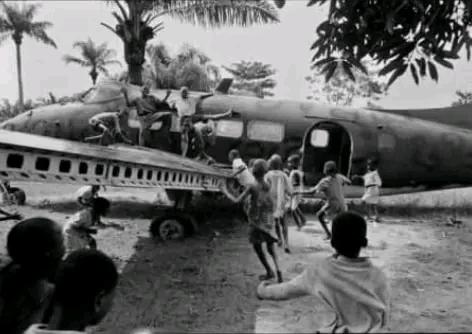
• The image shows Igbo children playing on the wreckage of a Biafran aircraft near the Uli airstrip in 1971, one year after the end of the Nigerian-Biafran Civil War. The photo serves as a visual reminder of the war's impact and the local community's resilience, with the aircraft remnants being a testament to the conflict in Anambra State. Some sources identify the children as being from the St. Thomas Primary school in Uli.
    Context: The photograph was taken in 1971, a year after the Nigerian-Biafran Civil War ended in January 1970.
    Location: The scene is at the Uli airstrip in Anambra State.
    Subject: Children, identified by some sources as belonging to the St. Thomas Primary school, are playing on the remains of a grounded aircraft.
    Significance: The image captures a post-war moment, showing how a symbol of the conflict has become a part of the landscape and a place for children to play.
    The image shows Igbo children playing on the wreckage of a Biafran aircraft near the Uli airstrip in 1971, one year after the end of the Nigerian-Biafran Civil War. The photo serves as a visual reminder of the war's impact and the local community's resilience, with the aircraft remnants being a testament to the conflict in Anambra State. Some sources identify the children as being from the St. Thomas Primary school in Uli. Context: The photograph was taken in 1971, a year after the Nigerian-Biafran Civil War ended in January 1970. Location: The scene is at the Uli airstrip in Anambra State. Subject: Children, identified by some sources as belonging to the St. Thomas Primary school, are playing on the remains of a grounded aircraft. Significance: The image captures a post-war moment, showing how a symbol of the conflict has become a part of the landscape and a place for children to play.
    0 Comments ·0 Shares ·801 Views ·0 Reviews
  • Commando: Nigeria’s Fiercest Fighting Unit of the Civil War

    During the Nigerian Civil War (1967–1970), many military units fought bravely, but few earned a reputation as legendary, and sometimes feared, as the 3rd Marine Commando (3MCDO). Stationed in the Niger Delta and commanded first by Brigadier Benjamin Adekunle, later by Colonel Olusegun Obasanjo, this unit became one of the most decisive forces that changed the tide of the war. Yet behind the public stories of victories lies a lesser-known, deeply human tale of sacrifice, bravery, and the brutal realities of jungle warfare.

    The 3rd Marine Commando was formed specifically to fight under some of the toughest conditions of the conflict, creeks, mangrove swamps, flooded forests, and unpredictable waterways. Soldiers in this unit fought in harsh terrains where vehicles could not move, and the only safe transport was through narrow boats paddled silently at night. Many of these men could not swim, yet they went into water battles day after day because their mission demanded it. Their courage was built not on comfort, but on pure survival instincts and fierce loyalty to one another.

    One of the untold stories about this unit was how they survived on improvised food and supplies, often going days without standard rations. Soldiers roasted yam over firewood, caught fish with bare hands, drank from the same waters they fought in, and used palm fronts as bedding. Malaria, snake bites, and infections killed almost as many men as bullets. Still, they pushed forward, because every creek captured meant a lifeline cut off from the Biafran forces.

    During the intense battles to secure Bonny Island and later Calabar, the unit earned the nickname “the Amphibians” because of their ability to strike unexpectedly from water routes. One officer once described how they moved: “We fought like shadows. No one heard us coming. No one saw us leave.” They mastered silent paddling, coded whistles, and night maneuvers that confused the enemy. Their operations became a combination of traditional warfare and guerrilla tactics unique to the riverine geography.

    However, the untold part of their story also includes deep emotional scars. Many soldiers carried the burden of watching their comrades disappear beneath water, bodies never recovered. Others lived with memories of villages burned, families displaced, and the terrible responsibility of fighting in populated riverine communities. What made their story remarkable was not just their bravery, but the quiet grief they bore long after the war ended, grief that many never shared until old age.

    When Obasanjo took over command in 1969, he reorganized the unit, bringing structure to a group exhausted by years of grit. Under his leadership, the 3rd Marine Commando executed Operation Tail-Wind, the final operation that captured Owerri and effectively ended the civil war. But even in victory, many soldiers returned home uncelebrated, their roles lost in official reports, remembered only by those who survived beside them in the swamps.

    Today, the 3rd Marine Commando’s story remains one of the most symbolic chapters of the civil war, a reminder of the courage of ordinary Nigerian soldiers who fought under extreme conditions not for glory, but out of duty. Their untold story is a tribute to resilience, sacrifice, and the unrecorded humanity of war.

    Commando: Nigeria’s Fiercest Fighting Unit of the Civil War During the Nigerian Civil War (1967–1970), many military units fought bravely, but few earned a reputation as legendary, and sometimes feared, as the 3rd Marine Commando (3MCDO). Stationed in the Niger Delta and commanded first by Brigadier Benjamin Adekunle, later by Colonel Olusegun Obasanjo, this unit became one of the most decisive forces that changed the tide of the war. Yet behind the public stories of victories lies a lesser-known, deeply human tale of sacrifice, bravery, and the brutal realities of jungle warfare. The 3rd Marine Commando was formed specifically to fight under some of the toughest conditions of the conflict, creeks, mangrove swamps, flooded forests, and unpredictable waterways. Soldiers in this unit fought in harsh terrains where vehicles could not move, and the only safe transport was through narrow boats paddled silently at night. Many of these men could not swim, yet they went into water battles day after day because their mission demanded it. Their courage was built not on comfort, but on pure survival instincts and fierce loyalty to one another. One of the untold stories about this unit was how they survived on improvised food and supplies, often going days without standard rations. Soldiers roasted yam over firewood, caught fish with bare hands, drank from the same waters they fought in, and used palm fronts as bedding. Malaria, snake bites, and infections killed almost as many men as bullets. Still, they pushed forward, because every creek captured meant a lifeline cut off from the Biafran forces. During the intense battles to secure Bonny Island and later Calabar, the unit earned the nickname “the Amphibians” because of their ability to strike unexpectedly from water routes. One officer once described how they moved: “We fought like shadows. No one heard us coming. No one saw us leave.” They mastered silent paddling, coded whistles, and night maneuvers that confused the enemy. Their operations became a combination of traditional warfare and guerrilla tactics unique to the riverine geography. However, the untold part of their story also includes deep emotional scars. Many soldiers carried the burden of watching their comrades disappear beneath water, bodies never recovered. Others lived with memories of villages burned, families displaced, and the terrible responsibility of fighting in populated riverine communities. What made their story remarkable was not just their bravery, but the quiet grief they bore long after the war ended, grief that many never shared until old age. When Obasanjo took over command in 1969, he reorganized the unit, bringing structure to a group exhausted by years of grit. Under his leadership, the 3rd Marine Commando executed Operation Tail-Wind, the final operation that captured Owerri and effectively ended the civil war. But even in victory, many soldiers returned home uncelebrated, their roles lost in official reports, remembered only by those who survived beside them in the swamps. Today, the 3rd Marine Commando’s story remains one of the most symbolic chapters of the civil war, a reminder of the courage of ordinary Nigerian soldiers who fought under extreme conditions not for glory, but out of duty. Their untold story is a tribute to resilience, sacrifice, and the unrecorded humanity of war.

    0 Comments ·0 Shares ·600 Views ·0 Reviews
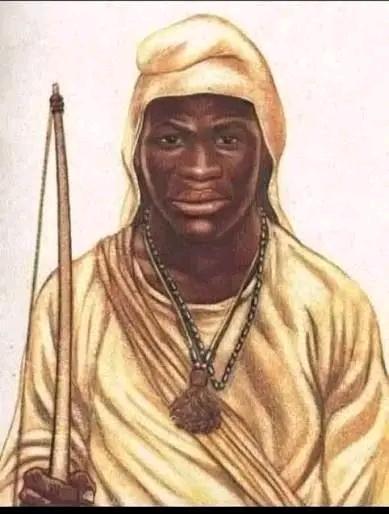
  • Sundiata Keita – The Lion King of Mali

    Long before the world heard of Mansa Musa’s golden empire,
    there was a boy — a boy who could not walk, a boy mocked by his own people,
    a boy who would one day rise to become Sundiata Keita, the first Lion King of Mali.

    His story did not begin with strength, but with prophecy and pain.

    Sundiata was born in the 13th century to King Maghan Kon Fatta of Mali and his second wife, Sogolon Kedjou — a woman many called “the Buffalo Woman” because of the prophecy that her son would one day become a mighty king.

    But at birth, Sundiata could not walk.
    He crawled while other children ran.
    He listened while others laughed.
    He endured whispers that he would never rule anything.

    Yet inside him was a quiet fire — a destiny waiting for the right moment.

    ---

    When Sundiata was still a child, tragedy struck.
    His father died, and a rival queen — jealous of Sogolon — forced Sundiata and his family into exile.
    So they wandered from kingdom to kingdom, strangers in foreign lands.
    But exile became his teacher.

    He learned languages, studied cultures, and trained with warriors across West Africa.
    Every hardship sharpened him.
    Every insult strengthened him.
    Every journey prepared him for the throne he was born to claim.

    ---

    Then came the darkness.

    Back home, a powerful conqueror named Sumanguru Kanté, king of the Sosso, rose like a shadow over Mali.
    He burned villages, controlled trade routes, and brought fear where there was once peace.
    The Mali people, once proud, were now desperate.

    And so, messengers traveled across the savannah, seeking the boy they once mocked —
    the boy who had now become a man.

    They said, “Sundiata, your people need you.”

    That was the moment the Lion stood up.

    ---

    Sundiata returned with the strength of an army and the wisdom of a seasoned leader.
    He united the Mandinka clans — something no ruler had achieved before.
    He brought archers, cavalry, and warriors from lands he once wandered as an exile.

    His banner was not just war.
    It was hope.

    At the Battle of Kirina in 1235, Sundiata faced Sumanguru.

    Legend says the earth shook.
    Arrows darkened the sky.
    War cries echoed through the plains.

    But Sundiata fought with intelligence, not just force.
    He used superior tactics, outmaneuvered his enemy, and struck with precision.
    By the end of the battle, Sumanguru was defeated — and Mali was free.

    ---

    With victory came transformation.

    Sundiata united the regions into one powerful empire —
    the Mali Empire, one of Africa’s greatest civilizations.

    He created laws known as the Kurukan Fuga Charter, one of the earliest constitutions in human history.
    He reorganized trade, protected farmers, and strengthened alliances.
    Under him, Mali became a land of prosperity, justice, and unity.

    Sundiata Keita began as a child who could not stand.
    He became the Lion King who made an empire stand tall.

    His story still echoes today —
    a reminder that destiny is not given…
    it is earned through courage, resilience, and purpose.
    Sundiata Keita – The Lion King of Mali Long before the world heard of Mansa Musa’s golden empire, there was a boy — a boy who could not walk, a boy mocked by his own people, a boy who would one day rise to become Sundiata Keita, the first Lion King of Mali. His story did not begin with strength, but with prophecy and pain. Sundiata was born in the 13th century to King Maghan Kon Fatta of Mali and his second wife, Sogolon Kedjou — a woman many called “the Buffalo Woman” because of the prophecy that her son would one day become a mighty king. But at birth, Sundiata could not walk. He crawled while other children ran. He listened while others laughed. He endured whispers that he would never rule anything. Yet inside him was a quiet fire — a destiny waiting for the right moment. --- When Sundiata was still a child, tragedy struck. His father died, and a rival queen — jealous of Sogolon — forced Sundiata and his family into exile. So they wandered from kingdom to kingdom, strangers in foreign lands. But exile became his teacher. He learned languages, studied cultures, and trained with warriors across West Africa. Every hardship sharpened him. Every insult strengthened him. Every journey prepared him for the throne he was born to claim. --- Then came the darkness. Back home, a powerful conqueror named Sumanguru Kanté, king of the Sosso, rose like a shadow over Mali. He burned villages, controlled trade routes, and brought fear where there was once peace. The Mali people, once proud, were now desperate. And so, messengers traveled across the savannah, seeking the boy they once mocked — the boy who had now become a man. They said, “Sundiata, your people need you.” That was the moment the Lion stood up. --- Sundiata returned with the strength of an army and the wisdom of a seasoned leader. He united the Mandinka clans — something no ruler had achieved before. He brought archers, cavalry, and warriors from lands he once wandered as an exile. His banner was not just war. It was hope. At the Battle of Kirina in 1235, Sundiata faced Sumanguru. Legend says the earth shook. Arrows darkened the sky. War cries echoed through the plains. But Sundiata fought with intelligence, not just force. He used superior tactics, outmaneuvered his enemy, and struck with precision. By the end of the battle, Sumanguru was defeated — and Mali was free. --- With victory came transformation. Sundiata united the regions into one powerful empire — the Mali Empire, one of Africa’s greatest civilizations. He created laws known as the Kurukan Fuga Charter, one of the earliest constitutions in human history. He reorganized trade, protected farmers, and strengthened alliances. Under him, Mali became a land of prosperity, justice, and unity. Sundiata Keita began as a child who could not stand. He became the Lion King who made an empire stand tall. His story still echoes today — a reminder that destiny is not given… it is earned through courage, resilience, and purpose.
    0 Comments ·0 Shares ·892 Views ·0 Reviews
  • THE WONDERS IGBO PEOPLE ACHIEVED DURING THE BIAFRA WAR — A STORY OF RESILIENCE!

    When the world shut its doors…
    When hunger, bombs, and blockade surrounded the East…
    The Igbo spirit stood tall.
    Biafra became a land of impossible creativity and unbreakable courage.

    1. OGBUNIGWE — The Biafran Bomb
    Designed and produced locally under war conditions.
    A weapon so effective that foreign nations later studied it.

    2. Local Refineries
    With total blockade, Igbo engineers built emergency refineries that produced petrol, diesel, and kerosene from scratch.

    3. Handmade Armoured Cars
    Mechanics and blacksmiths turned trucks and metal scraps into armored vehicles that shocked the world.

    4. Uli Airport Runway
    Built in days.
    Operated only at night.
    The lifeline of Biafra — the most dangerous runway on earth at the time.

    5. Survival Foods
    Despite starvation, Biafrans invented protein biscuits, powdered foods, and nutrient mixes that saved thousands of children.

    6. Biafran Currency, Passports & Government
    Even under siege, Biafra ran its own administration, minting money, printing stamps, and issuing passports.

    7. Unbreakable Igbo Spirit
    Communities fed each other.
    Children walked miles for survival.
    Church services continued under candlelight.
    A people who refused to disappear.

    The Biafran story is painful — but it is also beautiful.
    It is the story of a people who turned suffering into strength, hopelessness into innovation, and war into a testimony of courage.

    NDIGBO, YOU ARE AMAZING. NEVER FORGET WHERE YOU COME FROM.

    #BiafraHistory #IgboSpirit #Ndigbo #Resilience #NeverAgain #BiafraWarStories #IgboInnovation #AfricanHistory #StrengthInSuffering #BiafranHeroes #ProudlyIgbo #NeverForget
    ✊🔥 THE WONDERS IGBO PEOPLE ACHIEVED DURING THE BIAFRA WAR — A STORY OF RESILIENCE! When the world shut its doors… When hunger, bombs, and blockade surrounded the East… The Igbo spirit stood tall. Biafra became a land of impossible creativity and unbreakable courage. 🌟 1. OGBUNIGWE — The Biafran Bomb Designed and produced locally under war conditions. A weapon so effective that foreign nations later studied it. 🌟 2. Local Refineries With total blockade, Igbo engineers built emergency refineries that produced petrol, diesel, and kerosene from scratch. 🌟 3. Handmade Armoured Cars Mechanics and blacksmiths turned trucks and metal scraps into armored vehicles that shocked the world. 🌟 4. Uli Airport Runway Built in days. Operated only at night. The lifeline of Biafra — the most dangerous runway on earth at the time. 🌟 5. Survival Foods Despite starvation, Biafrans invented protein biscuits, powdered foods, and nutrient mixes that saved thousands of children. 🌟 6. Biafran Currency, Passports & Government Even under siege, Biafra ran its own administration, minting money, printing stamps, and issuing passports. 🌟 7. Unbreakable Igbo Spirit Communities fed each other. Children walked miles for survival. Church services continued under candlelight. A people who refused to disappear. The Biafran story is painful — but it is also beautiful. It is the story of a people who turned suffering into strength, hopelessness into innovation, and war into a testimony of courage. ✊💛 NDIGBO, YOU ARE AMAZING. NEVER FORGET WHERE YOU COME FROM. #BiafraHistory #IgboSpirit #Ndigbo #Resilience #NeverAgain #BiafraWarStories #IgboInnovation #AfricanHistory #StrengthInSuffering #BiafranHeroes #ProudlyIgbo #NeverForget
    0 Comments ·0 Shares ·3K Views ·0 Reviews
  • Breaking News: Luxury fashion giant Fendi, the global brand known for its signature designs often worn by Mazi Nnamdi Kanu during his court appearances, has reportedly offered the Federal Government of Nigeria a staggering $300 billion for his unconditional release.

    According to inside sources, the Italian fashion powerhouse has also announced Nnamdi Kanu as a Lifetime Global Ambassador of the Fendi brand — a move that has sent shockwaves across political and fashion circles alike.

    “Nnamdi Kanu represents strength, resilience, and identity — values Fendi deeply associates with,” a spokesperson for the company allegedly stated during a private briefing in Rome.

    #viral #fyp #highlightseveryone #everyone #trending #fypシ゚viralシ #everyonefollowers #usa #fendi
    #designer
    Breaking News: Luxury fashion giant Fendi, the global brand known for its signature designs often worn by Mazi Nnamdi Kanu during his court appearances, has reportedly offered the Federal Government of Nigeria a staggering $300 billion for his unconditional release. According to inside sources, the Italian fashion powerhouse has also announced Nnamdi Kanu as a Lifetime Global Ambassador of the Fendi brand — a move that has sent shockwaves across political and fashion circles alike. “Nnamdi Kanu represents strength, resilience, and identity — values Fendi deeply associates with,” a spokesperson for the company allegedly stated during a private briefing in Rome. #viral #fyp #highlightseveryone #everyone #trending #fypシ゚viralシ #everyonefollowers #usa #fendi #designer
    0 Comments ·0 Shares ·3K Views ·0 Reviews
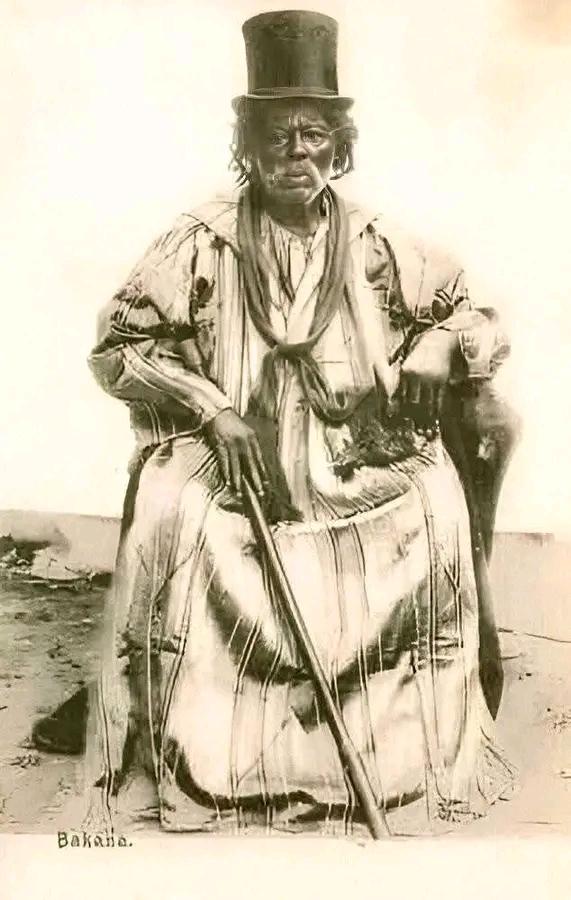
  • Behold the striking portrait of HRM King Igbanibo WillBraide, Kombo Agolia I — Jike Jikea Odum Dum, the visionary founder and first Amanyanabo of the ancient town of Bakana (Oba-Ama), established in 1881.

    A man of courage, strategy, and uncommon leadership, Igbanibo WillBraide led his people out of Elem Kalabari and laid the foundation of Bakana on its present site. With firm resolve and divine conviction, he transformed a humble settlement into a proud and thriving Kalabari kingdom community.

    Today, Bakana Town, in Degema Local Government Area of Rivers State, stands tall — not only for its storied past, but also as one of the largest and most historically significant towns in the Kalabari Kingdom.

    Oral tradition speaks of his fearless spirit, diplomatic wisdom, and commitment to unity. His reign symbolized strength and resilience, guiding his people through early colonial encounters, trade interests along the waterways, and cultural consolidation across the Niger Delta.

    His legacy lives in the festivals, customs, and communal pride of Bakana — a town that continues to honor his name with reverence. The echoes of his leadership still shape the Kalabari identity, reminding generations of the enduring power of vision and tradition.

    A king not just of land, but of history — a name written on the tides of time and the hearts of his people.

    Igbo History Since 3000bc
    Behold the striking portrait of HRM King Igbanibo WillBraide, Kombo Agolia I — Jike Jikea Odum Dum, the visionary founder and first Amanyanabo of the ancient town of Bakana (Oba-Ama), established in 1881. A man of courage, strategy, and uncommon leadership, Igbanibo WillBraide led his people out of Elem Kalabari and laid the foundation of Bakana on its present site. With firm resolve and divine conviction, he transformed a humble settlement into a proud and thriving Kalabari kingdom community. Today, Bakana Town, in Degema Local Government Area of Rivers State, stands tall — not only for its storied past, but also as one of the largest and most historically significant towns in the Kalabari Kingdom. Oral tradition speaks of his fearless spirit, diplomatic wisdom, and commitment to unity. His reign symbolized strength and resilience, guiding his people through early colonial encounters, trade interests along the waterways, and cultural consolidation across the Niger Delta. His legacy lives in the festivals, customs, and communal pride of Bakana — a town that continues to honor his name with reverence. The echoes of his leadership still shape the Kalabari identity, reminding generations of the enduring power of vision and tradition. A king not just of land, but of history — a name written on the tides of time and the hearts of his people. Igbo History Since 3000bc
    0 Comments ·0 Shares ·408 Views ·0 Reviews
  • Breaking News: Dubai President Declares South East Nigeria the Safest Place in Africa

    In a dramatic address to Black African leaders, Sheikh Mohamed bin Zayed Al Nahyan asserted that the region of South-East Nigeria is “the only safe place in all of Africa” for Black people. He declared:

    “In the South-East of Nigeria no harm or terror attack can touch you. The people there stand ready and vigilant for any threat.”

    He added that the resilience and discipline of the people in the South East have made their land a symbol of safety, peace, and progress across the continent.

    “In a continent struggling with insecurity, the South East of Nigeria stands as a fortress of safety and pride for Africans,” he concluded.
    Breaking News: Dubai President Declares South East Nigeria the Safest Place in Africa In a dramatic address to Black African leaders, Sheikh Mohamed bin Zayed Al Nahyan asserted that the region of South-East Nigeria is “the only safe place in all of Africa” for Black people. He declared: “In the South-East of Nigeria no harm or terror attack can touch you. The people there stand ready and vigilant for any threat.” He added that the resilience and discipline of the people in the South East have made their land a symbol of safety, peace, and progress across the continent. “In a continent struggling with insecurity, the South East of Nigeria stands as a fortress of safety and pride for Africans,” he concluded.
    0 Comments ·0 Shares ·571 Views ·0 Reviews
  • It's likely to come as a surprise to Korra's fans, but our relationship is likely to make headlines soon. I've always aspired to marry a single mother, and it appears that dream is on the cusp of being fulfilled. Korra has captured my heart with her strength and resilience as a single parent. Our bond has grown stronger, and we're excited to embark on this new chapter in our lives together.
    It's likely to come as a surprise to Korra's fans, but our relationship is likely to make headlines soon. I've always aspired to marry a single mother, and it appears that dream is on the cusp of being fulfilled. Korra has captured my heart with her strength and resilience as a single parent. Our bond has grown stronger, and we're excited to embark on this new chapter in our lives together.
    0 Comments ·0 Shares ·405 Views ·0 Reviews
  • BREAKING NEWS: “Don’t Joke With History — Nigeria Didn’t Defeat the Igbos, It Was a Global Alliance,” Sultan of Sokoto Warns Yoruba Elders

    In a statement that has sparked widespread reactions, the Sultan of Sokoto has cautioned Yoruba elders and political leaders against provoking tensions with the Igbo people, reminding them of the resilience and strength the Igbos demonstrated during the Nigerian Civil War.

    According to the Sultan, it’s misleading to claim that Nigeria “won” the Biafra war purely by its own strength.

    “Let’s be truthful — Nigeria did not fight the Igbos alone. Britain, America, and five other world powers joined forces to suppress them,” the Sultan said. “On their own, no African nation could have defeated the Igbos in battle. These are people born to fight and survive.”

    The Sultan emphasized that the Igbos’ ability to sustain a full-scale war for nearly three years (1967–1970), despite international blockades and limited resources, remains unmatched in African history.

    “No nation in Africa has ever held out for three years under such pressure and isolation,” he added. “That’s why it sounds almost laughable when anyone talks about going to war with the Igbos today. Even during the darkest days of the war, there were moments the world thought Biafra would win. They were that determined.”

    BREAKING NEWS: “Don’t Joke With History — Nigeria Didn’t Defeat the Igbos, It Was a Global Alliance,” Sultan of Sokoto Warns Yoruba Elders In a statement that has sparked widespread reactions, the Sultan of Sokoto has cautioned Yoruba elders and political leaders against provoking tensions with the Igbo people, reminding them of the resilience and strength the Igbos demonstrated during the Nigerian Civil War. According to the Sultan, it’s misleading to claim that Nigeria “won” the Biafra war purely by its own strength. “Let’s be truthful — Nigeria did not fight the Igbos alone. Britain, America, and five other world powers joined forces to suppress them,” the Sultan said. “On their own, no African nation could have defeated the Igbos in battle. These are people born to fight and survive.” The Sultan emphasized that the Igbos’ ability to sustain a full-scale war for nearly three years (1967–1970), despite international blockades and limited resources, remains unmatched in African history. “No nation in Africa has ever held out for three years under such pressure and isolation,” he added. “That’s why it sounds almost laughable when anyone talks about going to war with the Igbos today. Even during the darkest days of the war, there were moments the world thought Biafra would win. They were that determined.”
    0 Comments ·0 Shares ·388 Views ·0 Reviews
001Davido https://001davido.com