• When ENUGU COAL GENERATED ELECTRICITY FOR NIGERIA AND NEIGHBOURING COUNTRIES.

    Kwame Nkrumah, Ghana's first Prime Minister, visits Nigeria, February 1959.
    When Nkrumah arrived in Enugu, he visited the Enugu coal mine and watched the magnificent plant, which supplied Ghana her electricity, in action.

    In 1916, Nigeria’s first coal-fired power plant in Enugu began generating electricity, marking the dawn of industrial energy production in the country. The discovery of coal in the Udi Hills had turned the sleepy town of Enugu into a bustling mining hub known as the “Coal City.” The electricity generated powered railway lines, mines, and colonial offices, fueling the growth of southeastern Nigeria. Workers toiled deep underground, their efforts lighting up cities hundreds of miles away and across neighbouring countries. That era not only symbolized technological progress but also laid foundation for Nigeria’s modern energy history.
    When ENUGU COAL GENERATED ELECTRICITY FOR NIGERIA AND NEIGHBOURING COUNTRIES. Kwame Nkrumah, Ghana's first Prime Minister, visits Nigeria, February 1959. When Nkrumah arrived in Enugu, he visited the Enugu coal mine and watched the magnificent plant, which supplied Ghana her electricity, in action. In 1916, Nigeria’s first coal-fired power plant in Enugu began generating electricity, marking the dawn of industrial energy production in the country. The discovery of coal in the Udi Hills had turned the sleepy town of Enugu into a bustling mining hub known as the “Coal City.” The electricity generated powered railway lines, mines, and colonial offices, fueling the growth of southeastern Nigeria. Workers toiled deep underground, their efforts lighting up cities hundreds of miles away and across neighbouring countries. That era not only symbolized technological progress but also laid foundation for Nigeria’s modern energy history.
    0 Комментарии ·0 Поделились ·1Кб Просмотры ·0 предпросмотр
  • How Coal in Enugu led to creation of Port Harcourt- (Rivers state Nigeria )

    The city now known as Port Harcourt, capital of Rivers State in Southern Nigeria, was originally called Iguocha—a name believed to derive from the Igbo expression “Ụ́gwụ́ Ọ́chá,” often interpreted as “Bright Hill” or “White Ridge.” When the British colonial administration sought a coastal outlet for exporting the newly discovered coal deposits in Enugu (found in 1909), they established a port city along the Bonny River. In 1913, Governor-General Lord Frederick Lugard renamed the area Port Harcourt in honor of Lord Lewis Vernon Harcourt (1863–1922), the then Secretary of State for the Colonies. Its primary purpose was to serve as the export terminal for Enugu coal to Britain.

    Historical Relationship Between Port Harcourt and the Igbo People
    • Early Settlement and Cultural Links:
    Before colonial development, the area now called Port Harcourt and its surrounding villages were inhabited by communities with deep cultural and commercial ties to the Ikwerre, an ethnic group whose language and cultural patterns show strong historical connections to the wider Igbo cultural sphere. Many scholars consider the Ikwerre to be part of the larger Igboid linguistic group.
    • Igbo Migration and Urban Growth:
    As the port city expanded under colonial rule, thousands of Igbo people from various regions—particularly from Imo, Abia, and Anambra—migrated to Iguocha/Port Harcourt in search of work in railways, docks, coal transport, and emerging industries. By the mid-20th century, Igbo traders, artisans, and professionals played a major role in shaping the city’s commercial identity.
    • The Railway Connection:
    The Enugu–Port Harcourt railway, completed between 1913 and 1916, linked the Igbo hinterland directly to the coast. This line strengthened the economic integration between Igbo populations and the growing port city, making Port Harcourt a strategic lifeline for Eastern Nigeria.
    • Cultural Influence:
    Markets, festivals, and social institutions in early Port Harcourt bore strong Igbo influences, as Igbo-speaking populations became an essential part of the city’s demographic and economic structure.
    How Coal in Enugu led to creation of Port Harcourt- (Rivers state Nigeria 🇳🇬 ) The city now known as Port Harcourt, capital of Rivers State in Southern Nigeria, was originally called Iguocha—a name believed to derive from the Igbo expression “Ụ́gwụ́ Ọ́chá,” often interpreted as “Bright Hill” or “White Ridge.” When the British colonial administration sought a coastal outlet for exporting the newly discovered coal deposits in Enugu (found in 1909), they established a port city along the Bonny River. In 1913, Governor-General Lord Frederick Lugard renamed the area Port Harcourt in honor of Lord Lewis Vernon Harcourt (1863–1922), the then Secretary of State for the Colonies. Its primary purpose was to serve as the export terminal for Enugu coal to Britain. Historical Relationship Between Port Harcourt and the Igbo People • Early Settlement and Cultural Links: Before colonial development, the area now called Port Harcourt and its surrounding villages were inhabited by communities with deep cultural and commercial ties to the Ikwerre, an ethnic group whose language and cultural patterns show strong historical connections to the wider Igbo cultural sphere. Many scholars consider the Ikwerre to be part of the larger Igboid linguistic group. • Igbo Migration and Urban Growth: As the port city expanded under colonial rule, thousands of Igbo people from various regions—particularly from Imo, Abia, and Anambra—migrated to Iguocha/Port Harcourt in search of work in railways, docks, coal transport, and emerging industries. By the mid-20th century, Igbo traders, artisans, and professionals played a major role in shaping the city’s commercial identity. • The Railway Connection: The Enugu–Port Harcourt railway, completed between 1913 and 1916, linked the Igbo hinterland directly to the coast. This line strengthened the economic integration between Igbo populations and the growing port city, making Port Harcourt a strategic lifeline for Eastern Nigeria. • Cultural Influence: Markets, festivals, and social institutions in early Port Harcourt bore strong Igbo influences, as Igbo-speaking populations became an essential part of the city’s demographic and economic structure.
    0 Комментарии ·0 Поделились ·937 Просмотры ·0 предпросмотр
  • Okokon Ndem, from Calabar was the second most wanted man by the Nigerian Government after Ojukwu - the Biafran leader.

    Okokon Ndem did not fight physically in the war, but his verbal contributions in the war shook the foundation of the Nigerian Government.

    Even after the capital of Biafra fell, Okokon Ndem kept reporting fearlessly as though the radio Biafran was still in Enugu.

    This made the Federal troops wonder where he was reporting from because they had searched everywhere in Enugu, unknown to them that the Biafra radio they sought to capture was in the back seat of a Land rover Jeep.

    Okokon Ndem's fearless broadcasting increased the morale of the Biafran soldiers and instilled fear and uncertainty in the Nigerian troops.

    Below are some of his statements;

    1.“Biafra has a military that no force in Africa can defeat.”

    2. “The entire 2nd Division of the Nigerian Army is dead. Happening now at Abagana.”

    3. “We have developed a nuclear warhead (Ogbunigwe) that will wipe out the Nigerian Army.”

    4. “Awolowo has assured us that as soon as we secede, the West will follow.”

    5. “Nigeria is committing genocide against the Igbo.”

    6. “Nigeria has blockaded Biafra to cause mass starvation.”

    7.“The Yorubas are complaining that the war is lasting too long. They will soon throw in the towel, leaving only the Northerners to fight Biafra. It will be easier to defeat the Northerners!”

    8.“It is the British, Russians, and Egyptians who are helping Nigeria gain the upper hand!”
    Okokon Ndem, from Calabar was the second most wanted man by the Nigerian Government after Ojukwu - the Biafran leader. Okokon Ndem did not fight physically in the war, but his verbal contributions in the war shook the foundation of the Nigerian Government. Even after the capital of Biafra fell, Okokon Ndem kept reporting fearlessly as though the radio Biafran was still in Enugu. This made the Federal troops wonder where he was reporting from because they had searched everywhere in Enugu, unknown to them that the Biafra radio they sought to capture was in the back seat of a Land rover Jeep. Okokon Ndem's fearless broadcasting increased the morale of the Biafran soldiers and instilled fear and uncertainty in the Nigerian troops. Below are some of his statements; 1.“Biafra has a military that no force in Africa can defeat.” 2. “The entire 2nd Division of the Nigerian Army is dead. Happening now at Abagana.” 3. “We have developed a nuclear warhead (Ogbunigwe) that will wipe out the Nigerian Army.” 4. “Awolowo has assured us that as soon as we secede, the West will follow.” 5. “Nigeria is committing genocide against the Igbo.” 6. “Nigeria has blockaded Biafra to cause mass starvation.” 7.“The Yorubas are complaining that the war is lasting too long. They will soon throw in the towel, leaving only the Northerners to fight Biafra. It will be easier to defeat the Northerners!” 8.“It is the British, Russians, and Egyptians who are helping Nigeria gain the upper hand!”
    0 Комментарии ·0 Поделились ·717 Просмотры ·0 предпросмотр
  • EKWENSU IS NOT THE SATAN OF CHRISTIANITY: LET’S UNDERSTAND THIS BETTER

    Growing up, many of us heard the name Ekwensu and immediately imagined the Christian Devil — a dangerous spirit waiting to destroy people. As children, we were warned never to mention the name. It was associated with fear, darkness, and everything “evil.”

    But as I grew older and began to study African spirituality with an open mind, I realised something important:
    Ekwensu is not the Satan we were taught to fear.

    In fact, the more I learned, the more I discovered how misunderstood this ancient Igbo deity truly is.

    So who exactly is Ekwensu?

    Ekwensu is a trickster god — a spirit of strategy, trade, war, courage, and negotiation. In old Igbo society, traders called upon him when they needed sharpness in business or guidance in difficult bargaining situations. He represents energy, boldness, unpredictability, and change.

    He was also invoked during times of war to strengthen the hearts of warriors at the battlefield. After the war, cleansing rituals were performed before the warriors were fully reintegrated into society — not because Ekwensu was “evil,” but because his intense energy needed to be balanced.

    Because of this fierce and restless nature, he was linked to war and victory, especially during moments when communities required bravery or mental sharpness to survive difficult periods.

    After conflicts ended, people would “send away” or calm the Ekwensu energy to restore peace. This was not because he was evil — it was because his energy could fuel conflict if left unchecked.

    A Balance, Not a Devil

    Our ancestors understood balance better than we do today.
    Just like day and night, joy and sorrow, calm and chaos — Ekwensu and Chukwu represented different sides of the divine order.

    Igbo spirituality never taught that there is a physical Devil roaming around.
    Instead, it teaches that the divine forces exist within us, guiding our choices.

    When we act with kindness, patience, and love, we express our higher nature.
    When we act out of anger, greed, or vengeance, we tap into our lower energy — the Ekwensu side of us.

    How Ekwensu Became “The Devil”

    When Christianity and colonialism entered Igboland, missionaries needed a “Devil figure” to fit their teachings — but the African spiritual world had no such being.

    So deities like Seth (Egypt), Èsù (Yoruba), and Ekwensu (Igbo) — who had qualities such as trickery, chaos, or war — were labelled as Satan.
    This interpretation came from Europeans, not from Igbo belief.

    Ekwensu never fought God, never fell from heaven, and never tempted Adam and Eve.
    These are foreign stories imposed on African cultures.

    Evidence From Our Communities

    If Ekwensu truly meant “Satan,” Igbo people would never name their children or villages after him. Yet we have:

    Obiekwensu (Senator Abaribe’s community)

    Lekwensu in Umunneochi, Abia State

    Umunkwensu in Enugu State

    The renowned writer Cyprian Ekwensi

    These names show that Ekwensu originally represented something normal and respected — not a demonic figure.

    The Real Battle Is Within Us

    When someone commits evil, it is not a “Devil” pushing them.
    It is a choice — a decision made from the lower part of their spirit.

    Igbo spirituality has always taught that when we die, we return to the Ancestors and answer for how we used the divine energies given to us by Chukwu.
    This belief existed long before Christianity.

    Let’s Reclaim the Truth

    Ekwensu is not Satan.
    Satan is not Ekwensu.
    One belongs to Christian theology; the other belongs to Igbo cosmology.

    Our spirituality deserves to be understood on its own terms.
    Let us honour our ancestors by learning the truth about our traditions, not the version reshaped by fear and foreign influence.
    EKWENSU IS NOT THE SATAN OF CHRISTIANITY: LET’S UNDERSTAND THIS BETTER Growing up, many of us heard the name Ekwensu and immediately imagined the Christian Devil — a dangerous spirit waiting to destroy people. As children, we were warned never to mention the name. It was associated with fear, darkness, and everything “evil.” But as I grew older and began to study African spirituality with an open mind, I realised something important: Ekwensu is not the Satan we were taught to fear. In fact, the more I learned, the more I discovered how misunderstood this ancient Igbo deity truly is. So who exactly is Ekwensu? Ekwensu is a trickster god — a spirit of strategy, trade, war, courage, and negotiation. In old Igbo society, traders called upon him when they needed sharpness in business or guidance in difficult bargaining situations. He represents energy, boldness, unpredictability, and change. He was also invoked during times of war to strengthen the hearts of warriors at the battlefield. After the war, cleansing rituals were performed before the warriors were fully reintegrated into society — not because Ekwensu was “evil,” but because his intense energy needed to be balanced. Because of this fierce and restless nature, he was linked to war and victory, especially during moments when communities required bravery or mental sharpness to survive difficult periods. After conflicts ended, people would “send away” or calm the Ekwensu energy to restore peace. This was not because he was evil — it was because his energy could fuel conflict if left unchecked. A Balance, Not a Devil Our ancestors understood balance better than we do today. Just like day and night, joy and sorrow, calm and chaos — Ekwensu and Chukwu represented different sides of the divine order. Igbo spirituality never taught that there is a physical Devil roaming around. Instead, it teaches that the divine forces exist within us, guiding our choices. When we act with kindness, patience, and love, we express our higher nature. When we act out of anger, greed, or vengeance, we tap into our lower energy — the Ekwensu side of us. How Ekwensu Became “The Devil” When Christianity and colonialism entered Igboland, missionaries needed a “Devil figure” to fit their teachings — but the African spiritual world had no such being. So deities like Seth (Egypt), Èsù (Yoruba), and Ekwensu (Igbo) — who had qualities such as trickery, chaos, or war — were labelled as Satan. This interpretation came from Europeans, not from Igbo belief. Ekwensu never fought God, never fell from heaven, and never tempted Adam and Eve. These are foreign stories imposed on African cultures. Evidence From Our Communities If Ekwensu truly meant “Satan,” Igbo people would never name their children or villages after him. Yet we have: Obiekwensu (Senator Abaribe’s community) Lekwensu in Umunneochi, Abia State Umunkwensu in Enugu State The renowned writer Cyprian Ekwensi These names show that Ekwensu originally represented something normal and respected — not a demonic figure. The Real Battle Is Within Us When someone commits evil, it is not a “Devil” pushing them. It is a choice — a decision made from the lower part of their spirit. Igbo spirituality has always taught that when we die, we return to the Ancestors and answer for how we used the divine energies given to us by Chukwu. This belief existed long before Christianity. Let’s Reclaim the Truth Ekwensu is not Satan. Satan is not Ekwensu. One belongs to Christian theology; the other belongs to Igbo cosmology. Our spirituality deserves to be understood on its own terms. Let us honour our ancestors by learning the truth about our traditions, not the version reshaped by fear and foreign influence.
    0 Комментарии ·0 Поделились ·907 Просмотры ·0 предпросмотр
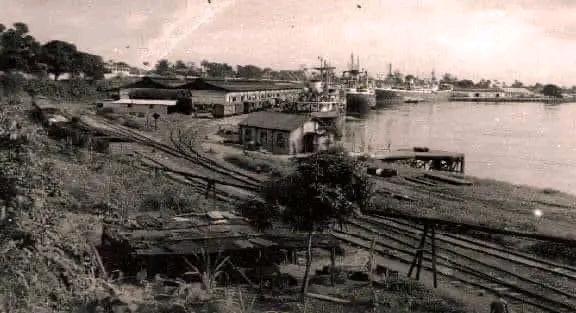
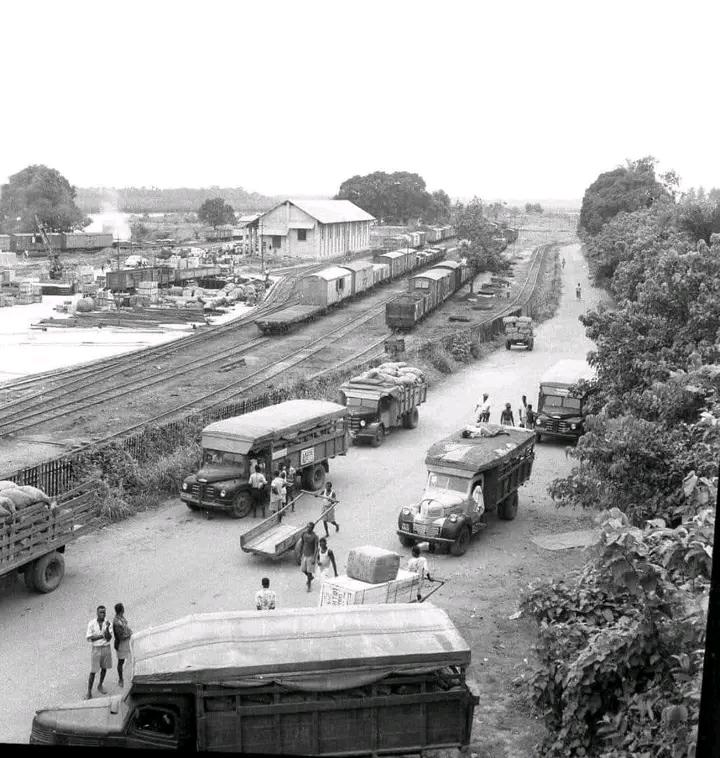
  • ENUGU-PORT HARCOURT RAIL LINE.

    Coal was discovered in Enugu in 1909 and that led to the founding of Port Harcourt 3 years later. By 1915,the first export of Enugu coal left for Britain through Port Harcourt.

    A railway was built between Enugu and PH within 3 years...

    Photo:A very busy street near the railway station in PortHarcourt, 1954

    .....good old days...
    ENUGU-PORT HARCOURT RAIL LINE. Coal was discovered in Enugu in 1909 and that led to the founding of Port Harcourt 3 years later. By 1915,the first export of Enugu coal left for Britain through Port Harcourt. A railway was built between Enugu and PH within 3 years... Photo:A very busy street near the railway station in PortHarcourt, 1954 .....good old days...
    0 Комментарии ·0 Поделились ·495 Просмотры ·0 предпросмотр
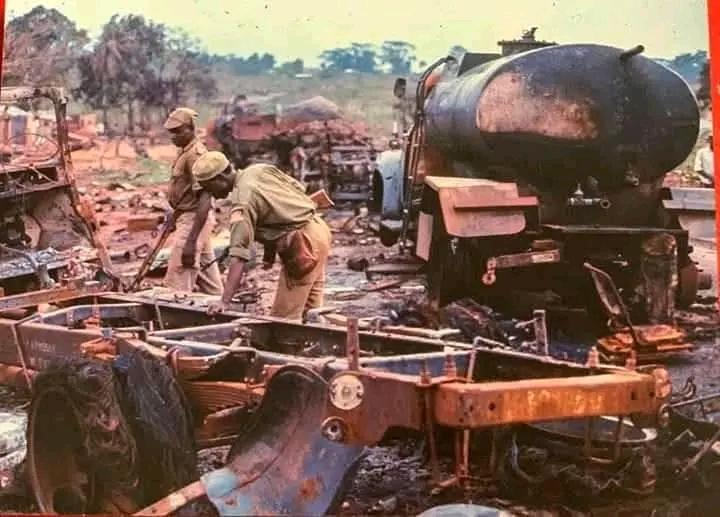
  • 𝗔𝗕𝗔𝗚𝗔𝗡𝗔 𝗔𝗠𝗕û𝗦𝗛
    On 31 March 1968, a convoy consisting of 106 vehicles belonging to the Nigerian 2nd Division transporting 6,000 soldiers, as well as armour from Onitsha to Enugu was ambûshed and dec!mated in the town of Abagana by a small unit of Biafran soldiers led by Major Jonathan Uchendu.

    ■ Homemade Ogbunigwe r0cket mis$iles were launched by the Biafrans at a tanker truck carrying gasoline which caused an enormous expl0sion destr0ying many of the convoy's armoured vehicles and k!lli!ng a large number of Nigerian troops.350 tons of Nigerian Army equipment were destr0yed or captur£d by the Biafran troops.After the rock£t attack the Biafran soldiers opened fir£ on the convoy with small arms f!re , k!!lling many more Nigerian soldiers.
    𝗔𝗕𝗔𝗚𝗔𝗡𝗔 𝗔𝗠𝗕û𝗦𝗛 On 31 March 1968, a convoy consisting of 106 vehicles belonging to the Nigerian 2nd Division transporting 6,000 soldiers, as well as armour from Onitsha to Enugu was ambûshed and dec!mated in the town of Abagana by a small unit of Biafran soldiers led by Major Jonathan Uchendu. ■ Homemade Ogbunigwe r0cket mis$iles were launched by the Biafrans at a tanker truck carrying gasoline which caused an enormous expl0sion destr0ying many of the convoy's armoured vehicles and k!lli!ng a large number of Nigerian troops.350 tons of Nigerian Army equipment were destr0yed or captur£d by the Biafran troops.After the rock£t attack the Biafran soldiers opened fir£ on the convoy with small arms f!re , k!!lling many more Nigerian soldiers.
    0 Комментарии ·0 Поделились ·366 Просмотры ·0 предпросмотр
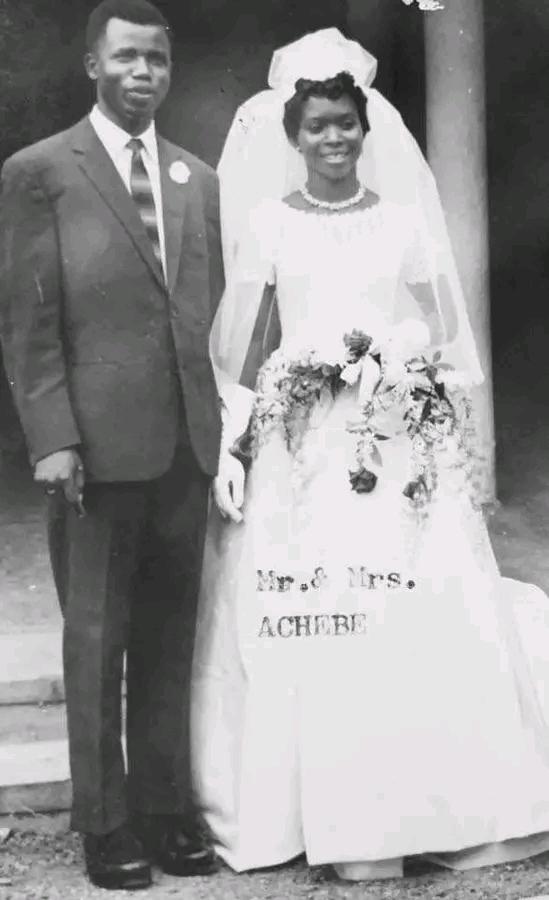
  • Wedding Photo of Chinua Achebe and Christiana (Christie) Chinwe Okoli, circa 1961.
    The couple met at the Nigerian Broadcasting Service (NBS), Enugu where Achebe served as Controller, NBS Eastern Region and Okoli was a student intern. He writes in his memoir, There Was a Country:
    "I was told by my secretary that a delegation of university students wanted to speak with me about a matter of great importance. The students trooped into my office led by their leader, Christie Okoli. She was a beautiful young woman and very articulate, and when she spoke she caught my attention. I was spellbound. In grave tones she announced the complaint of the students: There was one student whose salary was higher than all the others, and they wanted 'equal pay for equal time'. I was kindly disposed toward them and made sure that all of the students received the same remuneration for the work that they did.
    My interest in Christie grew rapidly into a desire to get to know her better. I discovered, for instance, that she was from the ancient town of Awka, the present-day capital of Anambra state. Awka held a soft spot in my heart because it was my mother’s hometown, and it was known throughout Igbo land and beyond for its skilled artisans and blacksmiths, who fashioned bronze, wood, and metal carvings of a bold and haunting beauty.
    Two years into our friendship, Christie and I were engaged."
    - Photo courtesy of the Amos Tutuola Archive, at University of Texas, Austin. Reproduced by Brittle Paper
    Wedding Photo of Chinua Achebe and Christiana (Christie) Chinwe Okoli, circa 1961. The couple met at the Nigerian Broadcasting Service (NBS), Enugu where Achebe served as Controller, NBS Eastern Region and Okoli was a student intern. He writes in his memoir, There Was a Country: "I was told by my secretary that a delegation of university students wanted to speak with me about a matter of great importance. The students trooped into my office led by their leader, Christie Okoli. She was a beautiful young woman and very articulate, and when she spoke she caught my attention. I was spellbound. In grave tones she announced the complaint of the students: There was one student whose salary was higher than all the others, and they wanted 'equal pay for equal time'. I was kindly disposed toward them and made sure that all of the students received the same remuneration for the work that they did. My interest in Christie grew rapidly into a desire to get to know her better. I discovered, for instance, that she was from the ancient town of Awka, the present-day capital of Anambra state. Awka held a soft spot in my heart because it was my mother’s hometown, and it was known throughout Igbo land and beyond for its skilled artisans and blacksmiths, who fashioned bronze, wood, and metal carvings of a bold and haunting beauty. Two years into our friendship, Christie and I were engaged." - Photo courtesy of the Amos Tutuola Archive, at University of Texas, Austin. Reproduced by Brittle Paper
    0 Комментарии ·0 Поделились ·477 Просмотры ·0 предпросмотр
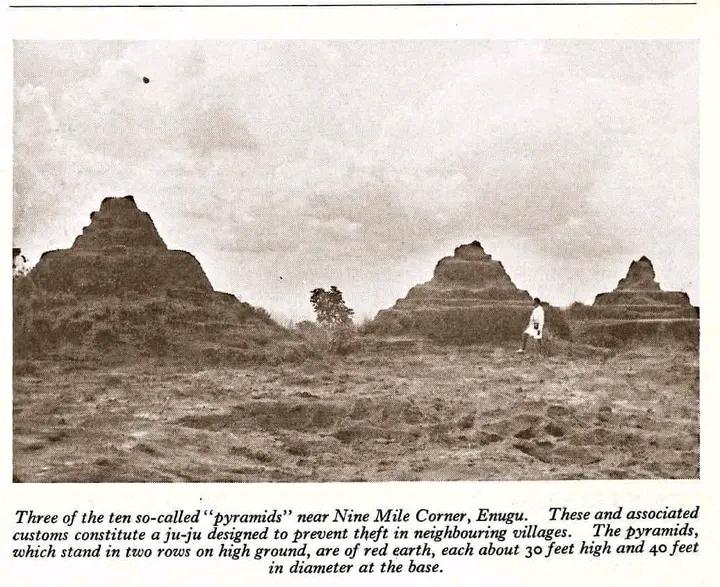
  • NSUDE PYRAMID

    On the Udi highlands of Enugu state, the Nsude pyramids once stood as a testimony to Black Africa’s level of cultural enlightenment.

    In 1935, G. I. Jones, an anthropoligist and colonial administrator took pictures of the Nsude pyramids, ancient Igbo pyramids, in Udi, Enugu state Nigeria with a Roloflex camera which he acquired and developed a system for immediate developing which produced negatives of such high quality

    The first base section was 60 ft. in circumference and 3 ft. in height. The next stack was 45 ft. in circumference. Circular stacks continued, till it reached the top. they are 10 in number.

    The structures were temples for the god Ala/Uto, who was believed to reside at the top. A stick was placed at the top to represent the god’s residence.

    Strikingly, these pyramids bear striking resemblance to the Step Pyramid of Saqqara, in Egypt constructed in 2648 BC and without a doubt, derive from the same cultural/religious/philosophical tradition that inspired this ancient Egyptian monument.

    Souce: Nigeria Magazine, 4th Quarter 1938,original footage.
    NSUDE PYRAMID On the Udi highlands of Enugu state, the Nsude pyramids once stood as a testimony to Black Africa’s level of cultural enlightenment. In 1935, G. I. Jones, an anthropoligist and colonial administrator took pictures of the Nsude pyramids, ancient Igbo pyramids, in Udi, Enugu state Nigeria with a Roloflex camera which he acquired and developed a system for immediate developing which produced negatives of such high quality The first base section was 60 ft. in circumference and 3 ft. in height. The next stack was 45 ft. in circumference. Circular stacks continued, till it reached the top. they are 10 in number. The structures were temples for the god Ala/Uto, who was believed to reside at the top. A stick was placed at the top to represent the god’s residence. Strikingly, these pyramids bear striking resemblance to the Step Pyramid of Saqqara, in Egypt constructed in 2648 BC and without a doubt, derive from the same cultural/religious/philosophical tradition that inspired this ancient Egyptian monument. Souce: Nigeria Magazine, 4th Quarter 1938,original footage.
    0 Комментарии ·0 Поделились ·368 Просмотры ·0 предпросмотр
  • Do you know southeast Nigeria has the highest number of caves in Nigeria.Below is
    Awhum Cave and Waterfall, Enugu, Nigeria.

    𝙲𝚊𝚟𝚎𝚜 𝚊𝚛𝚎 𝚏𝚘𝚛𝚖𝚎𝚍 𝚏𝚛𝚘𝚖 𝚋𝚛𝚎𝚊𝚔𝚍𝚘𝚠𝚗 𝚘𝚏 𝚛𝚘𝚌𝚔𝚜 𝚊𝚗𝚍 𝚞𝚜𝚞𝚊𝚕𝚕𝚢 𝚎𝚡𝚝𝚎𝚗𝚍𝚜 𝚞𝚗𝚍𝚎𝚛𝚐𝚛𝚘𝚞𝚗𝚍.𝙸𝚗 𝚙𝚛𝚎𝚑𝚒𝚜𝚝𝚘𝚛𝚒𝚌 𝚝𝚒𝚖𝚎𝚜 𝚝𝚑𝚎𝚢 𝚜𝚎𝚛𝚟𝚎 𝚊𝚜 𝚗𝚊𝚝𝚞𝚛𝚊𝚕 𝚑𝚘𝚖𝚎𝚜 𝚏𝚘𝚛 𝚙𝚛𝚒𝚖𝚒𝚝𝚒𝚟𝚎 𝚖𝚎𝚗 𝚘𝚛 𝚗𝚎𝚊𝚗𝚍𝚎𝚛𝚝𝚑𝚊𝚕𝚜.𝚃𝚑𝚎𝚢 𝚊𝚛𝚎 𝚊𝚕𝚜𝚘 𝚜𝚒𝚝𝚎𝚜 𝚠𝚑𝚎𝚛𝚎 𝚊𝚛𝚌𝚑𝚊𝚎𝚘𝚕𝚘𝚐𝚒𝚌𝚊𝚕 𝚍𝚒𝚜𝚌𝚘𝚟𝚎𝚛𝚒𝚎𝚜 𝚊𝚛𝚎 𝚖𝚊𝚍𝚎 𝚕𝚒𝚔𝚎 𝚜𝚝𝚘𝚗𝚎 𝚝𝚘𝚘𝚕𝚜 𝚊𝚗𝚍 𝚊𝚛𝚌𝚑𝚎𝚘𝚕𝚒𝚎𝚗 𝚑𝚊𝚗𝚍𝚎𝚡 𝚞𝚜𝚎𝚍 𝚋𝚢 𝚙𝚛𝚎𝚑𝚒𝚜𝚝𝚘𝚛𝚒𝚌 𝚖𝚎𝚗.𝚃𝚑𝚎 𝚕𝚊𝚛𝚐𝚎 𝚗𝚞𝚖𝚋𝚎𝚛 𝚘𝚏 𝚌𝚊𝚟𝚎𝚜 𝚒𝚗 𝚒𝚐𝚋𝚘𝚕𝚊𝚗𝚍 𝚊𝚗𝚍 𝚙𝚛𝚎𝚜𝚎𝚗𝚌𝚎 𝚘𝚏 𝚜𝚝𝚘𝚗𝚎 𝚝𝚘𝚘𝚕𝚜 𝚎𝚜𝚙𝚎𝚌𝚒𝚊𝚕𝚕𝚢 𝚊𝚝 𝚞𝚐𝚠𝚞𝚎𝚕𝚎 𝚞𝚝𝚞𝚛𝚞,𝙰𝚏𝚒𝚔𝚙𝚘 ,𝚜𝚞𝚙𝚙𝚘𝚛𝚝𝚜 𝚝𝚑𝚎 𝚌𝚕𝚊𝚒𝚖 𝚝𝚑𝚊𝚝 𝚒𝚐𝚋𝚘 𝚊𝚗𝚌𝚎𝚜𝚝𝚘𝚛𝚜 𝚑𝚊𝚟𝚎 𝚒𝚗𝚑𝚊𝚋𝚒𝚝𝚎𝚍 𝚝𝚑𝚎𝚛𝚎 𝚕𝚊nd 𝚕𝚘𝚗𝚐 𝚋𝚎𝚏𝚘𝚛𝚎 100,000 𝚢𝚎𝚊𝚛𝚜.
    ____________________________________
    Follow up Igbo History Since 3000bc
    Do you know southeast Nigeria has the highest number of caves in Nigeria.Below is Awhum Cave and Waterfall, Enugu, Nigeria. 𝙲𝚊𝚟𝚎𝚜 𝚊𝚛𝚎 𝚏𝚘𝚛𝚖𝚎𝚍 𝚏𝚛𝚘𝚖 𝚋𝚛𝚎𝚊𝚔𝚍𝚘𝚠𝚗 𝚘𝚏 𝚛𝚘𝚌𝚔𝚜 𝚊𝚗𝚍 𝚞𝚜𝚞𝚊𝚕𝚕𝚢 𝚎𝚡𝚝𝚎𝚗𝚍𝚜 𝚞𝚗𝚍𝚎𝚛𝚐𝚛𝚘𝚞𝚗𝚍.𝙸𝚗 𝚙𝚛𝚎𝚑𝚒𝚜𝚝𝚘𝚛𝚒𝚌 𝚝𝚒𝚖𝚎𝚜 𝚝𝚑𝚎𝚢 𝚜𝚎𝚛𝚟𝚎 𝚊𝚜 𝚗𝚊𝚝𝚞𝚛𝚊𝚕 𝚑𝚘𝚖𝚎𝚜 𝚏𝚘𝚛 𝚙𝚛𝚒𝚖𝚒𝚝𝚒𝚟𝚎 𝚖𝚎𝚗 𝚘𝚛 𝚗𝚎𝚊𝚗𝚍𝚎𝚛𝚝𝚑𝚊𝚕𝚜.𝚃𝚑𝚎𝚢 𝚊𝚛𝚎 𝚊𝚕𝚜𝚘 𝚜𝚒𝚝𝚎𝚜 𝚠𝚑𝚎𝚛𝚎 𝚊𝚛𝚌𝚑𝚊𝚎𝚘𝚕𝚘𝚐𝚒𝚌𝚊𝚕 𝚍𝚒𝚜𝚌𝚘𝚟𝚎𝚛𝚒𝚎𝚜 𝚊𝚛𝚎 𝚖𝚊𝚍𝚎 𝚕𝚒𝚔𝚎 𝚜𝚝𝚘𝚗𝚎 𝚝𝚘𝚘𝚕𝚜 𝚊𝚗𝚍 𝚊𝚛𝚌𝚑𝚎𝚘𝚕𝚒𝚎𝚗 𝚑𝚊𝚗𝚍𝚎𝚡 𝚞𝚜𝚎𝚍 𝚋𝚢 𝚙𝚛𝚎𝚑𝚒𝚜𝚝𝚘𝚛𝚒𝚌 𝚖𝚎𝚗.𝚃𝚑𝚎 𝚕𝚊𝚛𝚐𝚎 𝚗𝚞𝚖𝚋𝚎𝚛 𝚘𝚏 𝚌𝚊𝚟𝚎𝚜 𝚒𝚗 𝚒𝚐𝚋𝚘𝚕𝚊𝚗𝚍 𝚊𝚗𝚍 𝚙𝚛𝚎𝚜𝚎𝚗𝚌𝚎 𝚘𝚏 𝚜𝚝𝚘𝚗𝚎 𝚝𝚘𝚘𝚕𝚜 𝚎𝚜𝚙𝚎𝚌𝚒𝚊𝚕𝚕𝚢 𝚊𝚝 𝚞𝚐𝚠𝚞𝚎𝚕𝚎 𝚞𝚝𝚞𝚛𝚞,𝙰𝚏𝚒𝚔𝚙𝚘 ,𝚜𝚞𝚙𝚙𝚘𝚛𝚝𝚜 𝚝𝚑𝚎 𝚌𝚕𝚊𝚒𝚖 𝚝𝚑𝚊𝚝 𝚒𝚐𝚋𝚘 𝚊𝚗𝚌𝚎𝚜𝚝𝚘𝚛𝚜 𝚑𝚊𝚟𝚎 𝚒𝚗𝚑𝚊𝚋𝚒𝚝𝚎𝚍 𝚝𝚑𝚎𝚛𝚎 𝚕𝚊nd 𝚕𝚘𝚗𝚐 𝚋𝚎𝚏𝚘𝚛𝚎 100,000 𝚢𝚎𝚊𝚛𝚜. ____________________________________ Follow up Igbo History Since 3000bc
    0 Комментарии ·0 Поделились ·405 Просмотры ·0 предпросмотр
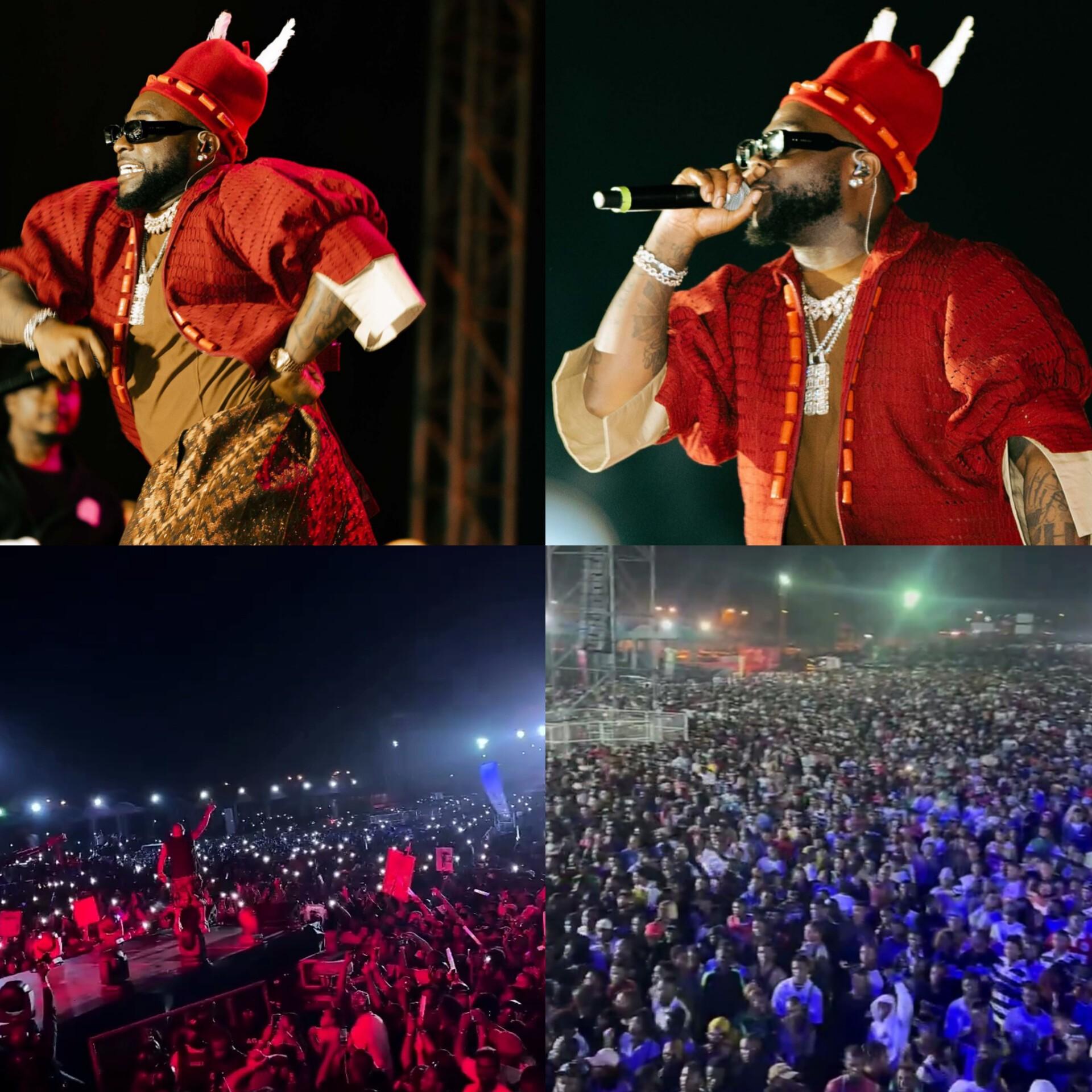
  • Davido’s #5iveAliveTour stop in Enugu was nothing short of legendary! The Michael Okpara Stadium was packed to the brim with an estimated over 50,000 fans — a sea of energy, love, and unstoppable vibes!
    From the moment OBO hit the stage, the entire city went wild — fans screaming every lyric, lights flashing, and hearts pounding in unison. The energy was pure magic , the kind that reminds everyone why Davido remains Africa’s #1 performer.
    Enugu showed up and showed out for 001 — and trust, that night will be remembered forever!
    #Davido #5iveAliveTour #EnuguConcert #30BG #WeRiseByLiftingOthers #AfrobeatsKing
    Davido’s #5iveAliveTour stop in Enugu was nothing short of legendary! 🔥 The Michael Okpara Stadium was packed to the brim with an estimated over 50,000 fans — a sea of energy, love, and unstoppable vibes! 💥 From the moment OBO hit the stage, the entire city went wild — fans screaming every lyric, lights flashing, and hearts pounding in unison. The energy was pure magic ✨, the kind that reminds everyone why Davido remains Africa’s #1 performer. Enugu showed up and showed out for 001 — and trust, that night will be remembered forever! 🦅💚 #Davido #5iveAliveTour #EnuguConcert #30BG #WeRiseByLiftingOthers #AfrobeatsKing
    Love
    1
    · 0 Комментарии ·0 Поделились ·3Кб Просмотры ·0 предпросмотр
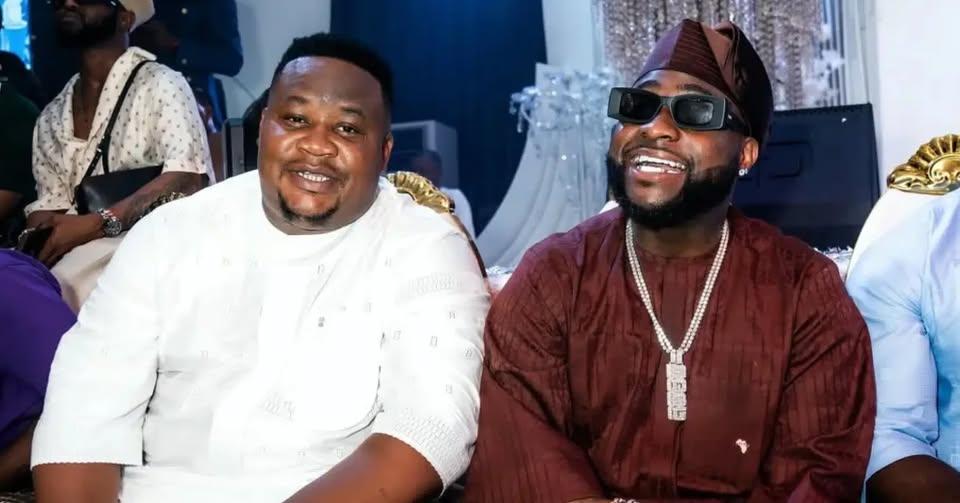
  • ‎“Sometimes I wonder how on earth I met Davido” – Cubana Chief Priest

    ‎Socialite and nightlife promoter, Cubana Chief Priest, has once again showered praise on Afrobeats superstar, Davido, following his electrifying performance in Enugu.

    ‎The socialite, who is known for his close friendship with the singer, expressed admiration and gratitude for the bond they share.

    ‎Chief Priest reflects on meeting OBO
    ‎In a post shared on his Instagram page, Chief Priest reflected on how he met Davido, describing the encounter as a divine connection that changed his life for the better.

    ‎He noted that he considers himself fortunate to have built a relationship with someone he regards as one of the most influential figures in African entertainment.

    ‎Enugu music concert
    ‎The event in Enugu, which drew massive crowds, saw fans and celebrities gather to celebrate Davido’s impact and musical legacy. Chief Priest highlighted how the singer’s presence brought excitement and unity to the Southeast, emphasizing the region’s pride in claiming Davido as one of their own through his marriage ties.

    ‎He also commended Davido’s unwavering commitment to representing Africa globally, acknowledging his contribution to the evolution of Afrobeats. According to him, Davido’s success story continues to inspire countless young people across the continent to believe in their dreams.

    ‎Chief Priest concluded by expressing his joy and pride in witnessing Davido’s growth and global dominance, describing him as a symbol of excellence and a testament to hard work and divine favour.

    ‎His words …

    ‎“Sometimes I Wonder How On Earth I Take Meet @davido God Blessed Me With The Biggest Human Outta Africa. Enugu Will Never Forget. I’m Super Proud Of You, Southeast.
    ‎We Turned Up For Our Own, Our Son-In-Law, Our Bro & Friend, The Author & Finisher Of AfroBeats”.

    ‎#JAPD

    ‎“Sometimes I wonder how on earth I met Davido” – Cubana Chief Priest ‎ ‎Socialite and nightlife promoter, Cubana Chief Priest, has once again showered praise on Afrobeats superstar, Davido, following his electrifying performance in Enugu. ‎ ‎The socialite, who is known for his close friendship with the singer, expressed admiration and gratitude for the bond they share. ‎ ‎Chief Priest reflects on meeting OBO ‎In a post shared on his Instagram page, Chief Priest reflected on how he met Davido, describing the encounter as a divine connection that changed his life for the better. ‎ ‎He noted that he considers himself fortunate to have built a relationship with someone he regards as one of the most influential figures in African entertainment. ‎ ‎Enugu music concert ‎The event in Enugu, which drew massive crowds, saw fans and celebrities gather to celebrate Davido’s impact and musical legacy. Chief Priest highlighted how the singer’s presence brought excitement and unity to the Southeast, emphasizing the region’s pride in claiming Davido as one of their own through his marriage ties. ‎ ‎He also commended Davido’s unwavering commitment to representing Africa globally, acknowledging his contribution to the evolution of Afrobeats. According to him, Davido’s success story continues to inspire countless young people across the continent to believe in their dreams. ‎ ‎Chief Priest concluded by expressing his joy and pride in witnessing Davido’s growth and global dominance, describing him as a symbol of excellence and a testament to hard work and divine favour. ‎ ‎His words … ‎ ‎“Sometimes I Wonder How On Earth I Take Meet @davido God Blessed Me With The Biggest Human Outta Africa. Enugu Will Never Forget. I’m Super Proud Of You, Southeast. ‎We Turned Up For Our Own, Our Son-In-Law, Our Bro & Friend, The Author & Finisher Of AfroBeats”. ‎ ‎#JAPD ‎
    0 Комментарии ·0 Поделились ·643 Просмотры ·0 предпросмотр
  • Davido In Teàrs After His Sh0cking Experience Of The Massive Turnout And Love From Enugu State People In His Recently 5ivealivetour In Michael Okpara Square, Enugu
    Wow !, It Was Indeed Massive And OBO Is Loved Nation
    Moral Lesson: Congratulations 001
    #5iveAlivetour #davido #enugu
    Davido In Teàrs After His Sh0cking Experience Of The Massive Turnout And Love From Enugu State People In His Recently 5ivealivetour In Michael Okpara Square, Enugu 🔥🥰😲 Wow !, It Was Indeed Massive And OBO Is Loved Nation 🥰✌️ Moral Lesson: Congratulations 001 💪👌 #5iveAlivetour #davido #enugu
    0 Комментарии ·0 Поделились ·1Кб Просмотры ·0 предпросмотр
Расширенные страницы
001Davido https://001davido.com