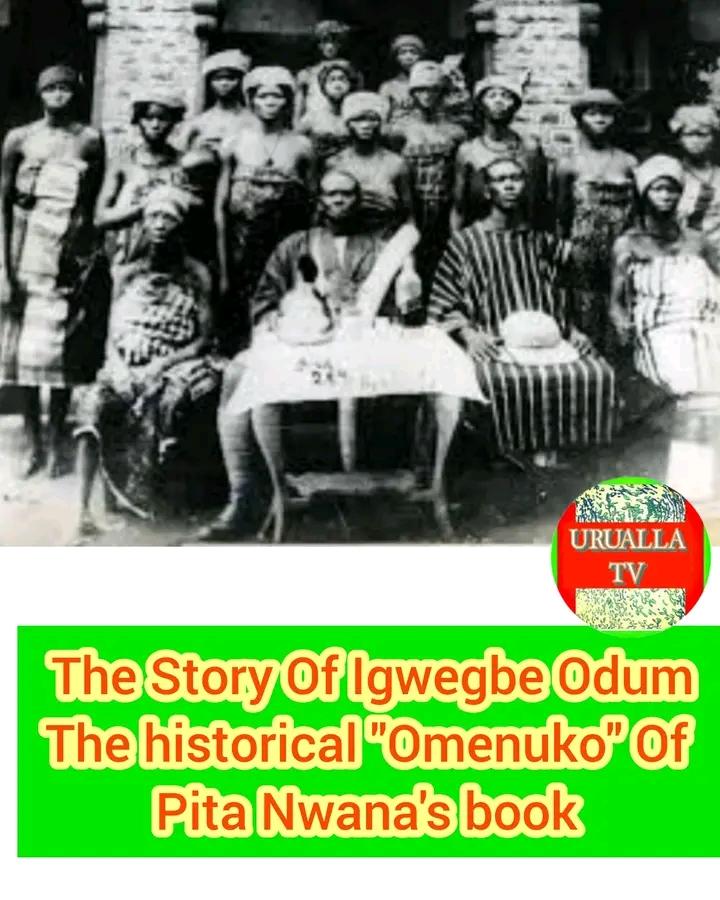
The Story Of Omenuko
A Igbo wealthy Man in the Late Nineteenth Century.
Chief Igwegbe Ọdum
Omenuko of Arondizuogu, c.1860-1940
He was a brother to Mbadiwe Odum the father of Dr K.O Mbadiwe and Chief Green Mbadiwe
Although the British outlawed slave trading for its subjects in 1807, the Igbo hinterland sustained an illicit trade late into the second decade of the twentieth century, in response to the palm oil trade and other factors. In fact, after the final slave cargo left the Niger Delta coast in the 1830s, internal slavery continued in the interior of the Bight of Biafra, especially around the Arondizuogu-Bende-Arochukwu supply axis, as late as 1912. The slaves previously meant for the overseas market were now engaged in plantation farms where their labor accelerated the growth of the palm oil trade. The focus of this History is the continuation of the slave trade after the ending of the trans-Atlantic traffic, as reflected in the life of Chief Igwegbe Ọdum. The biography of Igwebe Ọdum speaks in many ways to the collective historical experience of slavery and abolition, colonialism, social change and cultural dilemmas, and the link between economic power and political machinations. Igwegbe's life history provides an insight into the character of a class of nouveaux riche who were emerging in West Africa, including Igboland, where they were known as ọgaranya. The new economic order was defined by expansion of the cash economy, the gradual but steady decline of the Atlantic slave trade, and the transition to "legitimate commerce." Igwegbe Ọdum is remembered as someone who was able to take advantage of opportunities; in 1929, his kinsmen referred to him as ọmenukọ-akụ ("one who is financially buoyant in the midst of scarcity"). How he achieved this status is controversial, however. Igwegbe is portrayed either as a hero or villain. In 1934, for instance, his biographer, Pita Nwana, an Aro indigene and pioneer Igbo writer, presented Igwegbe as an ultimate model of a successful Aro traditional entrepreneur and politician. Similarly, in their different studies, Mbonu Ojike, Richard Ohizu Igwegbe (Chief Igwebe's son), and Dr. K. O. Mbadiwe (Igwegbe's nephew and popular Nigerian politician in the first and second republics)—have described Igwegbe in colorful words as a "political wizard" and "political dynamo." In 1966, however, the eminent African historian, Adiele Afigbo, stood the earlier studies on their heads by focusing specifically on the activities of Igwegbe as a collaborator in British colonial rule in Nigeria. Afigbo described Igwegbe as a paradox of "the greatest success and failure among that notorious crowd of Eastern Nigeria's rulers known as warrant chiefs," and "a discredited politician in his hometown Arondizuogu." In 1993, Evaristus Anyaehie sharply disagreed with Afigbo's uncomplimentary view of Igwegbe, which he dismissed as "misplaced emphasis." Instead, Anyaehie interprets Igwegbe's career broadly as "an authentic source of information on the political culture of the Igbo in the nineteenth and early twentieth century." As Elizabeth Isichei demonstrated in her study of nineteenth-century Igbo society, a cadre of "aristocrats" (ọgaranya) with newly found wealth emerged, thanks to the lucrative export trade in slaves and later palm oil. It is argued here that Igwegbe Ọdum's career provides us with insight into the nature of the evolving but often misunderstood nineteenth-century militarized social milieu in which he was raised. The history of the ọgaranya who marched with feet of iron fills a curious void in a period of Igbo history when the indigenous society was heading towards a crucial take-off to a new level of socioeconomic and political development following the expansion of merchant capitalism and the creation of new wealth in the hands of opportune individuals.
What did you hear about Chief Omenuko
#uruallatv #OmenukoThe Story Of Omenuko
A Igbo wealthy Man in the Late Nineteenth Century.
Chief Igwegbe Ọdum
Omenuko of Arondizuogu, c.1860-1940
He was a brother to Mbadiwe Odum the father of Dr K.O Mbadiwe and Chief Green Mbadiwe
Although the British outlawed slave trading for its subjects in 1807, the Igbo hinterland sustained an illicit trade late into the second decade of the twentieth century, in response to the palm oil trade and other factors. In fact, after the final slave cargo left the Niger Delta coast in the 1830s, internal slavery continued in the interior of the Bight of Biafra, especially around the Arondizuogu-Bende-Arochukwu supply axis, as late as 1912. The slaves previously meant for the overseas market were now engaged in plantation farms where their labor accelerated the growth of the palm oil trade. The focus of this History is the continuation of the slave trade after the ending of the trans-Atlantic traffic, as reflected in the life of Chief Igwegbe Ọdum. The biography of Igwebe Ọdum speaks in many ways to the collective historical experience of slavery and abolition, colonialism, social change and cultural dilemmas, and the link between economic power and political machinations. Igwegbe's life history provides an insight into the character of a class of nouveaux riche who were emerging in West Africa, including Igboland, where they were known as ọgaranya. The new economic order was defined by expansion of the cash economy, the gradual but steady decline of the Atlantic slave trade, and the transition to "legitimate commerce." Igwegbe Ọdum is remembered as someone who was able to take advantage of opportunities; in 1929, his kinsmen referred to him as ọmenukọ-akụ ("one who is financially buoyant in the midst of scarcity"). How he achieved this status is controversial, however. Igwegbe is portrayed either as a hero or villain. In 1934, for instance, his biographer, Pita Nwana, an Aro indigene and pioneer Igbo writer, presented Igwegbe as an ultimate model of a successful Aro traditional entrepreneur and politician. Similarly, in their different studies, Mbonu Ojike, Richard Ohizu Igwegbe (Chief Igwebe's son), and Dr. K. O. Mbadiwe (Igwegbe's nephew and popular Nigerian politician in the first and second republics)—have described Igwegbe in colorful words as a "political wizard" and "political dynamo." In 1966, however, the eminent African historian, Adiele Afigbo, stood the earlier studies on their heads by focusing specifically on the activities of Igwegbe as a collaborator in British colonial rule in Nigeria. Afigbo described Igwegbe as a paradox of "the greatest success and failure among that notorious crowd of Eastern Nigeria's rulers known as warrant chiefs," and "a discredited politician in his hometown Arondizuogu." In 1993, Evaristus Anyaehie sharply disagreed with Afigbo's uncomplimentary view of Igwegbe, which he dismissed as "misplaced emphasis." Instead, Anyaehie interprets Igwegbe's career broadly as "an authentic source of information on the political culture of the Igbo in the nineteenth and early twentieth century." As Elizabeth Isichei demonstrated in her study of nineteenth-century Igbo society, a cadre of "aristocrats" (ọgaranya) with newly found wealth emerged, thanks to the lucrative export trade in slaves and later palm oil. It is argued here that Igwegbe Ọdum's career provides us with insight into the nature of the evolving but often misunderstood nineteenth-century militarized social milieu in which he was raised. The history of the ọgaranya who marched with feet of iron fills a curious void in a period of Igbo history when the indigenous society was heading towards a crucial take-off to a new level of socioeconomic and political development following the expansion of merchant capitalism and the creation of new wealth in the hands of opportune individuals.
What did you hear about Chief Omenuko
#uruallatv #Omenuko