• THEOPHILUS YAKUBU DANJUMA

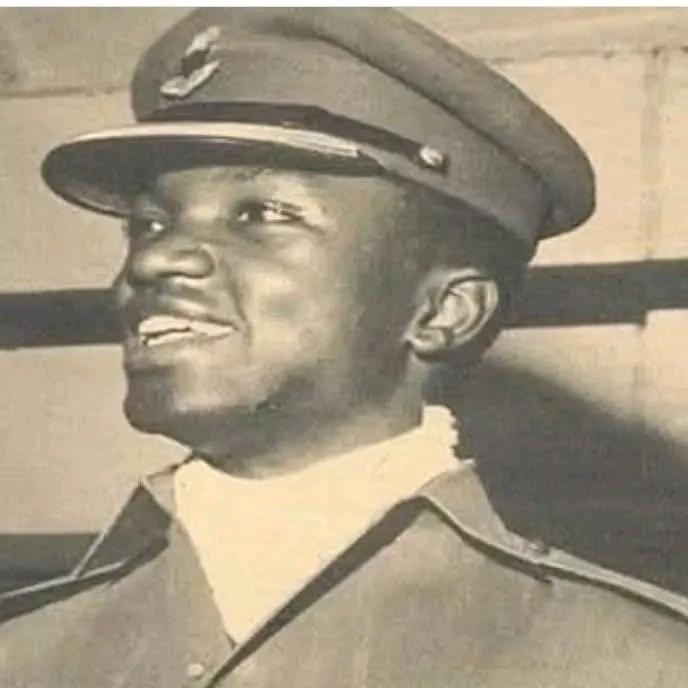
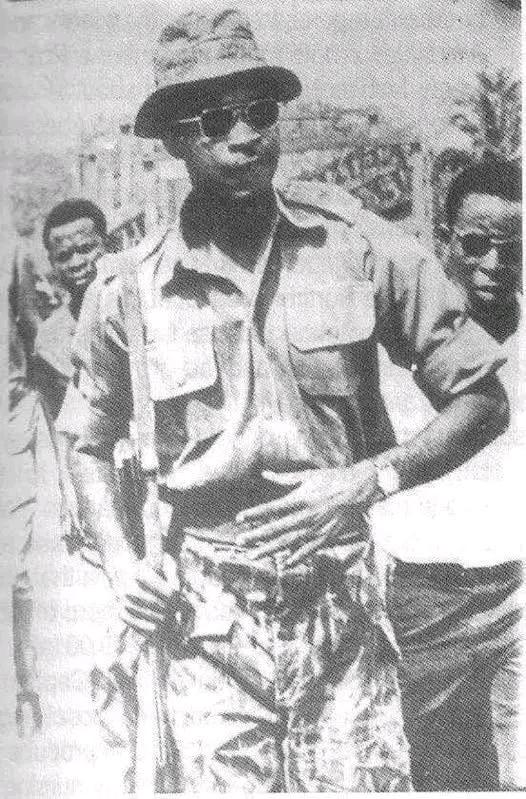
    This photograph captures a young Lt. Theophilus Yakubu Danjuma in 1966, a year marked by two vi0lent military upheavals that reshaped Nigeria’s post-independence path. Although often linked to the January c0up, Danjuma was not part of the January 15, 1966 mutiny led by Major Nzeogwu and others. At the time, he served with the 4th Battalion in Ibadan, where he witnessed the political turbulence that followed the coup’s failure and the rise of Major General Johnson Aguiyi-Ironsi.

    Danjuma’s decisive and controversial role came later in the July 1966 counter-coup, when northern soldiers revolted against Ironsi’s government. During this operation in Ibadan, Danjuma led the group that arrested General Ironsi and Lt. Colonel Adekunle Fajuyi, an event that ended tragically with their deaths. This moment became one of the defining turning points of the counter-coup and deepened the national crisis.

    The image therefore stands as a stark reminder of a young officer operating at the heart of one of Nigeria’s most turbulent years. It reflects the atmosphere of mistrust, ethnic tension, and political fragmentation that engulfed the First Republic and eventually set the stage for the Nigerian Civil W@r
    THEOPHILUS YAKUBU DANJUMA This photograph captures a young Lt. Theophilus Yakubu Danjuma in 1966, a year marked by two vi0lent military upheavals that reshaped Nigeria’s post-independence path. Although often linked to the January c0up, Danjuma was not part of the January 15, 1966 mutiny led by Major Nzeogwu and others. At the time, he served with the 4th Battalion in Ibadan, where he witnessed the political turbulence that followed the coup’s failure and the rise of Major General Johnson Aguiyi-Ironsi. Danjuma’s decisive and controversial role came later in the July 1966 counter-coup, when northern soldiers revolted against Ironsi’s government. During this operation in Ibadan, Danjuma led the group that arrested General Ironsi and Lt. Colonel Adekunle Fajuyi, an event that ended tragically with their deaths. This moment became one of the defining turning points of the counter-coup and deepened the national crisis. The image therefore stands as a stark reminder of a young officer operating at the heart of one of Nigeria’s most turbulent years. It reflects the atmosphere of mistrust, ethnic tension, and political fragmentation that engulfed the First Republic and eventually set the stage for the Nigerian Civil W@r
    0 التعليقات ·0 المشاركات ·768 مشاهدة ·0 معاينة
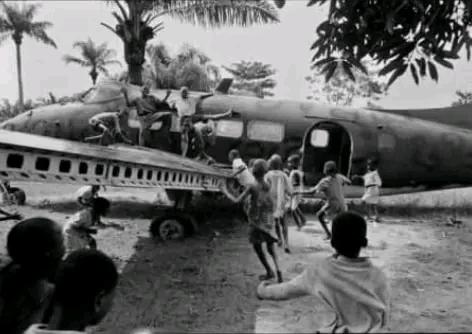
  • The image shows Igbo children playing on the wreckage of a Biafran aircraft near the Uli airstrip in 1971, one year after the end of the Nigerian-Biafran Civil War. The photo serves as a visual reminder of the war's impact and the local community's resilience, with the aircraft remnants being a testament to the conflict in Anambra State. Some sources identify the children as being from the St. Thomas Primary school in Uli.
    Context: The photograph was taken in 1971, a year after the Nigerian-Biafran Civil War ended in January 1970.
    Location: The scene is at the Uli airstrip in Anambra State.
    Subject: Children, identified by some sources as belonging to the St. Thomas Primary school, are playing on the remains of a grounded aircraft.
    Significance: The image captures a post-war moment, showing how a symbol of the conflict has become a part of the landscape and a place for children to play.
    The image shows Igbo children playing on the wreckage of a Biafran aircraft near the Uli airstrip in 1971, one year after the end of the Nigerian-Biafran Civil War. The photo serves as a visual reminder of the war's impact and the local community's resilience, with the aircraft remnants being a testament to the conflict in Anambra State. Some sources identify the children as being from the St. Thomas Primary school in Uli. Context: The photograph was taken in 1971, a year after the Nigerian-Biafran Civil War ended in January 1970. Location: The scene is at the Uli airstrip in Anambra State. Subject: Children, identified by some sources as belonging to the St. Thomas Primary school, are playing on the remains of a grounded aircraft. Significance: The image captures a post-war moment, showing how a symbol of the conflict has become a part of the landscape and a place for children to play.
    0 التعليقات ·0 المشاركات ·804 مشاهدة ·0 معاينة
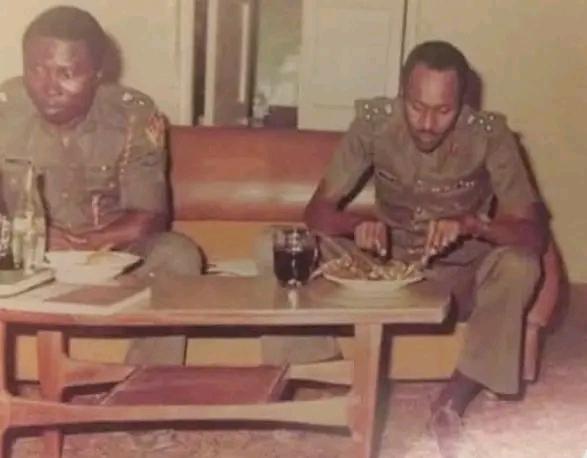
  • A photo captures Lt. Colonel Chris Ugokwe (left) and Brigadier Muhammadu Buhari sharing a meal with a chilled bottle of Coca-Cola sometime in the early 1980s. The relaxed moment reflects a bond rooted in their long military service, years of shared discipline, and the camaraderie that defined officers of their generation.

    Both men joined the Nigerian Army in the early 1960s. Ugokwe would later recount that he enlisted on the exact same day as Muhammadu Buhari and Shehu Musa Yar’Adua, a coincidence that tied their careers together from the very beginning.

    Ugokwe’s service took a dramatic turn after the July 1966 “reprisal coup.” Although he was officially placed on army leave, the atmosphere in the North had become dangerous for officers of Eastern Nigerian origin. His safety—and ultimately his survival—was secured through the intervention of Lt. Colonel Hassan Usman Katsina, the then governor of the Northern Region, under whom Ugokwe served as aide-de-camp.

    In September 1966, as tensions escalated and the situation deteriorated further, Katsina personally ensured Ugokwe’s escape from the North. He was discreetly escorted to safety, marking the end of a perilous chapter and the beginning of his withdrawal from an army he had joined alongside some of Nigeria’s most consequential military figures.
    A photo captures Lt. Colonel Chris Ugokwe (left) and Brigadier Muhammadu Buhari sharing a meal with a chilled bottle of Coca-Cola sometime in the early 1980s. The relaxed moment reflects a bond rooted in their long military service, years of shared discipline, and the camaraderie that defined officers of their generation. Both men joined the Nigerian Army in the early 1960s. Ugokwe would later recount that he enlisted on the exact same day as Muhammadu Buhari and Shehu Musa Yar’Adua, a coincidence that tied their careers together from the very beginning. Ugokwe’s service took a dramatic turn after the July 1966 “reprisal coup.” Although he was officially placed on army leave, the atmosphere in the North had become dangerous for officers of Eastern Nigerian origin. His safety—and ultimately his survival—was secured through the intervention of Lt. Colonel Hassan Usman Katsina, the then governor of the Northern Region, under whom Ugokwe served as aide-de-camp. In September 1966, as tensions escalated and the situation deteriorated further, Katsina personally ensured Ugokwe’s escape from the North. He was discreetly escorted to safety, marking the end of a perilous chapter and the beginning of his withdrawal from an army he had joined alongside some of Nigeria’s most consequential military figures.
    0 التعليقات ·0 المشاركات ·543 مشاهدة ·0 معاينة
  • Monday November 17,2025

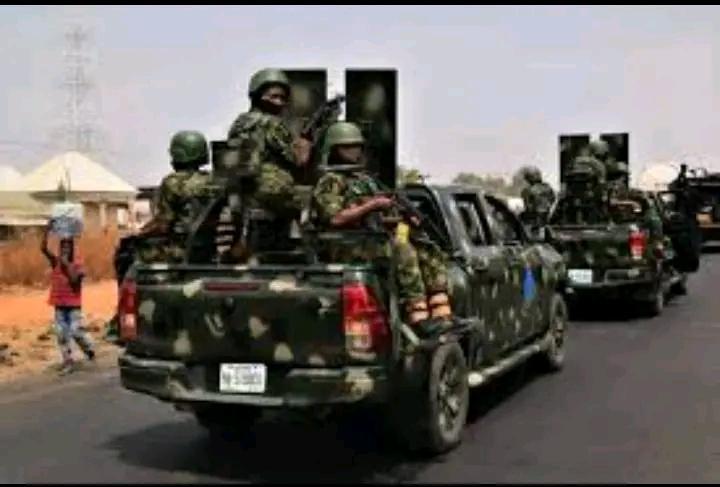
    ISWAP Shôts Nigerian General Deãd on Camera in First-Ever Abduction of a Serving Officer

    Nigeria has suffered an unprecedented tragedy in its counter-insurgency operations as Islamist terrorists from the Islamic State West Africa Province (ISWAP) reportedly captured Brigadier General M. Uba on the frontline and shōt him deãd on camera.
    Monday November 17,2025 ISWAP Shôts Nigerian General Deãd on Camera in First-Ever Abduction of a Serving Officer Nigeria has suffered an unprecedented tragedy in its counter-insurgency operations as Islamist terrorists from the Islamic State West Africa Province (ISWAP) reportedly captured Brigadier General M. Uba on the frontline and shōt him deãd on camera.😭🤔
    0 التعليقات ·0 المشاركات ·444 مشاهدة ·0 معاينة
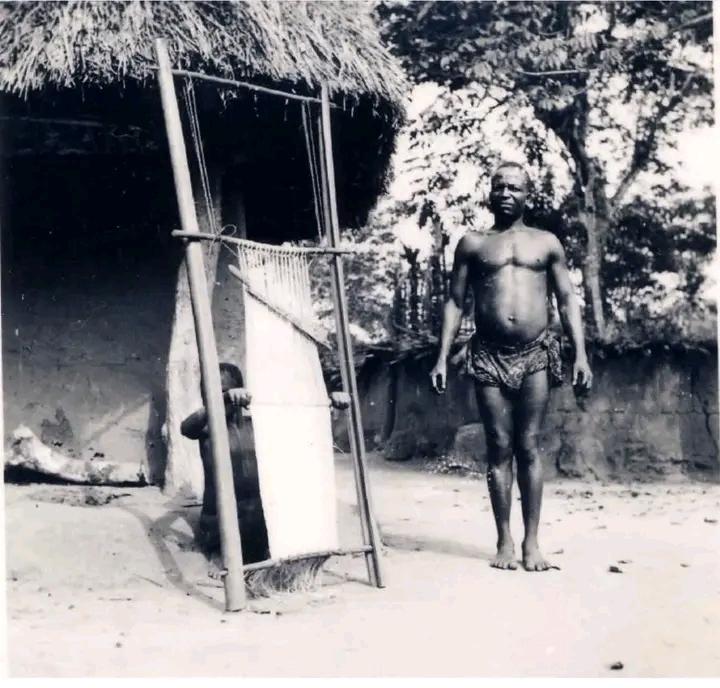
  • This is a photo of an Igbo man from the 1900s, a master weaver.

    The write-up below describes the Igbo people as documented by British colonialists.

    In 1888, British colonialist H. H. Johnston told the Royal Society of Britain that the Igbo people were extremely industrious, productive and skilled.

    They excel in weaving, metalwork, textile design, and home decoration.

    He emphasized that the Igbo’s were superior to their neighbors, being true producers and innovators.

    They smelted their own iron, crafted their own tools, and were successful agriculturists, raising livestock such as cattle, goats, sheep, fowl, and ducks. Unlike neighboring tribes, who were mostly non-producers, the Igbo created trade and maintained advanced social and cultural practices.

    VivianRora @X
    This is a photo of an Igbo man from the 1900s, a master weaver. ❤️ The write-up below describes the Igbo people as documented by British colonialists. In 1888, British colonialist H. H. Johnston told the Royal Society of Britain that the Igbo people were extremely industrious, productive and skilled. 💯 They excel in weaving, metalwork, textile design, and home decoration. 👍 He emphasized that the Igbo’s were superior to their neighbors, being true producers and innovators. 💯 They smelted their own iron, crafted their own tools, and were successful agriculturists, raising livestock such as cattle, goats, sheep, fowl, and ducks. Unlike neighboring tribes, who were mostly non-producers, the Igbo created trade and maintained advanced social and cultural practices.✅😳 ©️VivianRora @X
    0 التعليقات ·0 المشاركات ·494 مشاهدة ·0 معاينة
  • Kaduna Nzeogwu
    The image is a photo of Major Patrick Chukwuma Kaduna Nzeogwu, a Nigerian military officer who played a leading role in the 1966 Nigerian c0up d'état.

    Nzeogwu originally from okpanam Delta state was born on February 26, 1937, and di£d on July 29, 1967.
    The c0up, codenamed "Operation Damisa," overthrew the First Nigerian Republic.
    The c0up plotters' aim was to establish a strong, united, and prosperous nation free of corruption and internal strife.
    Nzeogwu is quoted as having said in a letter to his friend, Major Olusegun Obasanjo, that he would establish a new Nigerian Army within Biafra comprising Igbo, Hausa, Yoruba, and all other ethnic groups.

    ——————
    Igbo History Since 3000bc
    Kaduna Nzeogwu The image is a photo of Major Patrick Chukwuma Kaduna Nzeogwu, a Nigerian military officer who played a leading role in the 1966 Nigerian c0up d'état. Nzeogwu originally from okpanam Delta state was born on February 26, 1937, and di£d on July 29, 1967. The c0up, codenamed "Operation Damisa," overthrew the First Nigerian Republic. The c0up plotters' aim was to establish a strong, united, and prosperous nation free of corruption and internal strife. Nzeogwu is quoted as having said in a letter to his friend, Major Olusegun Obasanjo, that he would establish a new Nigerian Army within Biafra comprising Igbo, Hausa, Yoruba, and all other ethnic groups. —————— Igbo History Since 3000bc
    0 التعليقات ·0 المشاركات ·549 مشاهدة ·0 معاينة
  • The Ubulu-Ukwu kingdom that defeated Benin in 1750

    By Fortune Ngozi Onwordi

    Ubulu-Ukwu kingdom as one of the strongest allies of Benin kingdom had her city well planned with street lights and a King guided by Eunuchs.

    This account is according to revelations from someone who saw the precolonial City of Ubulu-Ukwu.

    After surviving a very famous Wąr with the Benin Kingdom in the 1750s, one will expect Ubulu-Ukwu to be desolate but that was not the case. The kingdom continued to thrive and build on the prestige of defeating Benin kingdom.

    Although, beer parlour historians from Benin continue to peddle falsehood that Obi Olise was beh£aded but the joke is on them as no Ubulu-Ukwu king was ever K!lled.

    Historians marvel at how well the ancient community of Ubulu Kingdom survived the onslaught of the Benin army without losing her monarchy or aesthetic appeal. The Bini version of the war tells how the Bini soldiers beheaded Ogie-Obolo (Obi Ubulu), whereas the Ubulu-Uku version holds that the war strategy of Ubulu Kingdom implied dressing up pseudo kings. Who did the Idu army behead and why did many Idu soldiers choose Ubulu Kingdom over their most respected Bini kingdom?

    In examining The Benin Factor In The West Niger Igbo History, researcher and history scholar Professor Emmanuel Nwafor Mordi writes:

    "Evidence does not suggest that the Ubulu-Ukwu monarchy was consequently weakened by the war with Benin.
    "On the contrary, the reputation of the monarchy was enhanced. It built on its increased post- war stature to maintain and sustain an image and carriage that commanded the awe and admiration of subjects and outsiders alike".

    The strengthening of Ubulu-Ukwu monarchy established her as one of the most respected kingdoms among the Enuani, Ụkwụani, Odiani, Olukwumis, Ika and others. That Ubulu-Ukwu Kingdom defeated the mighty Bini Kingdom boosted her morale to head the Ekwumekwu anti colonial resistance.

    According to J. Spencer, a European missionary who was the first to provide an outsider's insight into Ubulu-Ukwu geography and Royal Palace in February 1878, Ubulu-Ukwu was carefully planned.

    "The royal residence is a massive structure, built of mud, but so well-tempered that it could at first sight be taken for brick-work plastered over with mud. The whole building occupies a
    whole square. Its walls are supported by gigantic pillars of wood and mud, placed in regular
    succession, on the former of which are carved various grotesque figures.

    "The front apartment is the council-hall, and a very commodious place; on both sides are raised mud seats for the
    members of council, and in front is the throne, raised to conspicuous height above the rest. I
    sat for about a quarter of an hour, waiting for the coming of the king, who at last made his
    appearance, attended by twelve eunuchs, stark naked, carrying the sceptre and other insignia of royalty; the greater part of the nobility and gentry also followed in his train.

    The king is a man of between thirty-five and forty and of noble appearance. His head was adorned with three tremendous feathers jauntily stuck on the coronet that graced his brow. His neck, arms, hands and feet were covered with costly beads that glittered in the distance like diamonds, his eyes are bold and piercing, and his thin lips, when shut, show a resolve of will never to be overrules. His general carriage bears that careless confidence that marks the character of a monarch whose slightest nod is the law of the realm (cited in Isichei, 1977: 268).

    This visit happens to fall in the period of the reign of Obi Nwajei. In that time, every street (Ogbe) in Ubulu-Ukwu was policed day and night by well armed men.

    Spencer further wrote in 1878 that:

    “There are constructed several porches at the corners of the principal streets, where royal guards, armed with swords and muskets, are kept during the day, to see that order is established in the town”.

    Photo: HRM Agbogidi Obi Okonkwo Ofulue (I), the Obi of Ubulu-Uku kingdom.
    Image obtained from 'The Story of Ubulu Kingdom' by Esther Wright.
    The Ubulu-Ukwu kingdom that defeated Benin in 1750 By Fortune Ngozi Onwordi Ubulu-Ukwu kingdom as one of the strongest allies of Benin kingdom had her city well planned with street lights and a King guided by Eunuchs. This account is according to revelations from someone who saw the precolonial City of Ubulu-Ukwu. After surviving a very famous Wąr with the Benin Kingdom in the 1750s, one will expect Ubulu-Ukwu to be desolate but that was not the case. The kingdom continued to thrive and build on the prestige of defeating Benin kingdom. Although, beer parlour historians from Benin continue to peddle falsehood that Obi Olise was beh£aded but the joke is on them as no Ubulu-Ukwu king was ever K!lled. Historians marvel at how well the ancient community of Ubulu Kingdom survived the onslaught of the Benin army without losing her monarchy or aesthetic appeal. The Bini version of the war tells how the Bini soldiers beheaded Ogie-Obolo (Obi Ubulu), whereas the Ubulu-Uku version holds that the war strategy of Ubulu Kingdom implied dressing up pseudo kings. Who did the Idu army behead and why did many Idu soldiers choose Ubulu Kingdom over their most respected Bini kingdom? In examining The Benin Factor In The West Niger Igbo History, researcher and history scholar Professor Emmanuel Nwafor Mordi writes: "Evidence does not suggest that the Ubulu-Ukwu monarchy was consequently weakened by the war with Benin. "On the contrary, the reputation of the monarchy was enhanced. It built on its increased post- war stature to maintain and sustain an image and carriage that commanded the awe and admiration of subjects and outsiders alike". The strengthening of Ubulu-Ukwu monarchy established her as one of the most respected kingdoms among the Enuani, Ụkwụani, Odiani, Olukwumis, Ika and others. That Ubulu-Ukwu Kingdom defeated the mighty Bini Kingdom boosted her morale to head the Ekwumekwu anti colonial resistance. According to J. Spencer, a European missionary who was the first to provide an outsider's insight into Ubulu-Ukwu geography and Royal Palace in February 1878, Ubulu-Ukwu was carefully planned. "The royal residence is a massive structure, built of mud, but so well-tempered that it could at first sight be taken for brick-work plastered over with mud. The whole building occupies a whole square. Its walls are supported by gigantic pillars of wood and mud, placed in regular succession, on the former of which are carved various grotesque figures. "The front apartment is the council-hall, and a very commodious place; on both sides are raised mud seats for the members of council, and in front is the throne, raised to conspicuous height above the rest. I sat for about a quarter of an hour, waiting for the coming of the king, who at last made his appearance, attended by twelve eunuchs, stark naked, carrying the sceptre and other insignia of royalty; the greater part of the nobility and gentry also followed in his train. The king is a man of between thirty-five and forty and of noble appearance. His head was adorned with three tremendous feathers jauntily stuck on the coronet that graced his brow. His neck, arms, hands and feet were covered with costly beads that glittered in the distance like diamonds, his eyes are bold and piercing, and his thin lips, when shut, show a resolve of will never to be overrules. His general carriage bears that careless confidence that marks the character of a monarch whose slightest nod is the law of the realm (cited in Isichei, 1977: 268). This visit happens to fall in the period of the reign of Obi Nwajei. In that time, every street (Ogbe) in Ubulu-Ukwu was policed day and night by well armed men. Spencer further wrote in 1878 that: “There are constructed several porches at the corners of the principal streets, where royal guards, armed with swords and muskets, are kept during the day, to see that order is established in the town”. Photo: HRM Agbogidi Obi Okonkwo Ofulue (I), the Obi of Ubulu-Uku kingdom. Image obtained from 'The Story of Ubulu Kingdom' by Esther Wright.
    0 التعليقات ·0 المشاركات ·1كيلو بايت مشاهدة ·0 معاينة
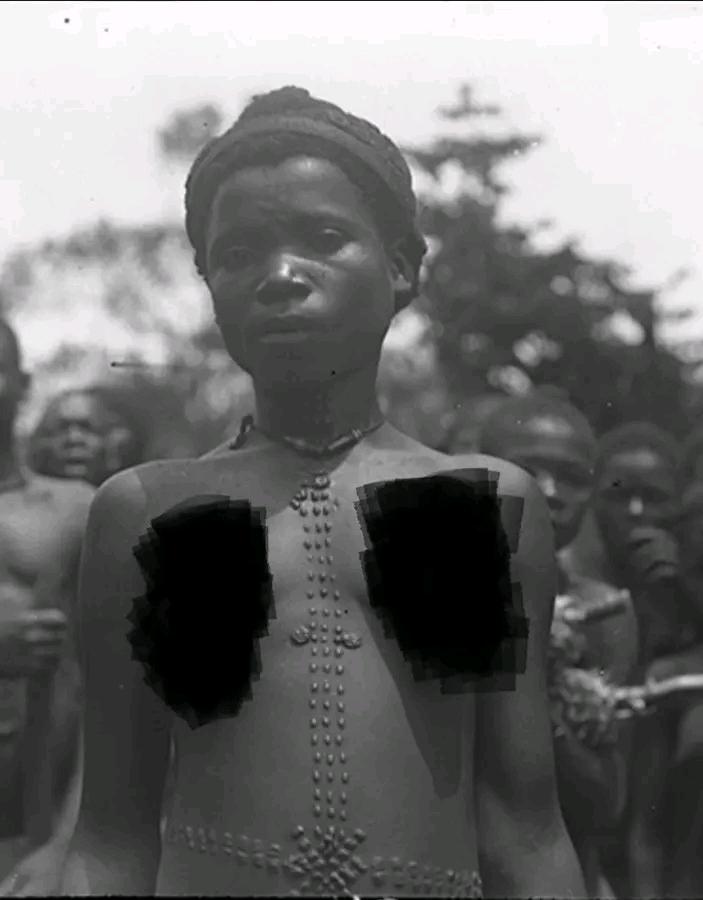
  • The practice of “”MBUBU””(body scarification) among the Igbos of Nigeria .

    The practice of ichí and mbùbù scarification has deep roots in Igbo society, with oral traditions tracing its origins as far back as the 8th century AD, when early Igbo communities used body marks to signify identity, purity, honour, and adulthood. The ichí ritual begins with the arrival of the Nwádíọ́ká, the specialist from Umudioka who alone is permitted to perform the marks. He travels to meet the Nwá Ichí, the initiate, accompanied by two assistants. The first is Nwá Nsọ, who carries the specialist’s tool bag and prepares the mat and wooden headrest on which the initiate must lie. The second, Nwá Mgbádò Ichí, holds the initiate’s legs firmly to keep him still during the incisions.

    Ichí markings are painful, and the initiate must show courage. To help him endure the ordeal, his mother or wife feeds him small pieces of fish from time to time, while relatives sing soothing but meaningful songs. These songs praise the art of ichí, the skill of the Nwádíọ́ká, and the honour gained by the initiate. After the cutting, Nwá Nsọ acts as a caregiver for fourteen days, washing the wounds with warm water and applying herbs that encourage healing.

    Among the Igbo, mbùbù and nkí scarification patterns were worn by boys as signs of bravery and as an essential part of their initiation into manhood. For girls, they marked important transitions—coming-of-age rituals, fertility rites, public outings, and marriage ceremonies. A bride-to-be was expected to undergo mbùbù cicatrization before her marriage could be fully recognized. This process involved rough tattoo-like incisions across the front of the body, often arranged as a cross made with raised triple lines known as mbùbù or ebùbù. The presence of these cicatrices showed that a woman was married or preparing for marriage. To conceive before undergoing this ritual was considered a grave abomination in Igbo custom.

    This tradition, captured in early photographs such as Northcote Thomas’s 1911 image of a woman with mbùbù marks, stands as one of the most enduring markers of identity, aesthetics, and social meaning in Igbo history.

    #history
    #viralphotochallenge
    @black history
    The practice of “”MBUBU””(body scarification) among the Igbos of Nigeria 🇳🇬. The practice of ichí and mbùbù scarification has deep roots in Igbo society, with oral traditions tracing its origins as far back as the 8th century AD, when early Igbo communities used body marks to signify identity, purity, honour, and adulthood. The ichí ritual begins with the arrival of the Nwádíọ́ká, the specialist from Umudioka who alone is permitted to perform the marks. He travels to meet the Nwá Ichí, the initiate, accompanied by two assistants. The first is Nwá Nsọ, who carries the specialist’s tool bag and prepares the mat and wooden headrest on which the initiate must lie. The second, Nwá Mgbádò Ichí, holds the initiate’s legs firmly to keep him still during the incisions. Ichí markings are painful, and the initiate must show courage. To help him endure the ordeal, his mother or wife feeds him small pieces of fish from time to time, while relatives sing soothing but meaningful songs. These songs praise the art of ichí, the skill of the Nwádíọ́ká, and the honour gained by the initiate. After the cutting, Nwá Nsọ acts as a caregiver for fourteen days, washing the wounds with warm water and applying herbs that encourage healing. Among the Igbo, mbùbù and nkí scarification patterns were worn by boys as signs of bravery and as an essential part of their initiation into manhood. For girls, they marked important transitions—coming-of-age rituals, fertility rites, public outings, and marriage ceremonies. A bride-to-be was expected to undergo mbùbù cicatrization before her marriage could be fully recognized. This process involved rough tattoo-like incisions across the front of the body, often arranged as a cross made with raised triple lines known as mbùbù or ebùbù. The presence of these cicatrices showed that a woman was married or preparing for marriage. To conceive before undergoing this ritual was considered a grave abomination in Igbo custom. This tradition, captured in early photographs such as Northcote Thomas’s 1911 image of a woman with mbùbù marks, stands as one of the most enduring markers of identity, aesthetics, and social meaning in Igbo history. #history #viralphotochallenge @black history
    0 التعليقات ·0 المشاركات ·783 مشاهدة ·0 معاينة
  • SHAME ON NIGERIA’S MILITARY HIGH COMMAND:
    They Got Brigadier-General M. Uba KILLED With Their Own Mouths!
    Posted: 17 Nov 2025 | 16:45 WAT
    By The Angry Nigerian
    They killed their own General.
    Not ISWAP.
    Not the ambush.
    The Nigerian Army High Command and their reckless loudmouth spokespeople KILLED Brigadier-General Mohammed Uba with a WhatsApp video and a premature press release.
    Let me tell you exactly how it happened, because nobody in uniform has the balls to say it out loud.
    1️⃣ November 14: ISWAP ambushes 25 Task Force Brigade convoy on Damboa-Biu road.
    Brig-Gen Uba, the commander, fights like a lion, gets separated, escapes into Sambisa with a few men.
    He’s alive. He’s unhurt. He records a short video from the bush: “I’m fine, sending coordinates, coming home.”
    2️⃣ That video was meant for Theatre Command ONLY.
    Instead, some overzealous PRO or “source” leaks it.
    Within hours it’s on every blog, every WhatsApp group, every ISWAP Telegram channel.
    Congratulations, you just painted a red target on a Brigadier-General hiding in Sambisa Forest.
    3️⃣ November 15: Army HQ, drunk on propaganda, rushes out a statement:
    “Commander Uba has SUCCESSFULLY LED his men back to base after repelling terrorists.”
    A BLATANT LIE.
    At that exact moment Uba was still lost in the bush, trying to link up with rescue teams.
    You know what that statement did?
    It told ISWAP: “He’s still out there. Go finish the job.”
    And they did.
    Hours later, terrorists who now had fresh intel from the viral video and the Army’s own lies tracked him down, shot him in the leg, dragged him away, and slaughtered him like a ram.
    The picture is everywhere. You’ve seen it.
    A whole Brigadier-General on his knees, blood pouring from his thigh, waiting for the blade.
    And the same Army that killed him with reckless PR is now quietly informing the Chief of Army Staff behind closed doors while pretending nothing happened in public.
    This is not just incompetence.
    This is criminal negligence.
    SHAME ON NIGERIA’S MILITARY HIGH COMMAND: They Got Brigadier-General M. Uba KILLED With Their Own Mouths! Posted: 17 Nov 2025 | 16:45 WAT By The Angry Nigerian They killed their own General. Not ISWAP. Not the ambush. The Nigerian Army High Command and their reckless loudmouth spokespeople KILLED Brigadier-General Mohammed Uba with a WhatsApp video and a premature press release. Let me tell you exactly how it happened, because nobody in uniform has the balls to say it out loud. 1️⃣ November 14: ISWAP ambushes 25 Task Force Brigade convoy on Damboa-Biu road. Brig-Gen Uba, the commander, fights like a lion, gets separated, escapes into Sambisa with a few men. He’s alive. He’s unhurt. He records a short video from the bush: “I’m fine, sending coordinates, coming home.” 2️⃣ That video was meant for Theatre Command ONLY. Instead, some overzealous PRO or “source” leaks it. Within hours it’s on every blog, every WhatsApp group, every ISWAP Telegram channel. Congratulations, you just painted a red target on a Brigadier-General hiding in Sambisa Forest. 3️⃣ November 15: Army HQ, drunk on propaganda, rushes out a statement: “Commander Uba has SUCCESSFULLY LED his men back to base after repelling terrorists.” A BLATANT LIE. At that exact moment Uba was still lost in the bush, trying to link up with rescue teams. You know what that statement did? It told ISWAP: “He’s still out there. Go finish the job.” And they did. Hours later, terrorists who now had fresh intel from the viral video and the Army’s own lies tracked him down, shot him in the leg, dragged him away, and slaughtered him like a ram. The picture is everywhere. You’ve seen it. A whole Brigadier-General on his knees, blood pouring from his thigh, waiting for the blade. And the same Army that killed him with reckless PR is now quietly informing the Chief of Army Staff behind closed doors while pretending nothing happened in public. This is not just incompetence. This is criminal negligence.
    0 التعليقات ·0 المشاركات ·986 مشاهدة ·0 معاينة
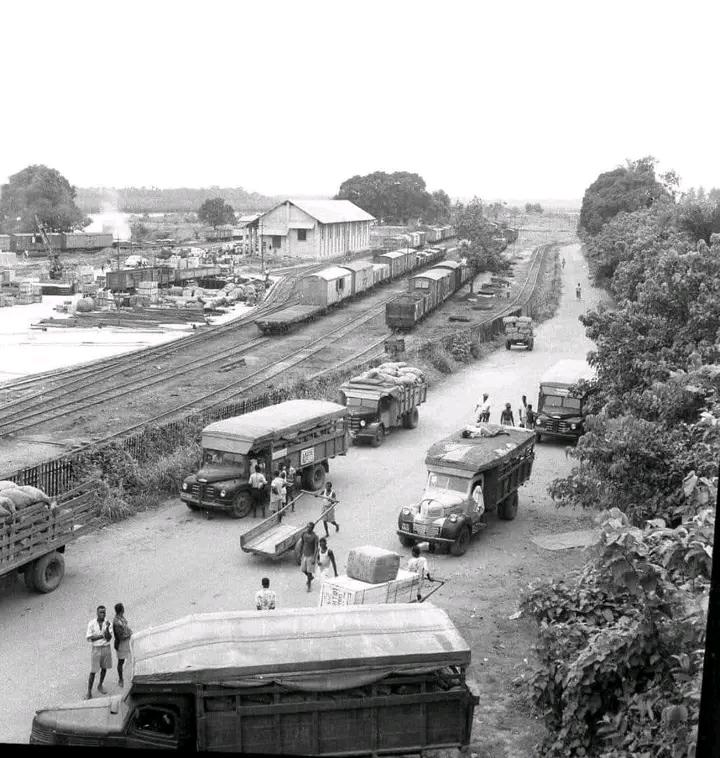
  • ENUGU-PORT HARCOURT RAIL LINE.

    Coal was discovered in Enugu in 1909 and that led to the founding of Port Harcourt 3 years later. By 1915,the first export of Enugu coal left for Britain through Port Harcourt.

    A railway was built between Enugu and PH within 3 years...

    Photo:A very busy street near the railway station in PortHarcourt, 1954

    .....good old days...
    ENUGU-PORT HARCOURT RAIL LINE. Coal was discovered in Enugu in 1909 and that led to the founding of Port Harcourt 3 years later. By 1915,the first export of Enugu coal left for Britain through Port Harcourt. A railway was built between Enugu and PH within 3 years... Photo:A very busy street near the railway station in PortHarcourt, 1954 .....good old days...
    0 التعليقات ·0 المشاركات ·507 مشاهدة ·0 معاينة
  • Court Sentences Suspended UNICAL Law Dean, Prof. Cyril Ndifon, to Five Years in Prison for S+x¥al Hara§§ment

    The Federal High Court in Abuja on Monday sentenced suspended University of Calabar Law Dean, Prof. Cyril Ndifon, to five years in prison without an option of fine after finding him guilty of s+x¥al hara§§ment.

    Justice James Omotosho ruled that the ICPC proved counts one and two beyond reasonable doubt.

    Ndifon received two years for count one and five years for count two, to run concurrently. The court, however, discharged and acquitted Ndifon’s former lawyer, Sunny Anyanwu, of charges against him, holding that the ICPC failed to link him to the offences in counts three and four.

    The amended charge dated January 19, 2024, contained four counts against Ndifon and Anyanwu. Ndifon was initially the sole defendant but Anyanwu was later joined over allegations that he attempted to pervert justice by calling and thr+atening a star witness during the case.

    Counts one and two accused Ndifon of s+x¥ally hara§§ing female students. The ICPC said that while serving as Dean of Law, he asked a female diploma student, identified as TKJ, to send indecent photos via WhatsApp and repeatedly demanded a s+x¥al act in exchange for her admission into the law programme.

    Ndifon testified in his defence, while a forensic analyst from the Office of the National Security Adviser, CSP Babagana Mingali, also took the stand.

    Justice Omotosho held that the prosecution proved the offences, stating that Ndifon abused his office and took undue advantage of a student desperate for admission.
    Court Sentences Suspended UNICAL Law Dean, Prof. Cyril Ndifon, to Five Years in Prison for S+x¥al Hara§§ment The Federal High Court in Abuja on Monday sentenced suspended University of Calabar Law Dean, Prof. Cyril Ndifon, to five years in prison without an option of fine after finding him guilty of s+x¥al hara§§ment. Justice James Omotosho ruled that the ICPC proved counts one and two beyond reasonable doubt. Ndifon received two years for count one and five years for count two, to run concurrently. The court, however, discharged and acquitted Ndifon’s former lawyer, Sunny Anyanwu, of charges against him, holding that the ICPC failed to link him to the offences in counts three and four. The amended charge dated January 19, 2024, contained four counts against Ndifon and Anyanwu. Ndifon was initially the sole defendant but Anyanwu was later joined over allegations that he attempted to pervert justice by calling and thr+atening a star witness during the case. Counts one and two accused Ndifon of s+x¥ally hara§§ing female students. The ICPC said that while serving as Dean of Law, he asked a female diploma student, identified as TKJ, to send indecent photos via WhatsApp and repeatedly demanded a s+x¥al act in exchange for her admission into the law programme. Ndifon testified in his defence, while a forensic analyst from the Office of the National Security Adviser, CSP Babagana Mingali, also took the stand. Justice Omotosho held that the prosecution proved the offences, stating that Ndifon abused his office and took undue advantage of a student desperate for admission.
    0 التعليقات ·0 المشاركات ·746 مشاهدة ·0 معاينة
  • IS LOKOJA A YORUBA-SPEAKING TOWN OR A YORUBA TOWN?

    Historical facts

    Lokoja is not a purely “Yoruba town” in the sense of being dominated exclusively by Yoruba people — rather, it is a very multi-ethnic city, though it does have a significant Yoruba connection (especially the Oworo subgroup).

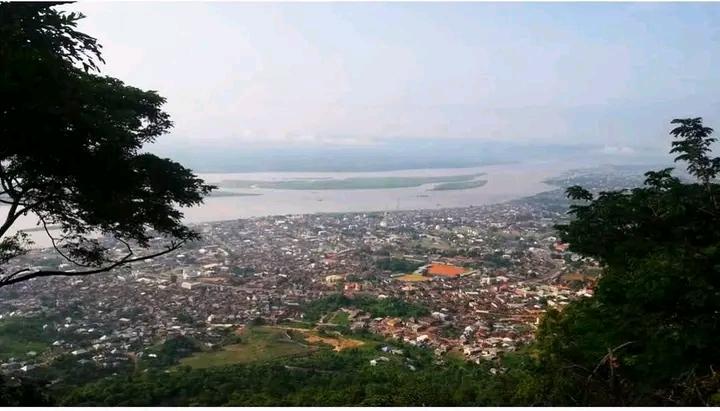
    Lokoja sits at a very strategic and symbolic spot in Nigeria: where the Niger and Benue rivers meet.  Its geography made it a natural crossroads, long before the arrival of Europeans.

    Long before colonial times, the area around Lokoja was inhabited by a variety of ethnic groups. According to historical and geographical accounts, the Oworo (a Yoruba subgroup), Bassa-Nge, Igala, and Ebira (Igbira) are among the indigenous peoples.  Over time, other groups migrated in, including Nupe, Igbo, Hausa, Bini/Edo, Tiv, and others. 

    The etymology of “Lokoja” itself is contested, and reflects this mixed heritage. One version suggests a Yoruba origin: from the Oworo, “Ilu Oke Oja,” roughly meaning “settlement on the hill near the market.”  Other groups have their own claims: for example, some Hausas say it comes from “Loko Ja” (“a red corner”), and the Nupe suggest a derivation from “Patti Lukongi” (“hill of doves”). 

    Lokoja came into stronger global focus in the 19th century, especially with European colonial ambitions. In 1841, the British signed treaties at the confluence — the king of Idah (an Igala area) ceded land around Lokoja.  But the real boost came in the 1850s: in 1857–1859, the Scottish explorer William Balfour Baikie set up a trading post at Lokoja.  This was not just trade — it also had missionary underpinnings.

    By the 1860s, Lokoja became a kind of colonial administrative hub: the first British consulate in the interior was established there (1860–1869).  Later, it became the military headquarters for the Royal Niger Company under Sir George Goldie (around the 1880s–1900). 

    Then came a very important date: 1914. That’s when the British formally amalgamated their Northern and Southern Nigerian protectorates. Lokoja played a symbolic role: it became seat of power. Sir Frederick Lugard, the first Governor-General of the newly unified Nigeria, used Lokoja as his base. 

    After independence, Lokoja’s administrative importance continued to evolve. For a while (1967–1991) it was part of Kwara State.  But in 1991, when Kogi State was created, Lokoja was made its capital.  The city has grown rapidly, both in population and in economic importance. 

    There are still many colonial relics in Lokoja: Lugard’s office and residence on Mount Patti, a colonial cemetery, the first prison yard, and more.  Those landmarks underscore how deeply Lokoja was embedded within British colonial governance.

    So, Is Lokoja a Yoruba Town?

    Not in a simple way. While Yoruba people (especially the Oworo subgroup) are indigenous to Lokoja, they are one of several important ethnic groups there. The city is multi-ethnic, and its identity has been shaped by:
    • Yoruba (Oworo) origins, especially in name and early settlement 
    • Nupe, Igala, Igbo,Ebira, Bassa-Nge, and many more groups contributing to its social fabric. 
    • Its role as a colonial administrative center, which drew in diverse peoples and made it a strategic hub. 

    So, to answer succinctly: Lokoja is not exclusively a Yoruba town, but there is a genuine Yoruba (Oworo) connection in its foundations and name — just as there are deep roots from other ethnicities.

    #history

    #viralphotochallenge
    IS LOKOJA A YORUBA-SPEAKING TOWN OR A YORUBA TOWN? Historical facts Lokoja is not a purely “Yoruba town” in the sense of being dominated exclusively by Yoruba people — rather, it is a very multi-ethnic city, though it does have a significant Yoruba connection (especially the Oworo subgroup). Lokoja sits at a very strategic and symbolic spot in Nigeria: where the Niger and Benue rivers meet.  Its geography made it a natural crossroads, long before the arrival of Europeans. Long before colonial times, the area around Lokoja was inhabited by a variety of ethnic groups. According to historical and geographical accounts, the Oworo (a Yoruba subgroup), Bassa-Nge, Igala, and Ebira (Igbira) are among the indigenous peoples.  Over time, other groups migrated in, including Nupe, Igbo, Hausa, Bini/Edo, Tiv, and others.  The etymology of “Lokoja” itself is contested, and reflects this mixed heritage. One version suggests a Yoruba origin: from the Oworo, “Ilu Oke Oja,” roughly meaning “settlement on the hill near the market.”  Other groups have their own claims: for example, some Hausas say it comes from “Loko Ja” (“a red corner”), and the Nupe suggest a derivation from “Patti Lukongi” (“hill of doves”).  Lokoja came into stronger global focus in the 19th century, especially with European colonial ambitions. In 1841, the British signed treaties at the confluence — the king of Idah (an Igala area) ceded land around Lokoja.  But the real boost came in the 1850s: in 1857–1859, the Scottish explorer William Balfour Baikie set up a trading post at Lokoja.  This was not just trade — it also had missionary underpinnings. By the 1860s, Lokoja became a kind of colonial administrative hub: the first British consulate in the interior was established there (1860–1869).  Later, it became the military headquarters for the Royal Niger Company under Sir George Goldie (around the 1880s–1900).  Then came a very important date: 1914. That’s when the British formally amalgamated their Northern and Southern Nigerian protectorates. Lokoja played a symbolic role: it became seat of power. Sir Frederick Lugard, the first Governor-General of the newly unified Nigeria, used Lokoja as his base.  After independence, Lokoja’s administrative importance continued to evolve. For a while (1967–1991) it was part of Kwara State.  But in 1991, when Kogi State was created, Lokoja was made its capital.  The city has grown rapidly, both in population and in economic importance.  There are still many colonial relics in Lokoja: Lugard’s office and residence on Mount Patti, a colonial cemetery, the first prison yard, and more.  Those landmarks underscore how deeply Lokoja was embedded within British colonial governance. So, Is Lokoja a Yoruba Town? Not in a simple way. While Yoruba people (especially the Oworo subgroup) are indigenous to Lokoja, they are one of several important ethnic groups there. The city is multi-ethnic, and its identity has been shaped by: • Yoruba (Oworo) origins, especially in name and early settlement  • Nupe, Igala, Igbo,Ebira, Bassa-Nge, and many more groups contributing to its social fabric.  • Its role as a colonial administrative center, which drew in diverse peoples and made it a strategic hub.  So, to answer succinctly: Lokoja is not exclusively a Yoruba town, but there is a genuine Yoruba (Oworo) connection in its foundations and name — just as there are deep roots from other ethnicities. #history #viralphotochallenge
    0 التعليقات ·0 المشاركات ·1كيلو بايت مشاهدة ·0 معاينة
الصفحات المعززة
001Davido https://001davido.com